
Spiked shield bug
Podops inuncta
Description
How to identify
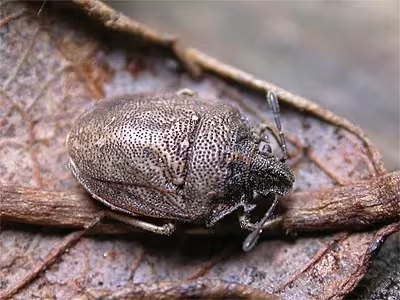
The Spiked shield bug (Podops inuncta) is a small species belonging to the family Scutelleridae. These insects typically measure between 7 and 9 millimeters in length and feature a characteristic oval, shield-like body.
The name "spiked" comes from the prominent, sharp-pointed projections on the pronotum, which are directed forwards. The head is also elongated, and the lateral margins of the pronotum have noticeable teeth, making the species easily recognizable under magnification.
These insects are generally nocturnal or secretive, often hiding near the base of plant stems or within crop residues during the day. Because of this behavior, they can go unnoticed in fields until their population density reaches a threshold.
The life cycle involves an egg stage, five nymphal instars, and the adult stage. Eggs are usually laid in small clusters on soil or the lower parts of host plants, ensuring that nymphs have immediate access to food upon hatching.
Overwintering occurs in the adult stage. The bugs seek shelter in forest edges, field margins, or under thick layers of leaf litter, where they remain dormant until spring temperatures trigger their emergence.
What it damages
The Spiked shield bug is primarily a pest of cereal crops, feeding on the sap of both wild and cultivated grasses. It uses its specialized piercing-sucking mouthparts to damage the plant's vascular tissue.
Crops such as winter and spring wheat, barley, and rye are most frequently affected. Feeding often occurs early in the growing season, which can significantly stunt the growth of young plants.
Beyond cultivated fields, the pest thrives on various wild grass species, which serve as reservoirs throughout the year. This makes the surrounding landscape a critical factor in the pest's population dynamics.
The damage caused by these bugs is characterized by localized necrotic lesions where the insect has fed. This disrupts the plant's ability to conduct photosynthesis and transport water and nutrients efficiently.
While often considered a minor pest, high population levels in specific years can lead to visible reductions in yield, particularly when outbreaks coincide with early stages of crop development.
Signs of infestation
The most common sign of infestation is the yellowing and wilting of the tips of young grass leaves. This is a direct result of the bug feeding on the sap and damaging the leaf tissue.
Field inspections near the base of the stems may reveal the presence of adult bugs or nymphs. When disturbed, they tend to drop to the ground and hide quickly within the soil debris or between leaf bases.
Severe infestations manifest as patches of stunted plants within the field. This loss of vigor leads to uneven crop height and can result in significant thinning of the stand during the tillering phase.
In cases of heavy pressure, the affected stalks become brittle and may die prematurely. This is most noticeable along the edges of the field, where the pests migrate from nearby habitats or weedy areas.
Small, dark fecal spots on the lower leaves of the plants are another indicator of established bug activity, marking the locations where the insects have been feeding for extended periods.
Control measures
Effective management begins with rigorous cultural practices, specifically the removal of wild grass weeds from field margins, which are primary breeding sites for the Spiked shield bug.
Deep autumn plowing is a highly recommended practice, as it buries crop residues and exposes overwintering adults to adverse conditions, significantly reducing the survival rate of the population.
Crop rotation remains a fundamental strategy. By alternating susceptible cereal crops with non-host plants, farmers can break the life cycle of the bug and prevent population buildup in a single location.
When monitoring indicates that the economic threshold is exceeded, the application of systemic or contact insecticides is necessary to protect the crop from significant yield loss.
- Monitoring field edges during spring emergence.
- Maintaining healthy soil fertility to improve plant resilience.
- Using trap crops at field boundaries if necessary.
Taxonomy
- Latin name
- Podops inuncta
- Order
- Hemiptera (bugs, aphids, leafhoppers)
- Family
- Pentatomidae
- EPPO code
- PDPSIN
Discussion
No discussions yet — be the first.