
Podops
Podops
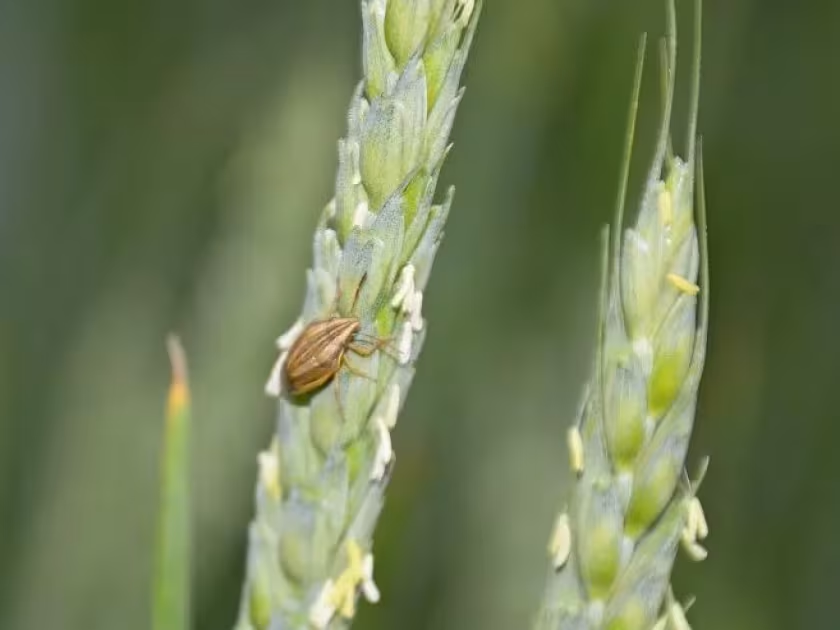
Description
How to identify
Podops is a genus of insects belonging to the Scutelleridae (shield-backed bugs) or Pentatomidae family. The most prominent feature of these bugs is the large scutellum, which covers almost the entire dorsal part of the body.
Adult specimens usually measure between 7 and 10 mm in length. The specific name is often associated with the sharp, pointed pronotal angles located on the thorax, which give the insect a distinct appearance.
Their coloration is generally cryptic, ranging from brown to dark gray, enabling them to blend in perfectly with soil, dried debris, and vegetation, which makes them hard to spot.
Nymphs go through several instars. They are smaller than adults and lack fully developed wings, often displaying a lighter, brownish-yellow color that changes as they mature.
Because they are secretive and often inhabit the base of plants or the soil surface, detection requires careful inspection or the use of specific monitoring traps.
What it damages
This pest mainly attacks cereal crops such as wheat, barley, rye, and oats. It also thrives on various wild grasses that act as alternative hosts during off-seasons.
The damage is caused by the insect's piercing-sucking mouthparts. They insert their stylets into the plant tissues, particularly the stems, to extract sap, which disrupts the plant's nutrient flow.
Severe infestations during the early stages of growth, such as tillering, can lead to stunted plant development, stem curvature, and necrosis at the feeding sites.
By weakening the plant structure, Podops bugs create entry points for secondary pathogens, including various fungal infections that can further reduce the quality and yield of the grain.
In cases of high population density, the cumulative effect of their feeding can result in significant yield losses and lower the overall density of the cereal stand.
When it appears
The lifecycle of this bug is typically univoltine, meaning it produces one generation per year. Adults overwinter in protected areas such as field margins, hedge rows, or shallow layers of soil.
Emergence starts in early spring when temperatures rise consistently, triggering the insects to migrate towards cereal crops in search of food and reproduction sites.
After a period of supplemental feeding, the bugs mate, and females lay eggs on the lower leaf surfaces or the lower stem sections of host plants.
Nymphs hatch approximately two weeks later, depending on environmental factors. They pass through several developmental stages throughout the summer while feeding on host plants.
As autumn arrives and the harvest concludes, the new generation of adults seeks shelter for the winter, marking the end of the active season on the fields.
Signs of infestation
The first indicator of an infestation is the appearance of white spots on the stems, which eventually turn into brown or necrotic lesions as the tissue dies due to sap extraction.
Stressed plants often exhibit reduced growth rates and yellowing of the leaf tips, which can sometimes be confused with nutrient deficiencies by inexperienced observers.
Careful examination of the base of the stems during cooler parts of the day, such as early morning, often reveals the presence of adult insects or nymphs.
A patch-like distribution of damaged or weakened plants across the field is a common sign of a localized Podops population spreading from the field edges.
The presence of damaged wild grasses in the field periphery serves as an early warning sign that the pests might migrate to the main crop shortly.
Control measures
Effective management requires an integrated approach that prioritizes agrotechnical practices to disrupt the pest's life cycle before chemical interventions become necessary.
Deep plowing of the fields immediately after harvest is a vital strategy, as it destroys the overwintering sites and reduces the population size for the following season.
Maintaining clean field borders by controlling weeds and grasses eliminates the bug's primary reserves and prevents them from moving into the main cereal stands.
Chemical control should be implemented only if the pest density exceeds the economic threshold, using authorized insecticides that target nymphs and adults effectively.
Regular monitoring using sweep nets and visual inspections is recommended to ensure that control measures are applied at the most vulnerable stage of the pest's development.
Taxonomy
- Latin name
- Podops
- Order
- Hemiptera (bugs, aphids, leafhoppers)
- Family
- Pentatomidae
- EPPO code
- PDPSSP
Discussion
No discussions yet — be the first.