
Podisus placidus
Podisus placidus
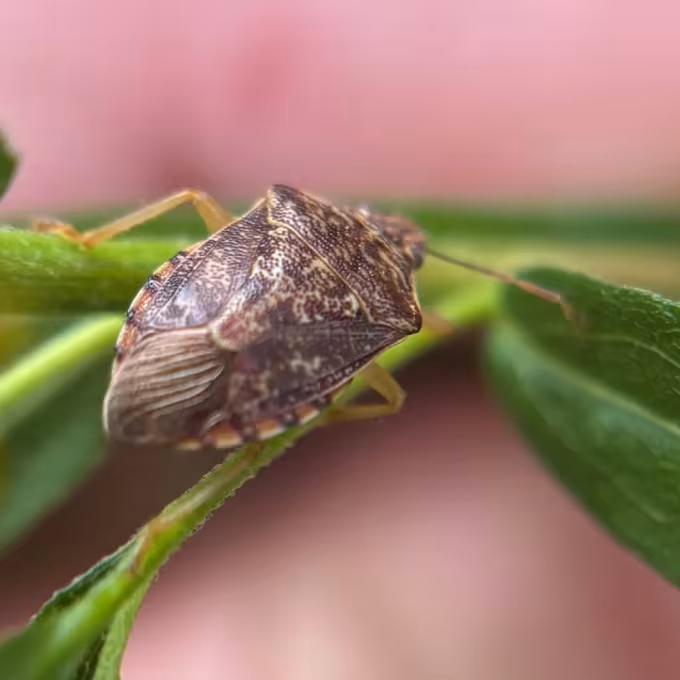
Description
How to identify
Podisus placidus is a species of predatory stink bug within the Pentatomidae family, specifically belonging to the subfamily Asopinae. Adult specimens typically possess a shield-shaped body, generally light brown or yellowish in color with darker speckled markings.
A distinctive morphological feature of this species is the presence of sharp, thorn-like projections on the pronotal angles, which are directed laterally. Adults typically measure between 10 and 12 millimeters in length and feature a sturdy, piercing-sucking proboscis.
The life cycle proceeds through incomplete metamorphosis, consisting of egg, nymphal, and adult stages. Nymphs often display vibrant coloration that changes through several instars before maturity.
These insects are highly agile and tend to inhabit the dense foliage of trees and shrubs. While they are essentially predators, their behavior can adapt based on the availability of their typical prey.
Accurate field identification requires close examination of the pronotal thorns and abdominal patterns, as many related stink bug species share a similar general appearance.
What it damages
Although primarily predaceous, Podisus placidus may cause damage to cultivated plants if their natural prey population is low. In such cases, they may feed on plant fluids, leading to agricultural losses.
Target crops typically include deciduous fruit trees and various berry bushes located near forest margins. They puncture buds, young shoots, and foliage to extract plant cell contents.
The feeding process results in necrotic lesions and tissue deformation. In sensitive crops, these punctures can lead to stunted growth or the drying out of terminal buds.
Secondary infections are a common consequence, as the feeding sites become vulnerable to fungal and bacterial pathogens. This can lead to fruit rot and overall tree stress.
Significant infestations are rare but can negatively impact fruit yield and quality, especially in organic orchards where broad-spectrum pesticides are not utilized.
When it appears
Activity begins in early spring, as temperatures rise above 10-12 degrees Celsius. Adults emerge from their overwintering sites, typically hidden in leaf litter or under loose tree bark.
The peak reproductive period occurs during the summer months, during which time multiple overlapping generations may develop depending on the regional climate.
In temperate zones, the species typically completes one to two generations annually. Warm, humid weather conditions often accelerate the development of nymphal populations.
As autumn approaches and temperatures drop, adults seek protected micro-habitats to enter winter diapause. This is the stage where population regulation is most effective.
Monitoring efforts should be focused on the late spring period, targeting the first generation of nymphs to prevent rapid population increases later in the season.
Signs of infestation
Initial signs of presence include small, translucent, or yellow spots on leaves that eventually dry into irregular holes or necrotic patches. This is a direct result of their piercing mouthparts.
Wilting of terminal growth or curling of young leaves often suggests the injection of saliva during the feeding process, which contains enzymes that breakdown plant tissues.
Egg clusters, typically deposited in neat, barrel-shaped groupings on the underside of leaves, serve as a clear indication of a breeding population within the planting area.
The presence of nymphs, which are often found congregating together, indicates active colonization. Unlike adults, nymphs tend to stay grouped until they reach later stages of development.
Small, dark fecal spots left on leaf surfaces or fruit are also characteristic evidence that a colony of shield bugs has been feeding in the immediate vicinity.
Control measures
Good orchard sanitation, including the removal of leaf litter and debris, is essential for reducing overwintering sites and keeping the population in check.
Biological control strategies can be highly effective, as the species is susceptible to various native parasitic wasps. Encouraging biodiversity in the garden helps maintain a natural balance.
Chemical control should be considered a last resort. If necessary, use selective insecticides that specifically target hemipteran pests while sparing beneficial predatory insects.
Manual removal of egg masses and adult bugs in the early morning hours can be a viable and eco-friendly management practice for small-scale gardening or hobby orchards.
- Applying sticky bands to tree trunks to monitor activity.
- Pruning and destroying heavily infested branches.
- Encouraging natural bird populations in the garden.
Taxonomy
- Latin name
- Podisus placidus
- Order
- Hemiptera (bugs, aphids, leafhoppers)
- Family
- Pentatomidae
- EPPO code
- PODIPL
Discussion
No discussions yet — be the first.