
Spined soldier bug
Podisus maculiventris
Description
How to identify
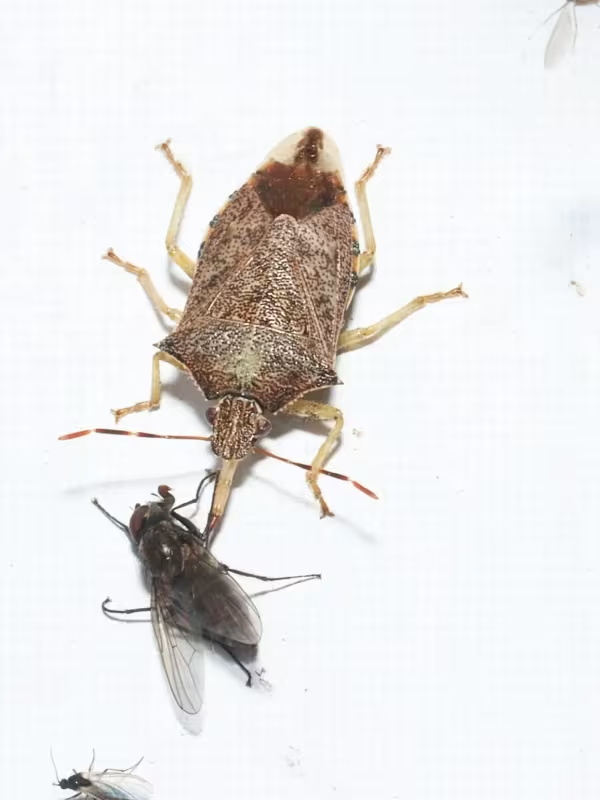
The spined soldier bug, scientifically known as Podisus maculiventris, is a member of the Pentatomidae family, characterized by a distinct shield-shaped body measuring 10–13 mm in length.
Adults typically display a brownish or yellowish-tan coloration, heavily speckled with small dark punctures, which provides effective camouflage against various plant surfaces.
The key diagnostic feature of this species is the sharp, prominent spine protruding from each shoulder of the pronotum, which easily distinguishes it from other similar bugs.
The eggs are barrel-shaped and laid in clusters, usually consisting of 20 to 70 eggs, typically glued to the underside of host leaves to ensure protection.
Nymphs undergo five developmental stages (instars), where they progressively develop wing pads and change their coloration, often appearing more brightly patterned than the adults.
What it damages
While Podisus maculiventris is primarily recognized as a beneficial predatory insect that feeds on harmful caterpillars and beetle larvae, it can act as a plant pest under certain conditions.
When prey populations are scarce, these bugs shift their diet to plant sap, damaging various vegetables such as tomatoes, peppers, and eggplants, as well as field crops like corn and soybeans.
The damage occurs when the insect inserts its piercing-sucking mouthparts into plant tissue, injecting enzymes that liquefy internal contents and cause localized necrosis.
This feeding behavior often leads to stunted growth of terminal shoots, leaf wilting, and significant fruit damage, which reduces overall crop yield and commercial quality.
The combination of direct injury and the potential introduction of secondary pathogens through the feeding wounds poses a serious threat to intensive agricultural production.
When it appears
Adult bugs overwinter in protected sites such as leaf litter, under tree bark, or in dense plant debris, emerging in early spring as temperatures begin to rise.
The peak period of activity and reproduction occurs during the summer months, with development rates highly dependent on ambient heat and the availability of prey.
Depending on the geographic region, this species can produce multiple generations per season, necessitating regular field scouting throughout the summer.
As autumn approaches and day length shortens, the population begins to migrate toward hibernation sites to survive the cold winter months.
Monitoring is most critical during the active growth phases of crops, particularly when environmental stress reduces the natural availability of insect prey.
Signs of infestation
The presence of egg clusters on the lower surfaces of leaves is the most reliable early indicator of an active population within a crop field.
Visual detection of feeding punctures on fruits or stems, often accompanied by small necrotic spots or discoloration, confirms that the bugs have begun to feed.
Terminal shoots may exhibit signs of wilting or terminal dieback, which is a common consequence of sustained feeding on the vascular tissues of the plant.
Observing nymphs of various sizes clustering together on foliage is a strong indicator of successful local reproduction and a potential future population boom.
- Egg masses on the underside of leaves.
- Small necrotic spots on fruits.
- Wilting of young plant shoots.
- Clusters of nymphs on foliage.
Control measures
Control measures must be carefully balanced because Podisus maculiventris is a major natural enemy of other agricultural pests; broad-spectrum insecticides can do more harm than good.
If population thresholds are exceeded, the use of selective insecticides that have minimal impact on predatory species is highly recommended for integrated management.
Cultural practices, such as removing crop debris and managing weeds during the off-season, can effectively reduce the available overwintering habitat for these insects.
Feronome trapping is an excellent tool for monitoring population density and timing potential interventions accurately to avoid unnecessary pesticide applications.
Encouraging natural biological control by protecting indigenous egg parasitoids can help maintain the spined soldier bug population below damaging levels.
Taxonomy
- Latin name
- Podisus maculiventris
- Order
- Hemiptera (bugs, aphids, leafhoppers)
- Family
- Pentatomidae
- EPPO code
- PODIMA
Discussion
No discussions yet — be the first.