
Sapporo wingless grasshopper
Podisma sapporensis
Description
How to identify
The Sapporo wingless grasshopper (Podisma sapporensis) belongs to the order Orthoptera and the family Acrididae. This insect is medium-sized and is distinguished by the absence of functional wings, which limits its ability to migrate over long distances.
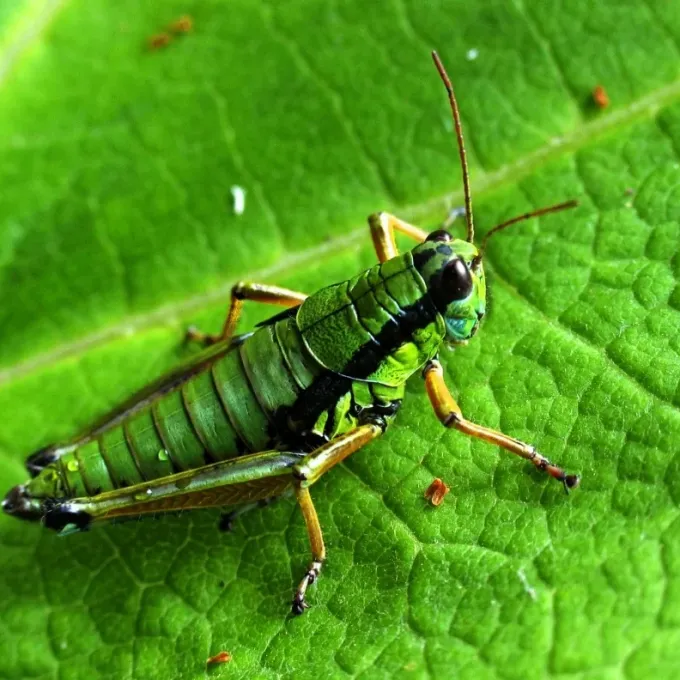
Adults have a stocky build, with coloration ranging from olive-green to brownish, often featuring dark lateral stripes along the body. They possess relatively short antennae, which is characteristic of the family members.
This species prefers open grassy areas, forest edges, and clearings where they find an optimal microclimate for reproduction. The lack of developed wings is compensated for by powerful hind legs, allowing for quick, sharp jumps.
Females lay their eggs in the soil, creating egg pods. Embryonic development occurs within the egg, ensuring high survival rates for the offspring even under harsh winter conditions.
Larvae resemble smaller versions of adults and progress through several instars, gradually increasing in size and developing reproductive organs.
What it damages
The pest has a wide host range, demonstrating polyphagy. The most significant damage is caused to cereal crops, such as wheat, barley, and oats, as well as perennial grasses.
Grasshoppers damage vegetative plant parts by feeding on leaves and stems. During mass outbreaks, this pest can destroy a significant portion of green biomass in a short period.
In addition to cereals, garden and industrial crops located near the insect's natural habitat are frequently affected. Damage is caused by both larvae and adults.
The greatest threat to crops occurs during drought periods when the natural food base (wild grasses) dries up, causing pests to migrate en masse to cultivated fields.
Beyond direct destruction of foliage, damaged plants become vulnerable to secondary infections that penetrate through the tissues wounded by the grasshopper's mouthparts.
When it appears
The life cycle of this species is strictly linked to seasonal temperature changes. Overwintering occurs in the egg phase within the top layer of the soil.
Larval emergence from eggs begins in the spring when stable positive temperatures warm the soil to the necessary levels.
The active feeding period for larvae occurs in early summer. During this time, insects grow rapidly and require large volumes of plant food.
Adults (imagos) appear in the second half of summer when metamorphosis is complete. During this period, they reach sexual maturity and begin reproduction.
In autumn, after eggs are deposited in the soil, the life cycle of the adults concludes, and the population naturally declines until the next spring cycle.
Signs of infestation
The first sign of the pest's presence is the appearance of characteristic ragged edges on cereal leaves, which differs from damage caused by rodents.
The presence of a large number of jumping insects in the crops during visual inspection indicates infestation.
In early stages, damage is often localized along the edges of fields bordering non-arable land, forest belts, or pastures.
The presence of excrement in the form of small granules on leaves and under plants serves as additional evidence of the pest's active feeding.
In cases of high density, areas with completely defoliated stems may be observed, leading to premature lodging or total loss of the harvest.
Control measures
The foundation of control is the agrotechnical method: deep autumn plowing helps destroy egg pods in the soil, exposing them to freezing temperatures.
An effective practice is mowing weed vegetation along field edges, which eliminates breeding grounds and primary food sources for the pests.
When the threshold population level is reached, the application of broad-spectrum insecticides from the pyrethroid or organophosphate groups is recommended.
It is important to spray during morning or evening hours when the pest is most active and less hidden within the dense vegetation.
The use of biological preparations based on entomopathogenic fungi or bacteria is a promising, environmentally safe method for population management.
Taxonomy
- Latin name
- Podisma sapporensis
- Order
- Orthoptera (locusts)
- Family
- Acrididae
- EPPO code
- PODMSA
Discussion
No discussions yet — be the first.