
Pnorisa
Pnorisa
Description
How to identify
The genus Pnorisa belongs to the family Acrididae (grasshoppers) within the order Orthoptera. These insects are typically found in arid and semi-arid grassland ecosystems.
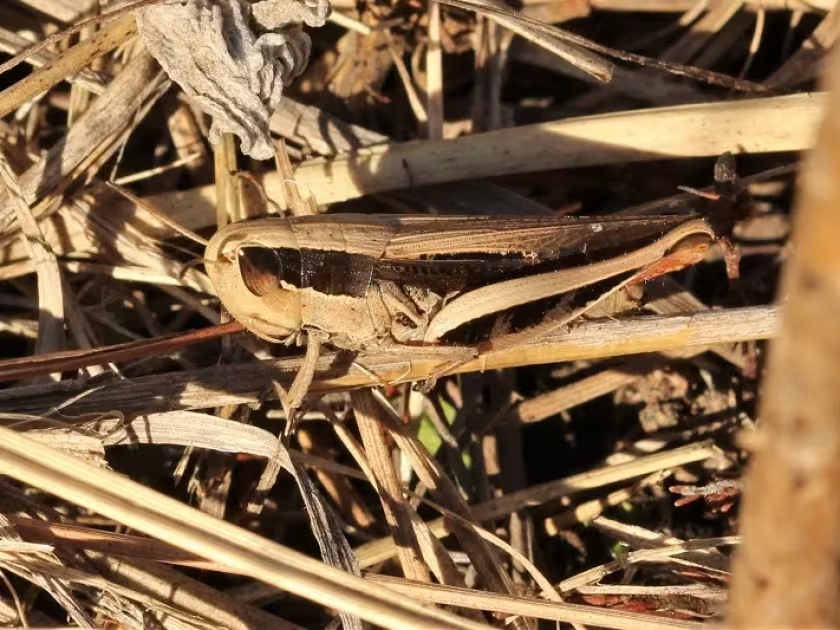
Physically, they possess camouflaging coloration that blends in with dry vegetation, which is a classic adaptation for insects living in open steppe environments.
The life cycle is characterized by incomplete metamorphosis, passing through egg, nymph, and adult (imago) stages. Eggs are laid in the soil and typically overwinter.
Nymphs are wingless versions of adults and go through several instars, feeding on grasses and becoming more destructive as they grow larger.
Their identity is often confirmed by specific acoustic signals produced by males to attract females, which is a reliable way for specialists to differentiate between species.
What it damages
Pnorisa primarily feeds on native grasses; however, when natural food sources are depleted, they readily migrate to adjacent agricultural fields.
They target key cereal crops, including wheat, barley, and corn, especially during the early vegetative stages when the plants are tender and highly nutritious.
Damage involves the consumption of leaves and stems, which significantly stresses the plant, reducing its ability to undergo photosynthesis and reach maturity.
The loss of foliage can lead to stunted plant growth, and in cases of severe infestation, complete defoliation of seedling patches occurs.
By attacking the reproductive organs or the developing head of the grain, they cause direct yield loss, affecting both the quality and quantity of the harvest.
Signs of infestation
Visible signs include irregular, jagged feeding marks along the margins of leaves, often referred to as "notching," which is common among orthopteran pests.
High levels of frass (excrement) accumulation around the base of the plants indicate that the insects are actively feeding and establishing a colony.
Thinning of crop density, particularly at the edges of fields nearest to uncultivated land, serves as a major warning sign of infestation.
During the day, sudden disturbances cause large numbers of grasshoppers to leap or fly, providing immediate visual evidence of the infestation level.
Uneven development of ears or panicles in cereal crops often indicates that the plant has been targeted by these pests during its critical growth phase.
Control measures
Cultural control is the most effective approach, particularly deep plowing after harvest, which disrupts the overwintering eggs buried in the soil.
Maintaining clean field borders by removing weeds and grasses limits the availability of nesting sites and reduces the primary breeding population.
Chemical control involving selective insecticides should be applied only when population thresholds are exceeded to minimize the impact on non-target species.
Regular field scouting using standard insect sampling methods is essential for early detection, allowing for targeted spot treatments rather than field-wide applications.
Encouraging biodiversity by protecting natural predators, such as insectivorous birds and parasitic wasps, provides long-term suppression of the locust population.
Taxonomy
- Latin name
- Pnorisa
- Order
- Orthoptera (locusts)
- Family
- Acrididae
- EPPO code
- PNORSP
Discussion
No discussions yet — be the first.