
Green stink bug
Plautia affinis
Description
How to identify
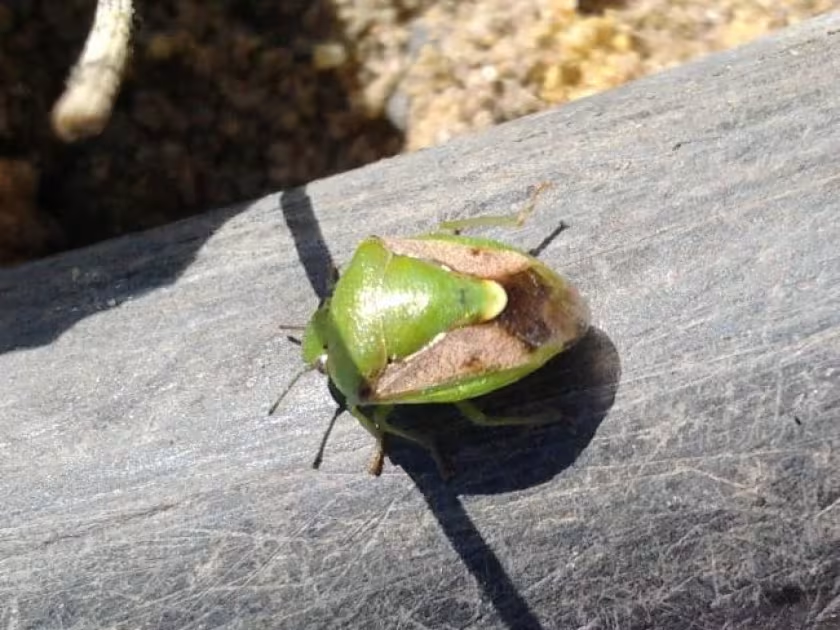
Adult Plautia affinis possess an oval, slightly flattened body, reaching lengths of 9–12 mm. Their coloration is predominantly green, and they feature a prominent scutellum that covers a large portion of the abdomen, which is a classic characteristic of the shield bug family.
Nymphs undergo five stages of development, gradually transitioning from a brownish, yellowish appearance to a more vibrant green as they mature. Their mouthparts are of the piercing-sucking type, perfectly adapted for extracting sap from various plant tissues.
Taxonomically, this species belongs to the order Hemiptera and the family Pentatomidae. These insects are equipped with scent glands that release a pungent odor when the insect is disturbed, serving as a primary defense mechanism against predators.
The species is highly adaptable to various environments but thrives in warm, temperate climates with adequate humidity. They are often found on the undersides of leaves, which allows them to remain elusive during initial crop inspections.
The life cycle involves hemimetabolous metamorphosis, meaning nymphs resemble adults but lack functional wings. They start feeding shortly after hatching, growing rapidly through multiple molts until they reach the reproductive adult stage.
What it damages
The green stink bug is a generalist pest, feeding on a wide range of plants, including vegetables, legumes, fruits, and ornamental crops. Their broad diet makes them a significant threat to diverse agricultural and gardening operations.
Economic damage is most severe during the fruiting phase. As they feed on developing ovaries and fruit, they inject saliva that causes cellular breakdown. This leads to premature fruit drop, severe deformation, and stunted growth of the produce.
Feeding punctures serve as entry points for secondary pathogens, such as bacteria and fungi, which can cause internal rot. This reduces the quality, shelf life, and overall market value of the harvested crops significantly.
In addition to physical damage, the saliva injected by the bug imparts an unpleasant taste to the fruit. The flesh around the feeding site often develops a spongy texture and necrotic spots, rendering the produce unpalatable for consumers.
Heavy infestations can lead to substantial yield losses, often exceeding 30-50% in vulnerable crops if not managed properly. Furthermore, repeated feeding can weaken the overall vitality of the host plant, making it more susceptible to other stressors.
When it appears
Adults emerge from overwintering sites in early spring as temperatures consistently rise above 12–15°C. They immediately seek out host plants to feed and initiate their mating cycle to establish the first generation of the season.
The peak emergence of nymphs typically occurs in early summer, coinciding with the rapid development of fruits. During this period, the pest population increases significantly, necessitating diligent monitoring of fields and garden beds.
The life cycle from egg to adult takes approximately 30 to 45 days, allowing for 2–3 generations per season in favorable climates. This rapid reproductive rate can cause population explosions if weather conditions remain stable.
As temperatures decline in autumn, adults migrate to overwintering shelters. They typically inhabit leaf litter, dense weeds, or cracks in buildings and fences, entering a state of diapause until the return of warmer weather in the following spring.
While extreme weather conditions like heat waves or excessive rain can impact survival rates, the species remains resilient due to its ability to find diverse refuges. Seasonal management strategies should focus on preventing these population spikes.
Signs of infestation
Presence of the pest can be confirmed by spotting adults or nymphs on plant stems and fruits. A characteristic strong, pungent smell is often detectable in areas with high bug density, even before visual confirmation is made.
- Small, dark, or whitish necrotic spots on the fruit surface.
- Deformation, bumpiness, or puckering of developing fruits.
- Premature abscission (dropping) of flowers and small fruits.
- Accumulation of exuviae (shed skins) on the foliage.
- Discolored, soft, or spongy patches under the skin of the harvested produce.
Inspecting the undersides of leaves is crucial, as this is where nymphs often congregate during the heat of the day. Regular monitoring of host plants, especially during fruit set, is the best strategy for early detection.
Damaged fruits often show signs of stunted development, appearing smaller or misshapen compared to healthy ones. When sliced, the internal tissue may show pale or brown streaks, which are clear indicators of bug feeding activity.
The condition of nearby weeds should also be monitored, as these often serve as a reservoir for the pest. Controlling these "bridge" plants is an effective way to minimize the risk of the stink bugs migrating into your primary crop area.
Control measures
Cultural control measures include thorough soil cultivation in autumn to disrupt overwintering sites and the removal of plant debris from the garden. These steps effectively reduce the number of adults that survive until the following season.
Biological control can be achieved by encouraging the presence of natural enemies, such as egg parasitoids. Preserving these beneficial insects in the ecosystem helps suppress stink bug populations without the need for chemical intervention.
Chemical control with insecticides should be reserved for cases where pest populations exceed the economic threshold. It is essential to select products with short pre-harvest intervals to ensure safety and minimize environmental impact.
The use of pheromone traps or light traps can be very effective for monitoring and controlling local populations. These tools allow for precise application of control measures only when and where they are truly needed.
Integrating crop rotation, weed management, and the use of targeted biological products provides a sustainable way to keep green stink bug populations in check, ensuring higher yields and better quality produce throughout the growing season.
Taxonomy
- Latin name
- Plautia affinis
- Order
- Hemiptera (bugs, aphids, leafhoppers)
- Family
- Pentatomidae
- EPPO code
- PLAUAF
Discussion
No discussions yet — be the first.