
Plautia bug
Plautia
Description
How to identify
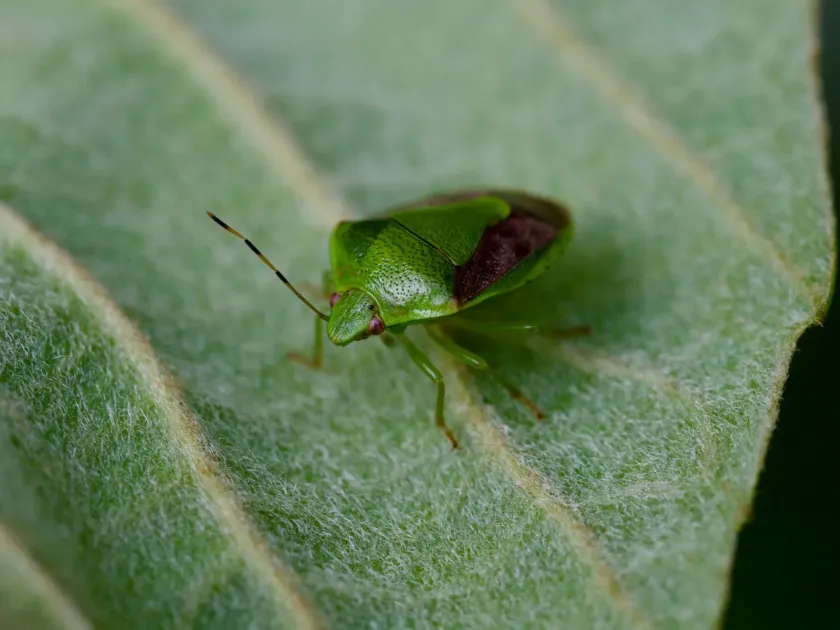
The Plautia bug (Plautia stali) belongs to the Pentatomidae family, commonly known as shield bugs. The adult insect has a typical shield-shaped body, colored in brownish-green or brown tones with characteristic light or reddish markings on the sides.
Adult insects usually measure between 10 and 12 millimeters in length. The head of the imago is relatively small, with well-developed antennae that assist the insect in navigating to locate host plants and mating partners.
Nymphs (larvae) look like miniature versions of the adults, although they lack fully developed wings. Throughout their growth stages, nymphs undergo several molts, gradually changing their color and body proportions.
This pest is highly mobile and capable of active flight over significant distances in search of suitable food sources, which makes it challenging to pinpoint and localize infestation hotspots.
Adults overwinter in sheltered locations, such as under fallen leaves, in plant debris, tree bark crevices, or dry weed stems, which makes them highly resistant to harsh winter conditions.
What it damages
The Plautia bug is a polyphagous pest that causes significant damage to a wide range of agricultural crops. Vulnerable species include fruit trees, berry bushes, vegetable crops, and even certain cereal varieties.
The pest poses a particular threat to peaches, apples, pears, and citrus fruits. In orchards, these bugs damage developing ovaries and ripening fruits, leading to deformation and reduced marketability of the produce.
Mass infestations have also been recorded in crops such as soybeans, tomatoes, eggplants, and other vegetables. The pest pierces the fruit skin or stems, sucking plant sap from internal tissues.
Necrotic spots form at the puncture sites, the plant tissue hardens, and corky tissue develops, rendering the produce unsuitable for long-term storage or sale.
Severe infestations can lead to premature fruit drop, stunted plant growth, and overall yield reduction, and in cases of high population density, may lead to the total loss of the commercial harvest.
When it appears
The activity of the bug begins in spring when the average daily temperature becomes consistently positive. The emergence from hibernation sites often coincides with the beginning of the growing season for most fruit and berry crops.
Breeding occurs during the summer months. Females lay eggs in compact clusters, usually on the underside of leaves or on the surface of fruits, selecting the most protected parts of the plant.
Depending on regional climatic conditions and the availability of food sources throughout the summer, one to several generations of the pest can develop in a single season.
Peak population density is usually observed in the second half of summer, when fruits begin to ripen, attracting adults and their larvae for intensive feeding.
With the arrival of autumn cold, bugs begin migrating to their overwintering sites, making autumn cleanup of orchards and surrounding areas critical for reducing the population for the following year.
Signs of infestation
The primary sign of a pest infestation is the presence of small punctures on fruits, around which depressed spots and surface deformities eventually develop.
When cutting into a damaged fruit, one can observe darkening and necrosis of tissues in areas where the insect injected its digestive enzymes along with its saliva.
Chlorotic spots may appear on leaves, and in cases of heavy infestation, general wilting of young shoots may occur due to the loss of nutrients caused by stem punctures.
A specific sign is the characteristic unpleasant odor released by the bug when threatened, which allows agronomists to detect the pest's presence during orchard inspections.
The presence of the insects themselves on the underside of leaves or on fruits during morning and evening hours is also a clear indicator that protective measures are required.
Control measures
Agricultural control methods include mandatory autumn removal of fallen leaves, tilling the soil around tree bases, and eliminating weeds that serve as shelter for overwintering individuals.
In private orchards, regular manual collection of insects during early morning hours, when their activity is minimal, is effective and helps significantly reduce the population density on smaller plots.
Using pheromone traps allows for monitoring pest population levels and making timely decisions regarding the application of chemical pesticides to protect crops.
In cases of mass outbreaks, broad-spectrum insecticides such as pyrethroids or organophosphates are used, strictly adhering to pre-harvest intervals to ensure safety.
Biological control includes supporting natural enemies of the pest, such as entomophages, which limit the number of eggs and larvae of the bug under natural conditions.
Taxonomy
- Latin name
- Plautia
- Order
- Hemiptera (bugs, aphids, leafhoppers)
- Family
- Pentatomidae
- EPPO code
- PLAUSP
Discussion
No discussions yet — be the first.