
Pirate spider
Pirata
Description
How to identify
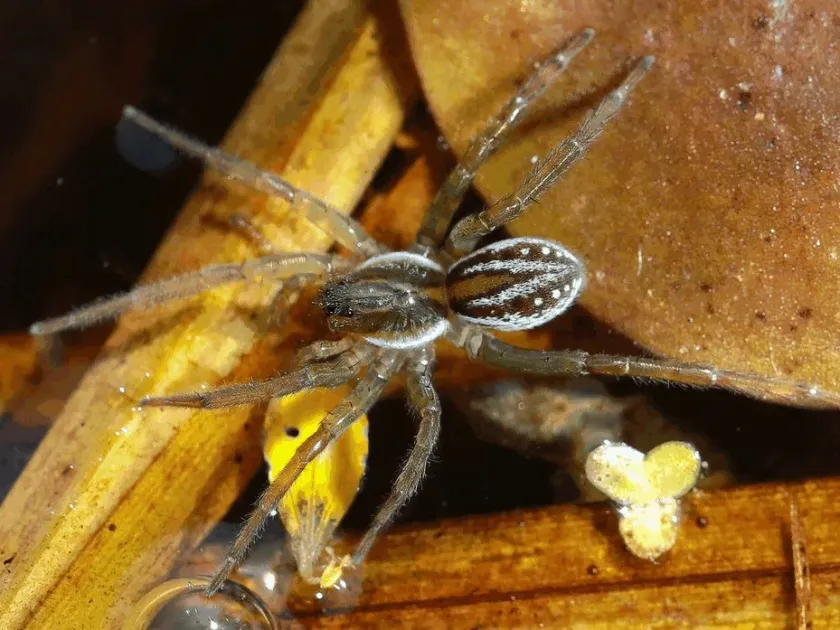
The Pirata genus, commonly known as pirate spiders, belongs to the family Lycosidae (wolf spiders). These spiders are active hunters that rely on speed and camouflage rather than silk webs to catch their prey.
They are characterized by a distinct V-shaped marking on their cephalothorax. Their body color is typically brownish or grey, providing excellent camouflage against soil and moist environments.
These spiders thrive in damp habitats, often found in irrigated fields, rice paddies, and wetlands. They are essentially ground-dwellers that prefer moisture-retaining soil structures.
Their life cycle includes maternal care, where the female carries the egg sac attached to her spinnerets. After hatching, the spiderlings ride on the female's back for several days.
In the agricultural context, these spiders are recognized as important biological agents that help manage the populations of other small insects within the field.
What it damages
Pirate spiders are not pests. Extensive agricultural observations confirm that they do not feed on plant tissues, nor do they cause any damage to crops or agricultural yields.
They act as generalist predators, feeding on a wide variety of small insects and larvae that are potentially harmful to crops. By preying on these organisms, they help keep pest populations in check.
The presence of Pirata in a field is a sign of a functioning ecosystem where natural enemies provide free pest control services.
There is no economic injury level (EIL) associated with these spiders because they are strictly carnivorous and do not damage plant infrastructure.
Labeling them as pests is scientifically incorrect; they are beneficial arthropods that support sustainable farming practices by reducing the need for chemical intervention.
Control measures
No control measures are necessary for pirate spiders, as they do not threaten crop health. On the contrary, their preservation should be encouraged.
Farmers should avoid broad-spectrum insecticides, which harm beneficial predators like Pirata and can lead to secondary pest outbreaks.
Implementing Integrated Pest Management (IPM) strategies ensures that these spiders continue to provide natural biocontrol services within the field.
- Maintain soil moisture levels.
- Reduce chemical pesticide usage.
- Preserve field borders and vegetative cover to support spider habitats.
Promoting the population of pirate spiders is a low-cost and environmentally friendly method to enhance the overall stability and health of agricultural land.
Taxonomy
- Latin name
- Pirata
- Family
- Lycosidae
- EPPO code
- PIRTSP
Discussion
No discussions yet — be the first.