
Boehmeria scale
Pinnaspis boehmeriae
Description
How to identify
The Boehmeria scale (Pinnaspis boehmeriae) is a member of the Diaspididae family, commonly known as armored scale insects.
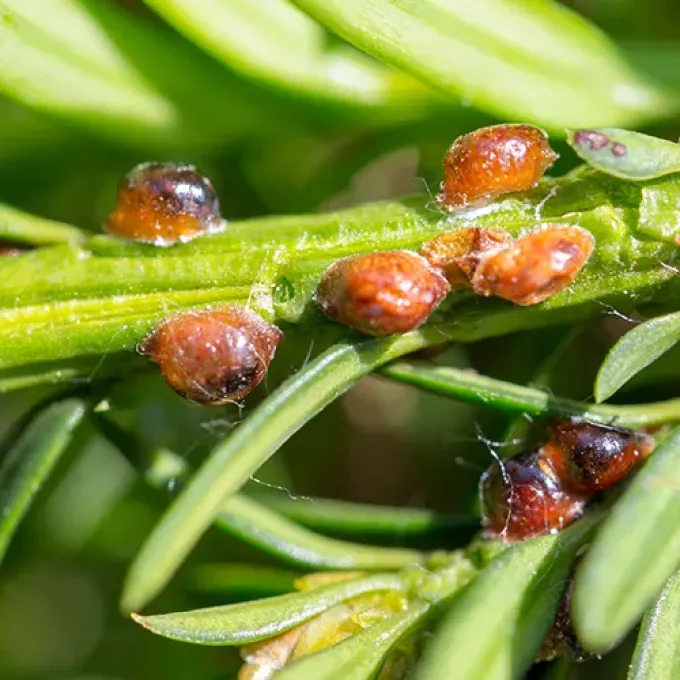
The female insect is characterized by a hardened, elongated, brown-colored scale that protects its body and eggs from the environment and predators.
Adult males are winged and significantly smaller than females, serving primarily for reproduction, while females are stationary throughout their adult stage.
The biological cycle starts with mobile "crawlers" (first-instar nymphs), which are the only stage capable of moving to new locations on the plant host.
Microscopic examination is often required to distinguish this specific species from other scale insects due to their similar appearance and protective armor.
What it damages
This pest mainly targets tropical and decorative plants, causing damage by piercing plant tissues with their mouthparts and sucking out sap.
Continuous feeding leads to the depletion of the host plant's energy, which manifests as stunted growth, leaf chlorosis, and general wilting.
Small-scale infestations might go unnoticed, but rapid population growth can result in widespread tissue necrosis and branch dieback.
The removal of cell fluids stresses the plant, making it highly susceptible to secondary attacks from other pathogens and environmental stresses.
Heavily infested plants often lose their decorative value, which is particularly detrimental in nursery and indoor gardening environments.
Signs of infestation
Signs of an infestation include the appearance of tiny, stationary, scale-like bumps on stems, twigs, and the undersides of leaves.
Affected plants often show patches of yellowing on the foliage, which eventually leads to leaf drop and decreased vigor of the plant.
The presence of honeydew (if produced) or the development of sooty mold on leaf surfaces indicates an active pest population that requires immediate attention.
Distorted and curled young shoots are another indicator that the plant's nutrient transport system is being compromised by scale feeding.
- Stationary scale-like bumps on branches
- Leaf yellowing and chlorosis
- Slow or distorted growth patterns
- Sooty mold accumulation
- Premature foliage loss
Control measures
Effective control begins with the physical removal of heavily infested plant parts and wiping stems with a cloth dipped in mild insecticidal soap.
Systemic insecticides are generally recommended for severe infestations, as they are absorbed by the plant and kill the insects upon ingestion of the sap.
Timing is critical: applications should coincide with the crawler stage, as they are the most vulnerable to chemical treatments before developing their armor.
Biological control, such as introducing predatory mites or specific parasitoid wasps, can be highly effective in managed greenhouse environments.
Preventive measures include strict quarantine of new plants and maintaining proper humidity, as excessive heat and dryness can accelerate scale reproduction.
Taxonomy
- Latin name
- Pinnaspis boehmeriae
- Order
- Hemiptera (bugs, aphids, leafhoppers)
- Family
- Diaspididae
- EPPO code
- PINNBO
Discussion
No discussions yet — be the first.