
Fathead minnow
Pimephales promelas
Description
How to identify
The fathead minnow (Pimephales promelas) is a member of the Cyprinidae family, often considered a nuisance in specific aquaculture settings.
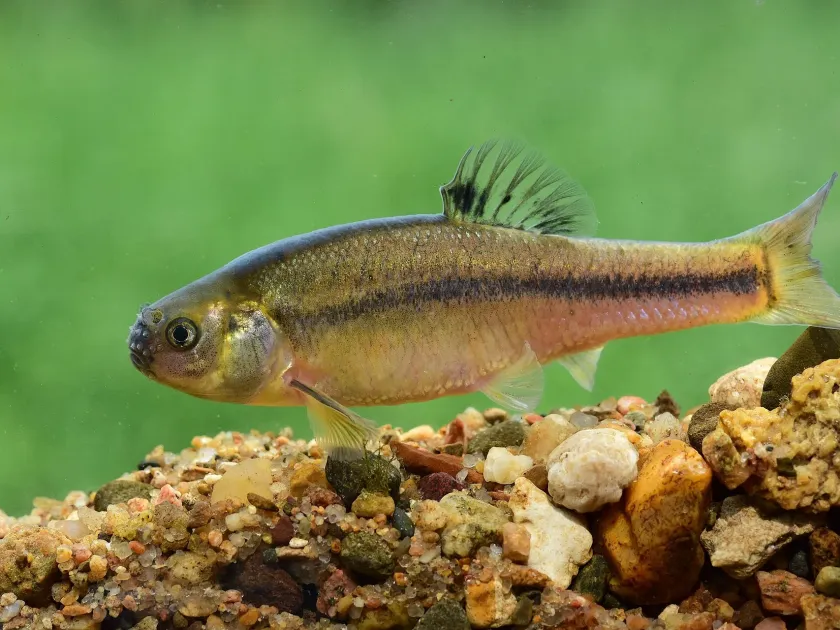
It is a small fish, typically 5–10 cm long, characterized by a blunt, rounded head and a dark lateral stripe running along the body.
These fish are exceptionally tolerant of poor water quality and low oxygen levels, allowing them to thrive where other species fail.
During the breeding season, males develop specialized, bony tubercles on their snouts and a dark vertical band on their bodies.
Their adaptability makes them a persistent competitor in managed freshwater ecosystems and agricultural ponds.
What it damages
The fathead minnow acts as a significant competitor for natural food sources, such as zooplankton, essential for the growth of target fish species.
By consuming invertebrates that would otherwise support larger, commercially valuable fish, they negatively impact production yields.
Overpopulation of this species leads to increased resource competition, causing stunted growth in the primary fish stock of the pond.
Their feeding activity disturbs the pond bottom, increasing water turbidity and interfering with the aquatic ecosystem balance.
Additionally, they can serve as vectors for various pathogens and parasites, threatening the overall health of the farm population.
When it appears
The activity cycle of the fathead minnow begins in spring as temperatures rise, triggering the start of the prolonged spawning season.
They can spawn multiple times throughout the summer, ensuring continuous population growth within the affected water body.
High summer temperatures accelerate their metabolism, leading to peak consumption of available resources in the pond.
In autumn, they remain active until water temperatures drop significantly, preparing for overwintering in deep or sheltered areas.
Winter survival is high due to their ability to tolerate hypoxic conditions, meaning they persist through the cold season.
Signs of infestation
Evidence of a fathead minnow infestation includes high concentrations of small fish observed in shallow shoreline areas.
Monitoring data often shows a decline in zooplankton density, indicating intense grazing pressure by the minnow population.
Reduced growth rates of cultured fish despite adequate supplementary feeding suggest competition from a robust minnow population.
Visual detection of small fish schools during routine pond management is a common sign of an established colony.
A decrease in the success of natural recruitment of other fish species is frequently attributed to the egg-predatory nature of the minnows.
Control measures
Complete pond drainage and subsequent drying of the basin is the most effective method for eliminating established populations.
Installing fine-mesh screens on inlet pipes prevents the accidental introduction of minnows from external water sources.
Biological control can be achieved by introducing predatory fish, such as largemouth bass or pike, to naturally reduce minnow numbers.
Selective harvesting using small-mesh seines during the early season helps to suppress population numbers before peak spawning occurs.
Strict quarantine protocols for any incoming fish stock are essential to ensure the containment of this invasive species.
Taxonomy
- Latin name
- Pimephales promelas
- Family
- Cyprinidae
- EPPO code
- PIMHPR
Discussion
No discussions yet — be the first.