
Bluntnose minnow
Pimephales notatus
Description
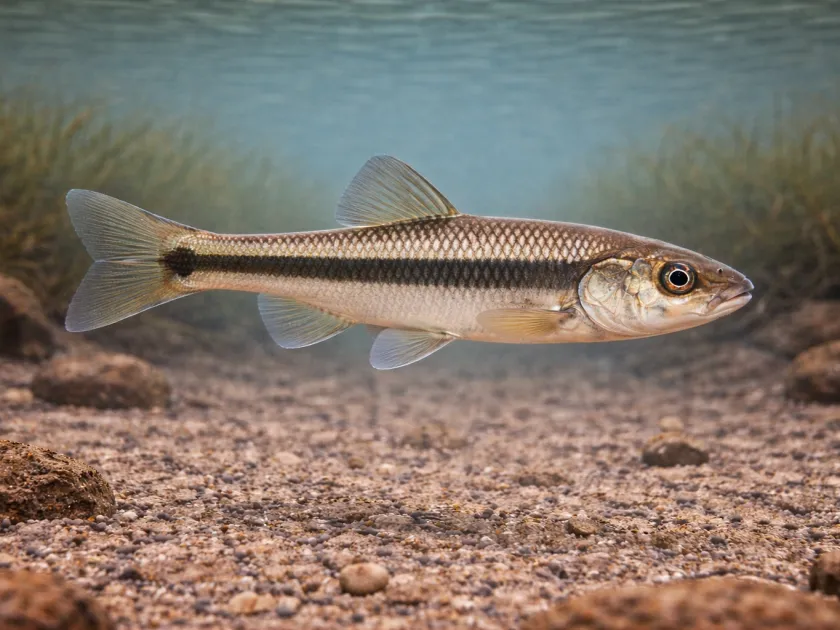
How to identify
It is important to clarify that Pimephales notatus, commonly known as the bluntnose minnow, is a freshwater fish species belonging to the family Cyprinidae.
The fish features a distinctive black spot at the base of the caudal fin and a relatively rounded, blunt snout, from which it derives its common name.
This species is native to North America and typically inhabits clear pools of creeks and small rivers, often living in association with benthic habitats.
From an agronomical standpoint, this organism is not a plant pest; it is a vertebrate aquatic animal that feeds on algae, small insects, and detritus.
Identification of this species in irrigation systems should be recognized as a feature of the aquatic ecosystem rather than an agricultural infestation threat.
What it damages
The bluntnose minnow does not cause damage to crops, vegetables, or any agricultural plants as it is restricted to aquatic environments.
There is no mechanism for this species to interact with plant tissues or cause economic loss in agricultural production.
The species does not feed on vegetation in a way that impacts farm output, as its diet is primarily composed of microorganisms and small aquatic invertebrates.
While aquatic organisms can sometimes block irrigation pumps, this is a mechanical maintenance issue rather than an act of plant pest damage.
Therefore, classifying this species as a pest is scientifically incorrect and misleading for field management purposes.
When it appears
The activity of Pimephales notatus is dictated by water temperature and the specific biological cycle of the species in its natural habitat.
Spawning typically occurs during the late spring and summer months when water temperatures are optimal for egg development.
Feeding activity is most intense during the warmer months, mirroring the general metabolic rates of freshwater teleost fish.
Winter dormancy or reduced activity occurs as water temperatures drop, leading the fish to deeper, more stable thermal zones.
These biological cycles are independent of agricultural planting, harvesting, or crop growth stages.
Control measures
No agricultural control measures are necessary for this species, as it is not a threat to agricultural crops.
The use of pesticides or other chemicals to target this fish is prohibited and would be detrimental to local water quality and biodiversity.
If the presence of the fish interferes with water flow in irrigation infrastructure, mechanical barriers or filters are the recommended approach.
Good agricultural practices should emphasize the protection of aquatic health in irrigation sources, ensuring that local wildlife remains undisturbed.
Consult with local environmental agencies if there are concerns regarding the impact of aquatic populations on local infrastructure.
Taxonomy
- Latin name
- Pimephales notatus
- Family
- Cyprinidae
- EPPO code
- HYBRNO
Discussion
No discussions yet — be the first.