
Stink bug
Piezodorus purus
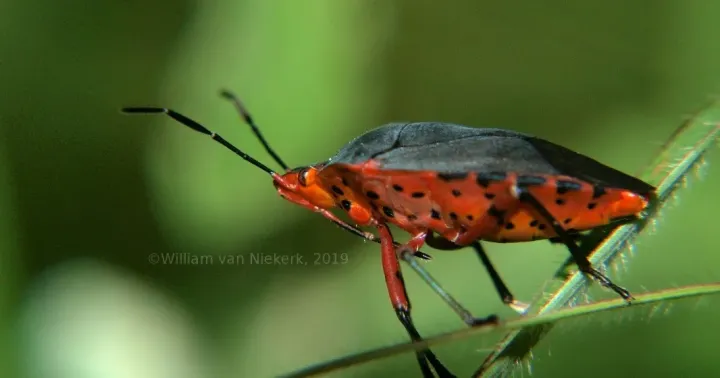
Description
How to identify
The Piezodorus purus belongs to the Pentatomidae family, commonly known as stink bugs. These insects possess a characteristic shield-shaped body, typically exhibiting green, yellowish, or brown hues that blend seamlessly with plant foliage.
They are equipped with specialized piercing-sucking mouthparts, which they use to penetrate plant tissues and extract sap, specifically targeting the nutrient-rich fluids found in developing pods and seeds.
The life cycle encompasses eggs, five nymphal instars, and the adult stage. Nymphs resemble miniature adults but are wingless and often exhibit distinct color patterns that change as they progress through different molting stages.
Adults overwinter in protected areas, including plant debris, leaf litter, and the upper soil layers at the edges of fields. Once spring temperatures reach suitable levels, they emerge to seek out favorable host plants.
Depending on environmental conditions, several generations can occur within a single growing season. High temperature and adequate humidity are critical drivers that accelerate their reproductive rate and population expansion.
What it damages
Piezodorus purus primarily damages leguminous plants (Fabaceae). They show a strong preference for feeding on reproductive organs, including floral buds, young pods, and developing seeds, which directly impacts the plant's reproductive success.
The primary symptom of damage includes shriveled seeds, pod abortion, and distorted fruit development. These injuries significantly reduce both the quantity and the nutritional quality of the harvested crop.
As the insects feed, they inject saliva containing enzymes into the plant tissue to aid digestion. This causes necrosis and cell death, which often results in premature yellowing and dropping of infected pods.
Economic damage is most severe when pest populations peak during the pod-filling stages of crop development. Under heavy infestation, entire portions of a crop may become non-marketable or fail to produce viable seeds.
Furthermore, the physical wounds inflicted by the stink bugs serve as entry points for secondary pathogens, such as fungi and bacteria, which can lead to further degradation of the plant's health and yield potential.
Control measures
Successful management of Piezodorus purus requires an integrated pest management (IPM) approach. The foundation of this strategy is the removal of alternative host weeds from field borders to minimize early-season pest colonization.
Regular field scouting using sweep nets or pheromone traps is essential to determine population density. Early detection allows for targeted interventions before the pest reaches a stage that causes irreparable economic loss.
Chemical control involving systemic or contact insecticides is recommended when economic thresholds are exceeded. Applications should be timed carefully to target nymphs before they mature into more resistant adult stages.
Biological control plays a significant role in suppressing stink bug numbers. Promoting the habitat of indigenous natural enemies, such as scelionid egg parasitoids and predatory insects, can maintain populations below damaging levels.
Farm-level biosecurity, such as deep plowing to bury overwintering sites, acts as a preventative measure to disrupt the insect's life cycle and decrease the starting population density for the upcoming season.
Taxonomy
- Latin name
- Piezodorus purus
- Order
- Hemiptera (bugs, aphids, leafhoppers)
- Family
- Pentatomidae
- EPPO code
- PIEZPU
Discussion
No discussions yet — be the first.