
Piezodorus hybneri
Piezodorus hybneri
Description
How to identify
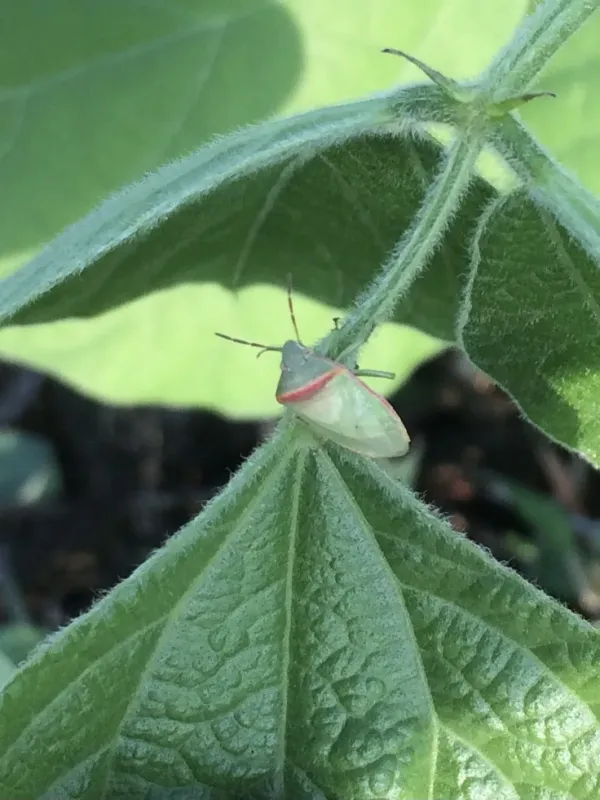
Piezodorus hybneri, commonly known as a type of red-banded stink bug, belongs to the family Pentatomidae. These insects are characterized by their shield-shaped bodies, typically reaching 8–12 mm in length.
Their color varies significantly, ranging from bright green to brownish or reddish hues, often with a distinctive transverse band across the pronotum. This coloration helps them blend into the foliage of their host plants.
The life cycle includes incomplete metamorphosis (hemimetabolous), passing through egg, five nymphal instars, and the adult stage. Nymphs of later instars look similar to adults but lack functional wings.
The insect possesses a piercing-sucking mouthpart (proboscis). This anatomy is specifically designed to penetrate the hard pods of leguminous crops to extract nutrient-rich fluids from developing seeds.
As a highly active pest, they thrive in warm and humid environments, often moving between different host plants as their preferred food sources progress through their developmental stages.
What it damages
The primary hosts for Piezodorus hybneri are legumes, with soybeans being the most economically significant. They feed directly on the pods and the internal seeds during the R3 to R6 growth stages.
Feeding damage leads to the abortion of young pods and the formation of shriveled, malformed seeds. This results in a drastic reduction in total yield and poor grain quality, making the crop unfit for premium markets.
The puncturing of the pod wall allows pathogens, such as fungi and bacteria, to enter the interior of the pod. This can lead to the rotting of seeds and further crop loss due to secondary infections.
In addition to yield loss, the feeding activity can disrupt the plant's physiological development. Severe infestations often lead to delayed senescence, where the plant remains green longer than it should, causing harvesting difficulties.
Damage is cumulative; the longer the bug population remains on the plant during the seed-filling stage, the greater the impact on the final oil and protein content of the soybeans.
When it appears
Piezodorus hybneri overwinters as an adult in sheltered locations, such as crop debris, leaf litter, or woodland borders. As temperatures rise in spring, they emerge to feed on early-season weeds.
The population builds up over several generations. Infestations typically peak in late summer when soybean pods are most attractive. The migration from alternate hosts to soybean fields is driven by the availability of preferred food.
Development rates are highly temperature-dependent. In warmer climates, multiple generations per year are possible, which creates continuous pressure on the crop throughout the reproductive cycle.
During the peak of the season, adults and nymphs may be found together on the same plants. This overlap makes population management difficult as insecticides must target multiple life stages simultaneously.
As autumn approaches and temperatures drop, adults initiate their migration toward hibernation sites, ending the cycle of active crop destruction for the season.
Signs of infestation
Visual identification of infestation includes the presence of small, dark, necrotic spots on the surface of the soybean pods. These represent the entry points of the bug's proboscis.
Inside the pods, damaged seeds will show discoloration, dark spots, or significant wrinkling. These symptoms are clear indicators of bug feeding even if the insect is no longer present on the plant.
Eggs are typically laid in regular rows on the underside of leaves. Finding these egg clusters is an early warning sign that a new generation of nymphs will soon emerge to feed on the crop.
The presence of a pungent, unpleasant odor when shaking the plant canopy is a classic sign of high stink bug density. This odor is a defense mechanism secreted by the insects when disturbed.
Monitoring efforts often reveal the insects resting in the mid-to-lower canopy during the hottest part of the day, moving to more exposed positions on the pods during the early morning or evening hours.
Control measures
Integrated Pest Management (IPM) is essential for controlling Piezodorus hybneri. This includes regular scouting using sweep nets to estimate population density against established economic thresholds.
Chemical control via insecticides remains the primary tool for managing outbreaks. It is critical to select products that are effective against both nymphs and adults and to apply them during the most vulnerable stages of plant development.
Cultural practices, such as controlling weeds in field margins, can reduce the number of alternate hosts and delay the initial infestation of the primary crop.
Biological control, including the encouragement of natural predators and parasitoids, plays a supportive role in keeping bug populations below damaging levels in diverse landscapes.
- Use of sweep nets for weekly field scouting.
- Adherence to economic threshold levels for spraying.
- Rotation of insecticide chemical classes to prevent resistance.
- Removal of host weeds around field edges.
- Ensuring uniform crop maturity to limit the period of vulnerability.
Taxonomy
- Latin name
- Piezodorus hybneri
- Order
- Hemiptera (bugs, aphids, leafhoppers)
- Family
- Pentatomidae
- EPPO code
- PIEZHY
Discussion
No discussions yet — be the first.