
Picromerus
Picromerus
Description
How to identify
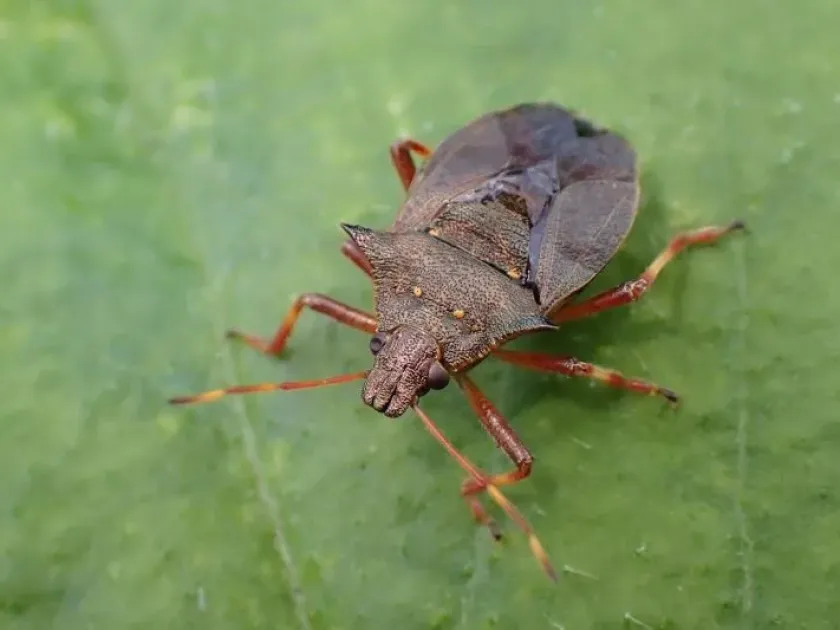
Picromerus is a genus of predatory stink bugs belonging to the family Pentatomidae. The most prominent species, Picromerus bidens, is a relatively large insect easily recognized by the sharp, prominent spine-like projections on the pronotal angles of its thorax.
Adults typically measure between 11 and 13 millimeters in length. Their coloration ranges from yellowish-brown to dark brown, often featuring a subtle metallic sheen. The most diagnostic physical trait remains the sharp, extended spikes on the shoulders of the pronotum.
Nymphs undergo several developmental stages (instars) before reaching adulthood. With each molt, they grow larger and their appearance shifts, although they remain active hunters throughout their life stages, constantly patrolling foliage for prey.
Unlike herbivorous shield bugs, the Picromerus features a short, robust rostrum (mouthpart) adapted specifically for piercing the exoskeletons of other insects, rather than sucking sap from plant tissues.
This bug is not an agricultural pest but rather a beneficial entomophage. Its presence in a field or garden is a positive indicator, suggesting that the local ecosystem has a healthy population of predators capable of keeping other insects in check.
What it damages
It is crucial to note that Picromerus does not damage crops. Instead, it plays a vital role as a biological control agent, feeding primarily on the larvae of various lepidopterans (moths and butterflies) that are considered harmful pests.
Their diet consists of caterpillars found in orchards, forests, and fields. They are known to prey effectively on species such as leaf rollers and loopers, which are notorious for defoliating trees and shrubs during the growing season.
The hunting behavior involves the bug actively tracking its prey across leaves and stems. Once it secures the target, it injects digestive enzymes that paralyze the caterpillar, allowing the predator to feed on the liquefied contents.
Because these bugs do not consume plant sap, they pose no risk of transmitting phytopathogenic viruses, which is a common problem associated with herbivorous stink bugs like the brown marmorated stink bug.
By keeping caterpillar numbers below economic thresholds, Picromerus acts as a natural guardian of the garden, reducing the necessity for chemical intervention and helping maintain plant health throughout the summer.
When it appears
Picromerus typically completes one generation per year. The species overwinters primarily in the egg stage, with eggs laid in clusters on the bark of trees, woody stems, or other stable surfaces during late summer or autumn.
The nymphs emerge in the spring, coinciding with the initial flush of new growth on host plants. This timing is essential, as it ensures that there is a sufficient supply of early-season caterpillars available for them to feed on.
Adult bugs reach maturity in mid-summer, typically peaking in July and August. This is the period when they are most visible, actively hunting, mating, and preparing the next generation by laying eggs on suitable vegetation.
Their activity period continues until the onset of cooler autumn temperatures. Population density is closely linked to the availability of prey; in years where caterpillar infestations are high, the population of these predatory bugs usually follows suit.
They can be observed on a variety of deciduous trees, ornamental shrubs, and occasionally on field crops where their prey is abundant and the environmental conditions are favorable for their development.
Control measures
As a beneficial predator, Picromerus does not require control measures. In fact, sustainable agricultural practices emphasize the preservation and protection of this species to enhance natural biological pest suppression.
The primary strategy for managing this beneficial insect is to minimize the use of broad-spectrum insecticides. Such chemicals are indiscriminate and can decimate predator populations, leading to secondary pest outbreaks.
Maintaining hedgerows, wild field margins, and diverse plantings creates the necessary habitat for these bugs to survive the winter and seek refuge during periods of intense cultivation or heat.
Integrated Pest Management (IPM) practitioners recommend utilizing biological pesticides or targeted applications only when absolutely necessary, ensuring that the natural enemies of pests are left unharmed.
By understanding the beneficial role of Picromerus, farmers and gardeners can make more informed decisions about crop management, ultimately saving time and money while fostering a more resilient and self-regulating agricultural environment.
Taxonomy
- Latin name
- Picromerus
- Order
- Hemiptera (bugs, aphids, leafhoppers)
- Family
- Pentatomidae
- EPPO code
- PICRSP
Discussion
No discussions yet — be the first.