
Phytoseiulus
Phytoseiulus persimilis
Description
How to identify
Phytoseiulus persimilis is a specialized predatory mite belonging to the family Phytoseiidae, highly valued for its efficacy in biological crop protection.
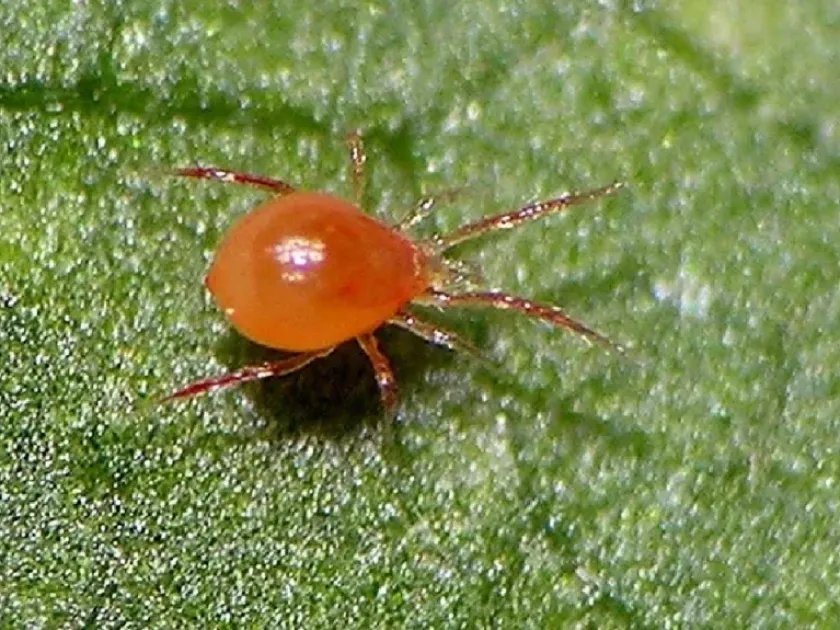
Adult mites are pear-shaped and bright orange in color, making them easily distinguishable from the smaller, translucent spider mites they hunt.
The life cycle is rapid, progressing through egg, larva, two nymphal stages, and adult, allowing the population to explode when prey is abundant.
Females are prolific egg-layers and exhibit high searching efficiency, constantly roaming the leaf surface to locate spider mite colonies.
The predator is most active in warm, humid conditions, which are ideal for its metabolism and rapid development compared to its prey.
What it damages
It is important to clarify that Phytoseiulus persimilis is not a plant pest; it is a highly beneficial natural enemy used for pest management.
Its diet consists almost exclusively of spider mites (Tetranychidae family), particularly the two-spotted spider mite (Tetranychus urticae).
By consuming all life stages of the spider mite, including eggs and nymphs, the predator effectively prevents damage to high-value vegetable and flower crops.
It does not consume plant sap or tissue, ensuring the safety of the host plant throughout the entire cycle of predator-prey interaction.
Its use is essential in high-tech greenhouse operations where chemical residues are restricted and sustainable farming practices are mandatory.
Control measures
Successful management requires maintaining a relative humidity of at least 65-70%, as low humidity can drastically reduce the egg-laying rate of the predator.
The predator should be introduced at the very first sign of a spider mite infestation to ensure rapid suppression and avoid crop damage.
Application rates vary based on the infestation density, typically ranging from 5 to 20 mites per square meter on affected foliage.
Integration with chemical pesticides is strictly limited; one must ensure that any prior pesticide applications have fully degraded to avoid killing the predatory mites.
Consistent monitoring of both the pest population and the predator density is critical to achieving a stable balance and protecting the crop yield.
Taxonomy
- Latin name
- Phytoseiulus persimilis
- Order
- Mites
- Family
- Phytoseiidae
- EPPO code
- PHSLRI
Discussion
No discussions yet — be the first.