
Grape phylloxera
Phylloxera pilosula
Description
How to identify
Grape phylloxera (Daktulosphaira vitifoliae) is a microscopic aphid-like insect that represents one of the most serious threats to global viticulture.
The insect possesses a complex polymorphic life cycle, which includes root-dwelling, leaf-galling, winged, and sexual forms.
The root-dwelling form is the most critical as it spends its entire life cycle underground, feeding on the roots of susceptible grapevines.
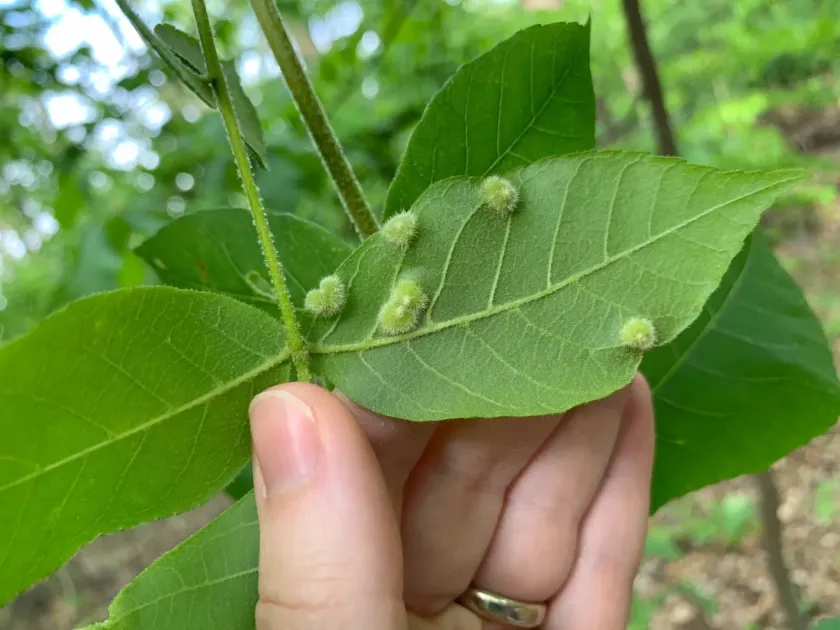
The leaf-galling form creates characteristic leaf deformities, which serve as a diagnostic feature for presence in a vineyard.
Due to its tiny size, detection is extremely difficult without specialized training and the use of high-magnification equipment.
What it damages
Phylloxera feeds on the roots and leaves of Vitis species, causing physiological changes that severely impact the plant's health.
Feeding on roots results in the formation of galls known as nodosities and tuberosities, which disrupt the vine's water and nutrient uptake.
Secondary infections from soil-borne pathogens often colonize the damaged root tissues, accelerating the decline and death of the vine.
In susceptible European varieties, the damage typically results in a slow decline, manifesting as stunted growth and eventual death of the plant.
Leaf damage leads to reduced photosynthesis, which weakens the vine's ability to store energy for the subsequent season.
When it appears
The life cycle of phylloxera is highly dependent on temperature, with the most active reproduction occurring during the summer months.
In the spring, dormant populations resume activity as temperatures rise, allowing for rapid colonization of new root growth.
Multiple generations occur throughout the growing season, potentially leading to exponential growth in population if left unchecked.
Winged forms appear primarily in mid-to-late summer, facilitating the spread of the pest to adjacent vineyards through wind dispersal.
As autumn temperatures fall, the activity decreases, and the insects transition into an overwintering state within the soil or bark crevices.
Signs of infestation
The primary symptom of the leaf-galling form is the presence of numerous small, raised, green-to-yellow galls on the undersides of the leaves.
Symptoms of root infestation include general vine weakness, chlorosis, and a lack of vigor that cannot be attributed to other soil issues.
Severely infested vines will show significant root system destruction and may fail to produce viable fruit or new vegetative growth.
In advanced stages of the disease, the entire vine canopy may become desiccated, leading to patches of dead plants within a vineyard.
- Leaf galls on the foliage
- Stunted annual shoot growth
- Yellowing of leaves in summer
- Root swelling and necrosis
Control measures
The most effective long-term strategy for managing phylloxera is the use of resistant rootstocks, which have been standard practice for over a century.
Strict quarantine measures are essential to prevent the accidental introduction of the pest into non-infested vineyard regions.
While chemical treatments exist, their efficacy against root-dwelling forms is often limited and requires specialized application methods.
Cultural practices, such as site sanitation and the use of certified, clean nursery stock, are critical components of an integrated pest management program.
Regular diagnostic inspections are necessary to identify potential infestations early, preventing the spread of the insect to wider areas.
Taxonomy
- Latin name
- Phylloxera pilosula
- Order
- Hemiptera (bugs, aphids, leafhoppers)
- Family
- Phylloxeridae
- EPPO code
- XEROPI
Discussion
No discussions yet — be the first.