
Grape phylloxera
Daktulosphaira conicum
Description
How to identify
Grape phylloxera Daktulosphaira vitifoliae is a tiny, aphid-like insect that represents one of the most significant threats to the global viticulture industry.
The insect exists in two main forms: root-feeding and leaf-galling. The root form is the most destructive, as it spends its entire life cycle underground, feeding on the vine roots.
Adult phylloxera are yellowish-green, roughly 1 millimeter long, and are often invisible to the naked eye, making early detection extremely difficult.
The life cycle is complex, involving various stages of wingless and winged individuals, which allows the pest to spread across vineyards via soil, equipment, or wind.
Due to its high reproductive rate and hidden lifestyle, phylloxera can quickly colonize an entire vineyard before significant above-ground symptoms appear.
What it damages
Phylloxera feeds on the roots of grapevines, injecting toxins that cause the formation of swellings known as nodosities on young roots and tuberosities on older, woody roots.
These deformations prevent the vine from absorbing water and essential nutrients effectively, leading to severe plant stress and nutrient deficiency.
Secondary infections by soil-borne fungi often occur at the site of the root wounds, which accelerates the decay and death of the entire root system.
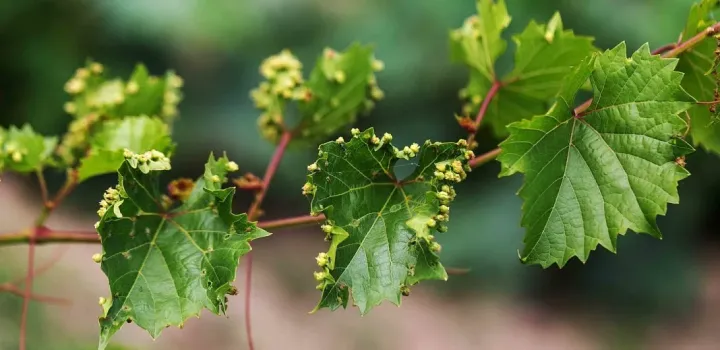
While leaf-galling forms cause damage to leaves by creating small bumps, this is generally less lethal than root-feeding, which leads to the eventual collapse of the vine.
Vines infested with phylloxera experience reduced yields, stunted growth, and death, usually within a few years of the initial infestation.
Signs of infestation
Initial symptoms on the surface include a general loss of vigor, poor shoot growth, and premature yellowing or reddening of the leaves during the summer season.
The pattern of decline often appears as patches of weak, dying vines that slowly spread outwards as the infestation moves through the vineyard soil.
When roots are inspected, one can find the characteristic galls and swellings that indicate the presence of the pest, often accompanied by necrotic tissue.
Affected vines become very sensitive to drought conditions because the damaged root system can no longer support the vine's water needs during hot weather.
Accurate diagnosis requires careful excavation of the root system or laboratory analysis of soil samples to confirm the presence of the insect.
Control measures
The primary and most effective strategy for managing phylloxera is the use of resistant rootstocks, which prevents the insect from causing lethal damage to the plant.
Strict quarantine protocols are essential to prevent the spread of the pest from infested areas to healthy, unaffected vineyards.
Chemical control remains difficult due to the subterranean nature of the pest, although soil fumigation and certain systemic insecticides can be used in specific scenarios.
Good agricultural practices, such as maintaining healthy, vigorous vines and proper equipment sanitation, are vital for slowing the spread of the insect.
- Planting only certified grafted vines on resistant rootstocks.
- Monitoring vineyard health for early signs of decline or yellowing.
- Strict hygiene protocols for tools and machinery moving between blocks.
- Avoiding the movement of soil or rooted material from suspected areas.
Taxonomy
- Latin name
- Daktulosphaira conicum
- Order
- Hemiptera (bugs, aphids, leafhoppers)
- Family
- Phylloxeridae
- EPPO code
- XEROCO
Discussion
No discussions yet — be the first.