
Pear phylloxera
Aphanostigma piri
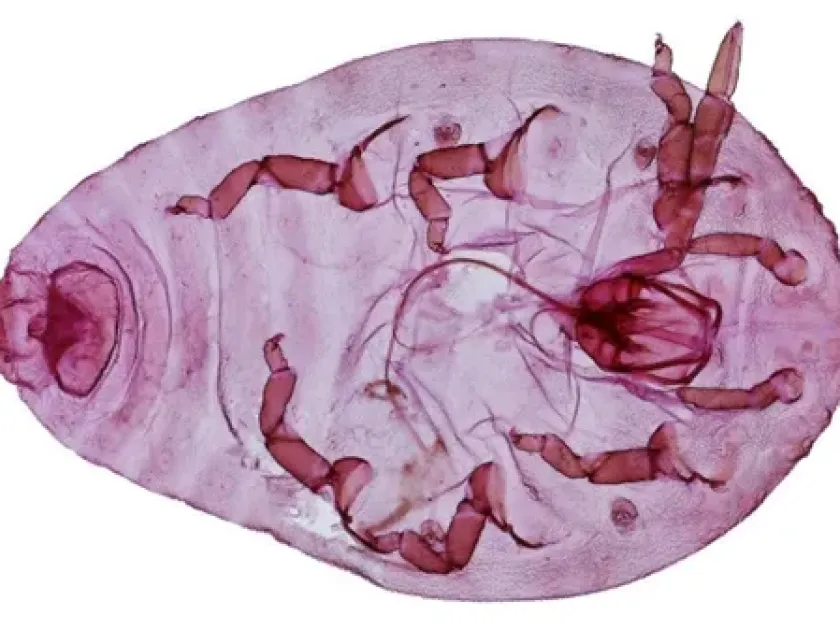
Description
How to identify
The pear phylloxera (Aphanostigma piri) is a small insect belonging to the order Hemiptera and the family Phylloxeridae. It is a specialized pest that primarily targets pear trees by feeding on plant sap.
These insects are extremely small, typically measuring less than 1 mm in length. Their body color ranges from pale yellow to greenish, allowing them to blend in perfectly with the underside of leaves and young bark.
The life cycle involves several stages, including egg, nymph, and adult. Given favorable climatic conditions, the population can go through multiple generations within a single growing season, leading to rapid infestations.
Overwintering usually occurs in the egg or early nymph stage, hidden securely under the bark scales of the tree trunk and branches. As temperatures rise in spring, they resume feeding on developing buds.
Due to their tiny size and habit of hiding within curled leaves or bark crevices, they are often overlooked until significant damage becomes visible to the orchard manager.
What it damages
The pear tree (Pyrus) is the main host for this pest. By inserting their stylets into plant tissues, they suck the sap, which severely depletes the nutrient reserves of the tree.
Feeding primarily occurs on the undersides of young leaves. This causes the leaves to curl, twist, and show signs of chlorosis or reddish discoloration, severely hampering photosynthesis.
Heavy infestations can lead to the deformity of fruitlets, causing premature fruit drop and significant yield reduction. The stress placed on the tree makes it less productive over time.
Continued feeding weakens the overall vigor of the pear tree, making it susceptible to winter injury, drought stress, and secondary infections from pathogens that exploit the damaged tissues.
The long-term impact includes reduced growth of new shoots and a decline in the formation of fruit buds, which compromises the productivity of the orchard in subsequent seasons.
Signs of infestation
The earliest symptom is the distortion of terminal leaves. These leaves often appear crinkled or puckered, making them look significantly different from healthy, flat leaves.
Close inspection of the underside of these curled leaves reveals clusters of small, yellowish insects or the shiny, sticky honeydew they secrete during the feeding process.
The presence of sooty mold, a black fungus that grows on the honeydew excreted by the aphids, is a strong indicator that the tree is harboring a population of sap-sucking insects.
Terminal shoot growth may appear stunted, with the affected branches looking brittle. This indicates a high level of stress on the vascular system of the young growth.
During the peak of the season, if you observe the foliage looking sickly despite adequate watering and fertilization, checking the underside of the leaves is essential.
Control measures
Effective management begins with good orchard hygiene, including the removal and destruction of heavily infested pruning debris to reduce the overwintering population.
Mechanical control, such as scraping off loose bark from trunks during the dormant season, is highly effective in destroying the overwintering sites of the pest.
Chemical control should be timed with the emergence of the first generation of nymphs in the spring. Systemic insecticides are generally preferred as they effectively reach the pests within the plant tissues.
Encouraging natural predators such as lady beetles, lacewings, and parasitic wasps helps in maintaining the pest population below the economic threshold throughout the season.
- Applying dormant oils to kill overwintering eggs.
- Systemic insecticide treatments during bud burst.
- Routine visual scouting for signs of leaf curling.
Taxonomy
- Latin name
- Aphanostigma piri
- Order
- Hemiptera (bugs, aphids, leafhoppers)
- Family
- Phylloxeridae
- EPPO code
- APHSPI
Discussion
No discussions yet — be the first.