
Aphanostigma
Aphanostigma
Description
How to identify
Aphanostigma is a genus of insects in the order Hemiptera, belonging to the family Phylloxeridae. These microscopic pests are closely related to the well-known grape phylloxera in terms of their biology and life cycle.
The adult insect has an oval body shape, with the size rarely exceeding 1 mm. The coloration ranges from light yellow to dark brown, depending on the age and developmental stage of the individual.
The life cycle of this pest is highly specialized. The insect passes through several nymphal stages that, while appearing similar to adults, may exhibit different lifestyles, living either on leaf surfaces or within the soil.
Accurate species identification often requires microscopic analysis, as the morphological characteristics of many Aphanostigma species closely resemble other members of the superfamily Phylloxeroidea.
The most active stages of the insect possess piercing-sucking mouthparts, which allow them to penetrate deep into plant tissues to feed on cellular sap.
What it damages
The primary hosts of Aphanostigma are woody and shrubby plants. They cause the most significant economic damage to vineyards and certain types of fruit-bearing trees.
The pest damages both the aerial parts of the plant, including leaves and young shoots, and the root system, making it an extremely dangerous threat to the overall health of the shrub.
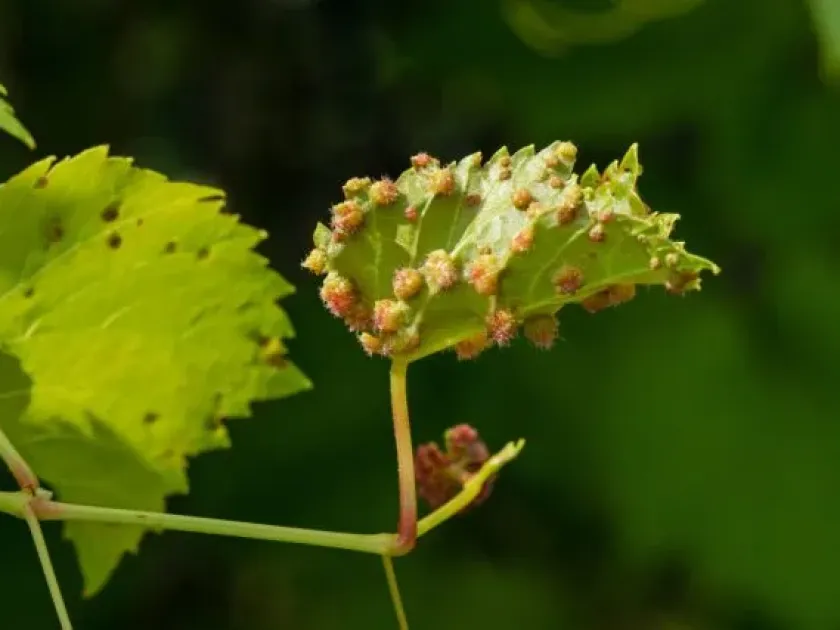
Feeding by these insects leads to metabolic disruption within plant tissues. Galls, which are specific outgrowths, often form at the puncture sites, providing a sheltered environment for the insects to develop.
Severe root infestation results in deformation, decay, and tissue death, which significantly reduces the plant's ability to absorb water and essential nutrients from the soil.
In commercial viticulture, this pest can lead to the total loss of plantations within a few seasons if timely localization and control measures are not implemented.
When it appears
The life cycle of Aphanostigma is closely synchronized with the host's growing season. In early spring, as sap begins to flow, nymphs emerge from diapause and begin active feeding.
The summer period is characterized by peak population density. During this time, rapid reproduction occurs, with multiple generations developing, leading to a sudden surge in numbers.
In autumn, as air temperatures drop and plants prepare for dormancy, the pest enters a resting stage. Depending on the species, they overwinter either as eggs on the bark or as nymphs in the soil around the roots.
Weather conditions have a direct impact on the development speed of each generation. A warm, humid spring promotes earlier emergence and more aggressive colonization of the site.
Monitoring for the pest should begin immediately after bud break, inspecting the undersides of leaves for the first signs of activity.
Signs of infestation
The primary symptom of infestation is the characteristic deformation of leaf blades, manifesting as swellings or galls, within which insect colonies reside.
On plant roots, signs of damage appear as galls and nodules, which inhibit the normal growth of root tips and facilitate secondary infections.
Visually, the shrubs look stunted: premature yellowing and leaf drop are common, along with slow shoot growth and an overall decline in yield.
Upon inspecting the root system, one can often observe not only the damage but also the insects themselves, which look like small yellowish particles on the root surface.
- Yellowing of leaf blade margins.
- Curling of young leaves into clusters.
- Presence of atypical thickening on the roots.
- Withering of inflorescences and fruit drop.
- Stunted vine growth during mid-summer.
Control measures
The cornerstone of Aphanostigma control is strict quarantine management when importing planting material from regions known to be affected by the pest.
Chemical control methods involve the use of systemic insecticides, which translocate through the plant sap to kill the pests upon feeding.
Agrotechnical measures include deep cultivation of the soil around the base of the plants and the timely pruning of infested plant parts, followed by their mandatory destruction by burning.
The use of resistant rootstocks is considered highly effective in vineyards, as this is the only reliable way to prevent the infestation of the root system.
Biological control methods, including the use of entomophagous insects or biopesticides, show potential only at low infestation levels and require regular and precise application.
Taxonomy
- Latin name
- Aphanostigma
- Order
- Hemiptera (bugs, aphids, leafhoppers)
- Family
- Phylloxeridae
- EPPO code
- APHSSP
Discussion
No discussions yet — be the first.