
Hickory leaf gall midge
Daktulosphaira notabilis
Description
How to identify
The Hickory leaf gall midge (Daktulosphaira notabilis) is a small insect belonging to the family Phylloxeridae. It is a specialist pest that primarily targets trees within the Carya genus, especially pecan trees.
Identifying this pest in its active form is challenging due to its diminutive size. The insects spend most of their life cycle hidden inside specialized gall structures that they induce on the foliage.
The taxonomic classification reflects its biological behavior as a sap-sucking pest. These insects rely on chemical signals to manipulate the plant's growth, leading to the formation of protective dwellings.
Detection is primarily based on visual symptoms of the leaves. Understanding the biological cycles of Daktulosphaira notabilis is essential for accurate diagnosis and timely intervention in orchards.
Given the hidden nature of the pests, scouts usually look for the development of characteristic galls rather than the adult insects themselves during routine orchard inspections.
What it damages
The primary damage is caused to pecan trees and other hickory species. The insects induce the formation of leaf galls, which are abnormal plant growths that house the developing larvae.
As the insects feed within the gall, they deplete the leaf's resources. This physiological disruption reduces the photosynthetic capacity of the foliage, directly affecting the tree's health and vitality.
Severe infestations result in heavy galling across the leaf surface, leading to leaf curling, chlorosis, and premature leaf drop. This significantly weakens the tree's overall vigor.
For young pecan trees and nursery saplings, heavy damage can stunt growth and compromise the structural development of the canopy. This poses a long-term risk to the tree's productivity.
Beyond individual tree health, the economic impact includes reduced nut yield and quality. Trees suffering from repeated heavy infestations often show decreased resilience to other environmental stressors.
When it appears
The lifecycle begins in early spring when the buds break and the first leaves emerge. Overwintering females emerge to lay eggs on the expanding tender foliage, triggering the gall formation process.
Several generations can occur throughout the summer months depending on the climate. Favorable temperatures and humidity accelerate the development of the population, leading to peak gall numbers by mid-summer.
As autumn approaches, the development cycle slows down. The insects move into overwintering stages, hiding in protected areas such as bark crevices, scales of buds, or other sheltered spots on the host tree.
Effective management requires monitoring during the critical period of early leaf expansion. Identifying the initial appearance of galls is crucial for implementing control strategies before the insects are fully protected.
Environmental conditions play a massive role in population fluctuations. Warm and wet springs are often associated with higher incidences of leaf gall midge outbreaks.
Signs of infestation
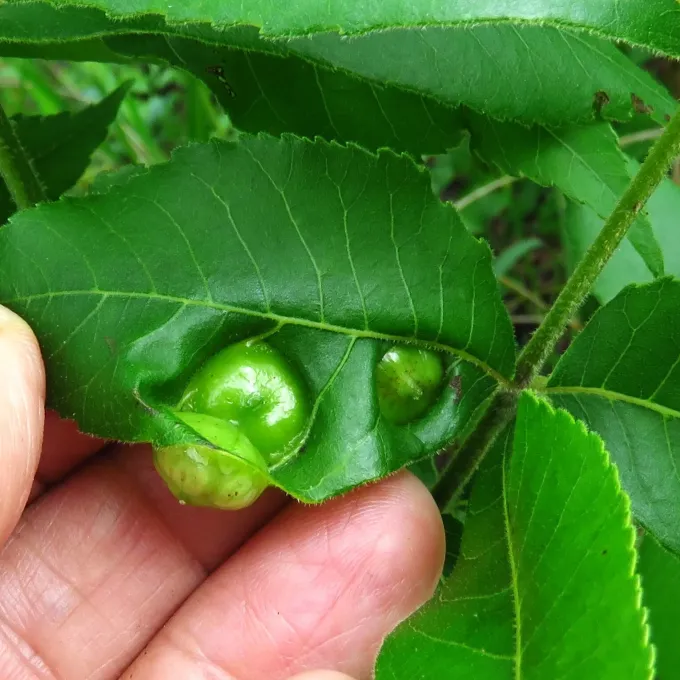
The most distinctive sign is the appearance of small, raised galls on the leaf surface. These structures vary in shape and color, often appearing as cones or small bumps on the underside or upper surface of the leaves.
Affected leaves appear distorted and puckered. If examined closely, one can see the small openings on the galls where the insects maintain access to the external environment.
Progressive signs include yellowing or necrosis of the leaf tissue surrounding the galls. If the infestation is dense, the entire leaf may wither and drop prematurely, causing partial defoliation.
Fine debris or excrement-like particles around the gall openings are additional signs of active feeding. These indicators are helpful for confirming that the galls are indeed occupied by pests.
In addition to leaf symptoms, the overall reduction in tree canopy density and loss of deep green color are typical indicators of a severe infestation that warrants immediate management.
Control measures
The primary control strategy involves the application of systemic insecticides. These must be applied early in the season, targeting the insects before they become enclosed within the mature leaf galls.
Cultural practices are vital for long-term management. Removing and destroying heavily infested leaves and debris can significantly decrease the overwintering population of the pest in the orchard.
Maintaining optimal tree health through proper fertilization and irrigation helps the trees withstand the stress caused by the midge. Healthy trees are significantly better equipped to recover from pest damage.
- Timely application of systemic insecticides at bud break.
- Promotion of natural predators and biological control agents.
- Sanitation programs, including removal of fallen foliage.
An integrated pest management (IPM) approach is recommended for commercial pecan orchards. This combines precise monitoring with targeted treatments to minimize the environmental footprint while maximizing control efficacy.
Taxonomy
- Latin name
- Daktulosphaira notabilis
- Order
- Hemiptera (bugs, aphids, leafhoppers)
- Family
- Phylloxeridae
- EPPO code
- PHYXNO
Discussion
No discussions yet — be the first.