
Variegated phylloxera
Phylloxera picta
Description
How to identify
The variegated phylloxera (Phylloxera picta) is a minute insect belonging to the family Phylloxeridae and order Hemiptera. It is closely related to the well-known grapevine phylloxera but is specialized to attack specific hardwood species.
Adult insects are extremely small, usually measuring about 1 millimeter in length. They are characterized by a distinct variegated pattern on their dorsal side, which gives them their common name.
These insects exhibit complex life cycles involving parthenogenetic reproduction, allowing for rapid population growth during the growing season. Identification usually requires high-magnification optics.
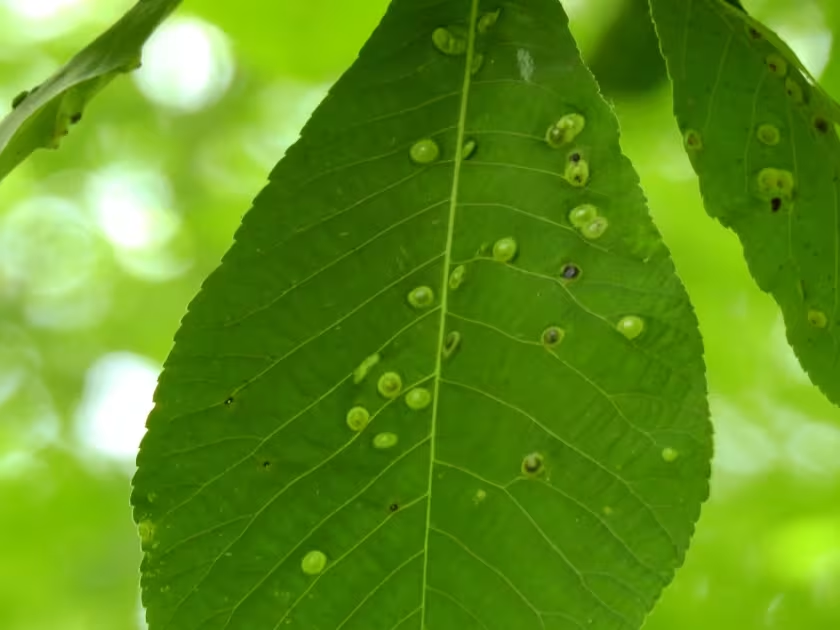
They are primarily identified by the specific types of galls they induce on the foliage of their host plants, rather than by observing the adult insects directly in the field.
Taxonomically, they are specialized herbivores that have adapted to live within the tissues of their host plants, shielding themselves from environmental fluctuations.
What it damages
The variegated phylloxera primarily attacks trees within the Juglandaceae family, most notably members of the genus Juglans (walnuts).
Feeding occurs when the insects pierce the leaves and young shoots to extract plant sap. This process induces the plant to form protective galls around the insect feeding sites.
The presence of numerous galls interferes with the plant's photosynthetic efficiency, causing localized tissue death and reduced vigor.
Severe infestations lead to premature leaf senescence and abscission, which can significantly stunt the growth and fruit production of the host tree.
The resulting wounds on the foliage can act as entry points for various secondary fungal and bacterial pathogens, leading to overall tree decline.
When it appears
The life cycle commences in the early spring as larvae emerge from their overwintering sites, typically hidden in bark crevices or under bud scales.
The peak activity period is during the late spring and summer months when new vegetative growth is abundant and nutrient-rich for the developing insects.
Multiple generations may occur throughout the summer, with the population size being heavily influenced by ambient temperature and relative humidity levels.
As autumn approaches and temperatures begin to drop, the insects migrate toward overwintering sites on the woody parts of the tree to survive the winter dormant period.
Successful development of each generation is highly dependent on the tree's health and the prevailing climatic conditions during the growing season.
Signs of infestation
The most prominent sign of infestation is the appearance of characteristic galls on the leaves. These structures are often small, bumpy, and discolored patches.
Leaf curling and deformation are common symptoms associated with heavy feeding, making the foliage appear unhealthy or sickly to the naked eye.
Opening these galls reveals the presence of small insects, larvae, or their waste products, confirming the active presence of the pest population.
Yellowing of the leaves in patches, known as chlorosis, is another symptom that indicates the plant is suffering from nutrient loss due to pest feeding.
A general decrease in tree vigor, including thin canopy growth and shorter shoot length, is a strong indicator of a long-term pest problem.
Control measures
Effective management strategies involve the use of dormant season insecticide sprays, which can target overwintering larvae before they become active.
Cultural control is essential, including the removal and destruction of fallen leaves and infected plant material to reduce the pest reservoir in the orchard.
Systemic insecticides are generally effective as they are translocated through the leaves, allowing them to control the insects living inside the protected galls.
Integrated Pest Management (IPM) practices, including the preservation of natural predators, are encouraged to keep populations below economic damage thresholds.
- Application of horticultural oils during dormancy.
- Sanitation through pruning of heavily infested limbs.
- Monitoring of tree vigor to detect early signs of infestation.
Taxonomy
- Latin name
- Phylloxera picta
- Order
- Hemiptera (bugs, aphids, leafhoppers)
- Family
- Phylloxeridae
- EPPO code
- MORZPI
Discussion
No discussions yet — be the first.