
Lesser phylloxera
Phylloxera minima
Description
How to identify
Lesser phylloxera (Latin: Phylloxera minima) is a small insect belonging to the Phylloxeridae family. It is a highly specialized pest that primarily affects grapevines, both wild and cultivated species, by feeding on their sap.
The adult insect is extremely small, often requiring a microscope for precise identification. Its body coloration is typically greenish-brown or yellowish, which provides excellent camouflage against the foliage and bark of the host plant.
The species possesses a complex lifecycle that involves different morphological forms. These forms adapt to different parts of the plant, such as the leaves (gallicola) and the root system (radicicola), maximizing the pest's exploitation of the host.
Like other members of its family, it uses a piercing-sucking mouthpart to penetrate plant tissues. During feeding, it secretes enzymes that cause localized physiological changes in the vine, facilitating easier consumption of nutrients.
Environmental factors such as soil moisture and temperature are critical for the survival of this species. They are generally more active in moderate climates and tend to avoid direct sunlight or overly dry conditions.
What it damages
The primary damage is caused by the extraction of sap, which drains the vine's energy reserves. This weakens the plant, making it more susceptible to environmental stressors and secondary infections by fungi or bacteria.
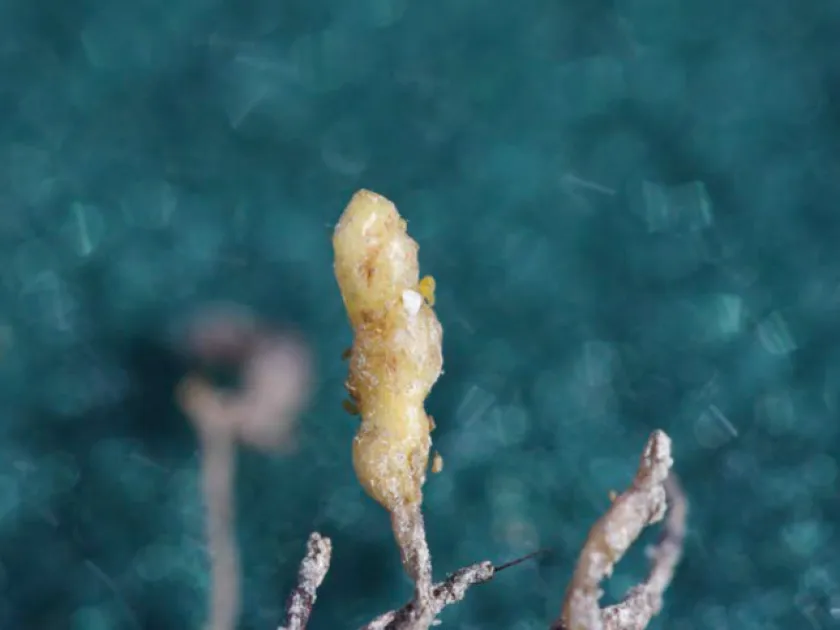
When the root system is infested, galls or nodules form on the rootlets. These formations obstruct water and nutrient transport, leading to a visible decline in the vine's vigor and an overall reduction in growth rates.
Foliar infestation causes the development of galls on the undersides of leaves. These galls provide protection for the larvae while significantly reducing the photosynthetic area of the leaf, which ultimately affects sugar accumulation in the grapes.
Young vines and nursery stock are the most vulnerable to damage. Intense infestation can lead to the death of the root system and the eventual collapse of the entire plant within a few years of initial colonization.
The spread of the pest often occurs via human activity, such as transporting contaminated nursery stock, or through natural vectors like water, wind, and even farm equipment passing through an infected vineyard.
When it appears
The activity cycle of the lesser phylloxera begins in the spring when overwintering larvae emerge due to rising temperatures. They immediately seek out fresh tissues on the developing buds or rootlets to begin feeding.
During the summer months, the population undergoes multiple generations of rapid reproduction. If weather conditions are favorable, the pest can quickly colonize healthy parts of the vineyard, significantly increasing the infestation levels.
As autumn approaches and temperatures begin to drop, the insects enter a phase of reduced activity. They migrate to protected locations, often deep in the soil or within the crevices of the vine's bark, to survive the winter dormant period.
The duration of each generation is highly dependent on climate. Regions with warmer, longer growing seasons allow for more generations, which poses a greater risk to the vineyard and requires more rigorous management strategies.
Monitoring throughout the growing season is essential because the most vulnerable mobile stage, known as the "crawler," is typically most abundant during the late spring and mid-summer periods.
Signs of infestation
Early signs of infestation include the appearance of small, yellowish spots or raised galls on the leaf surface. Closer inspection reveals the insects themselves or their eggs on the underside of the foliage.
General vine decline is a major indicator of root infestation. Symptoms include stunted shoots, chlorosis (yellowing of leaves), and premature wilting that persists even after thorough irrigation of the soil.
Digging near the base of a struggling vine will reveal damage to the roots. Characteristic nodules, swelling, and areas of necrosis indicate where the insects have been feeding and where secondary decay is occurring.
Ant activity is frequently linked to phylloxera presence, as ants often protect the insects to harvest the honeydew they excrete. An increase in ant traffic on vine stems can serve as a warning sign of an underlying pest issue.
In advanced cases, the impact on fruit quality is evident. Grapes become sparse, small, and lack the necessary sugar content, signaling that the vine's vascular system has been compromised by the prolonged feeding of the pest.
Control measures
The most reliable control method is the use of phylloxera-resistant rootstocks. Modern viticulture relies on this strategy, as it provides a permanent biological barrier against the pest's ability to feed on the root system.
Cultural controls involve strict adherence to quarantine protocols. It is essential to ensure that all nursery material is certified as clean before introduction into the vineyard to prevent the accidental introduction of the pest.
Chemical applications using systemic insecticides can be employed during periods when crawlers are active. These treatments aim to disrupt the lifecycle and prevent the colonization of new parts of the vine.
If an infestation is detected in a specific zone, immediate removal and destruction of the infected vines, including their root mass, is recommended to create a barrier and prevent further spread.
- Regular inspection of vineyard rows and leaf tissues.
- Implementation of biosecurity measures for farm machinery.
- Usage of biological control agents like beneficial fungi if applicable.
Taxonomy
- Latin name
- Phylloxera minima
- Order
- Hemiptera (bugs, aphids, leafhoppers)
- Family
- Phylloxeridae
- EPPO code
- XEROMI
Discussion
No discussions yet — be the first.