
Italian phylloxera
Phylloxera italica
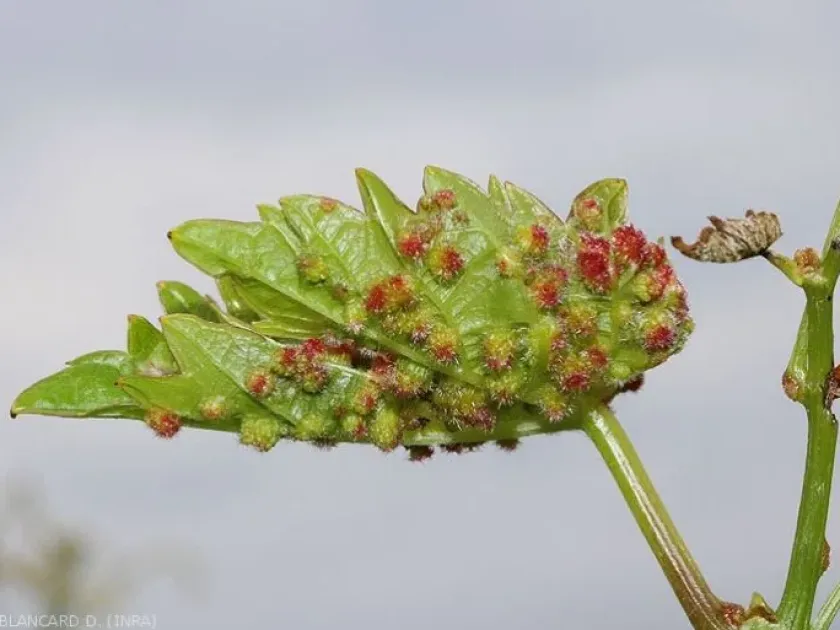
Description
How to identify
Italian phylloxera (Phylloxera italica) is a small insect belonging to the order Hemiptera and the family Phylloxeridae. It is a highly specialized pest that targets various species of Vitis, functioning primarily as a root-feeding parasite.
The adult insect is minute, typically measuring around 1 mm in length, and possesses a color palette ranging from pale yellow to brownish. Due to its cryptic nature and tiny size, it remains largely undetected by farmers until significant damage to the root system has already occurred.
Systematically, this species is classified as an obligate plant parasite. Its evolutionary biology involves sophisticated mechanisms to manipulate plant tissue to create nutrient-rich feeding sites, ensuring the pest's survival during unfavorable periods.
Distinguishing Phylloxera italica from other phylloxera species often requires specialized microscopic or molecular analysis. The pest's morphology is highly adapted to the specific conditions of the Mediterranean climate, where it has historically been observed.
Identification is primarily carried out by trained agronomists through soil and root sampling, focusing on the observation of specific morphological traits that differentiate it from the more widespread grape phylloxera (Daktulosphaira vitifoliae).
What it damages
The primary damage caused by Italian phylloxera occurs on the root system of the grapevine. By feeding on root tissues, the larvae induce the formation of abnormal growths known as nodosities and tuberosities.
These deformations severely disrupt the plant's vascular system, hindering the transport of water and essential minerals. As a result, the entire metabolic balance of the grapevine is compromised, leading to a visible decline in vigor.
Above-ground symptoms often appear as a reflection of the root destruction. Vines exhibit chlorosis, stunted growth, and a reduction in both the size and quality of the grape clusters, making the crop commercially non-viable.
In addition to direct physiological stress, the open wounds created by the pest provide easy access for opportunistic soil-borne pathogens, including bacteria and fungi, which exacerbate root rot and accelerate the decline of the vineyard.
If left unmanaged, infestation patches spread, eventually leading to the total collapse of the vine plants. This creates gaps in the vineyard, necessitating costly removal and replanting of the affected areas.
When it appears
The life cycle of Italian phylloxera is closely tied to the phenological stages of the grapevine. Activity begins in the spring, once soil temperatures reach a threshold that stimulates the larvae to emerge and resume feeding.
The peak of the pest's population density occurs during the summer months. Warm and stable temperatures provide the optimal environment for multiple generations to develop, causing rapid colonization of new root segments.
As autumn progresses, the insects' metabolic rate decreases in response to cooling temperatures. The population prepares for overwintering, seeking refuge in soil cracks or near the root collar of the host plant to survive the winter season.
The number of generations per year is heavily dependent on regional microclimate conditions. Warmer regions naturally support a higher number of generations, increasing the pressure on the vineyard throughout the growing season.
Agronomic planning relies on understanding these seasonal dynamics. Regular monitoring during the active growth period allows for the early detection of infestation hotspots before they can spread across the entire vineyard.
Signs of infestation
The most reliable sign of an Italian phylloxera infestation is the presence of stunted, poorly growing vines grouped in specific areas, often referred to as "decline patches."
- Yellowing of leaves, often mistaken for nutritional deficiencies or nitrogen stress.
- Noticeable decrease in shoot length and poor maturation of the vine wood.
- Reduced crop yield and thin, malformed grape bunches.
- Visible galls or hooked-shaped swellings on the rootlets when inspected closely.
- Gradual dying back of entire vines in circular patterns across the field.
Diagnostic field inspections involve careful removal of soil around the roots to observe for the typical symptoms of gall formation. If found, samples should be sent to a laboratory for professional confirmation.
Early signs are often difficult to spot, which is why preventive scouting is essential. Comparing the growth rate of vines across different blocks can reveal irregularities that suggest an underlying pest or disease issue.
Once the infestation reaches a certain threshold, the decline of the vine becomes irreversible. Therefore, recognizing the subtle signs of low-level infestation is crucial for proactive vineyard management.
Control measures
The use of phylloxera-resistant rootstocks is the gold standard and the most effective management strategy. Modern viticulture relies on these rootstocks to provide permanent protection against the pest.
Strict quarantine protocols must be enforced to prevent the movement of contaminated nursery stock. Certified, virus-free, and pest-free planting materials are the primary defense against the introduction of Italian phylloxera into new areas.
Cultural practices, such as planting in sandy soils, serve as a natural barrier. The physical properties of sand hinder the movement of larvae, making it difficult for the pest to colonize new root systems effectively.
Chemical control is generally ineffective and ecologically unsustainable due to the depth at which the pest resides. Consequently, industrial vineyards rarely resort to soil insecticides for long-term control.
If an infestation is identified, the standard protocol is to contain the area and remove the affected vines. Destroying the root system is critical to eliminating the pest population and protecting the surrounding healthy vineyard blocks.
Taxonomy
- Latin name
- Phylloxera italica
- Order
- Hemiptera (bugs, aphids, leafhoppers)
- Family
- Phylloxeridae
- EPPO code
- PHYXIT
Discussion
No discussions yet — be the first.