
Grape phylloxera
Phylloxera devastatrix
Description
How to identify
Grape phylloxera (Daktulosphaira vitifoliae, also known as Phylloxera devastatrix) is a microscopic aphid-like insect belonging to the family Phylloxeridae within the order Hemiptera.
The life cycle of this pest is highly complex and polymorphic, including root-dwelling, leaf-galling, wingless, and winged sexual stages that allow it to adapt to various environmental conditions.
In most viticultural regions worldwide, the root-dwelling form is the most prevalent and economically significant, as it lives protected within the soil throughout the year.
The insect reproduces parthenogenetically, which enables a single individual to establish a massive colony, leading to rapid infestation across a vineyard.
Due to its tiny size and subterranean lifestyle, it is difficult to detect during the early stages of infestation, making it one of the most dangerous pests in global viticulture.
What it damages
The primary host for this pest is the grapevine (Vitis vinifera), which lacks natural resistance to the feeding activity of the insect on its root system.
Phylloxera feeds on the roots, causing the formation of galls and nodules (tuberosities and nodosities) that block the transport of water and nutrients to the aerial parts of the vine.
These root lesions often become entry points for soil-borne pathogens, leading to secondary rot that ultimately kills the entire root system of the vine.
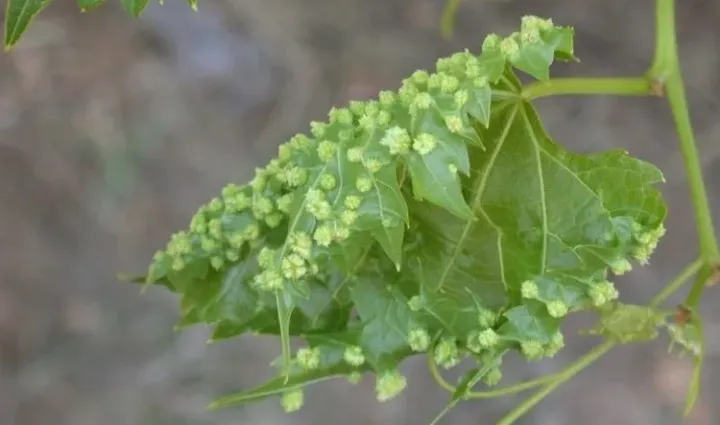
Leaf-galling forms cause distinctive bumps on the foliage, reducing the photosynthetic capacity of the leaves, although this is generally less destructive than root feeding.
Vineyard decline occurs gradually, starting with stunted growth and reduced yields, leading to the eventual death of the affected vines within a few years of initial exposure.
Signs of infestation
Early symptoms in a vineyard often appear as small patches of weak, stunted vines that show reduced vigor compared to surrounding healthy plants.
Leaves may exhibit chlorosis, premature yellowing, and thinning of the canopy as the vine's ability to maintain its nutritional needs decreases.
A definitive diagnosis requires digging up portions of the root system to examine them for the presence of characteristic swellings, galls, and necrotic tissue.
In cases where the foliar form is present, leaves will show small, wart-like galls on their underside, which can be easily observed during the active growing season.
Over time, the affected areas of the vineyard expand, and the vines stop producing viable grapes, eventually succumbing to the root damage caused by the aphid population.
Control measures
The most successful strategy for managing phylloxera is the use of phylloxera-resistant rootstocks, which are derived from native North American grape species.
Strict quarantine and biosecurity protocols are essential to prevent the accidental introduction of the pest into non-infested regions or newly established vineyards.
In the event of an infestation, current management often involves the removal of infected vines and implementing fallow periods to reduce the pest population in the soil.
Chemical control of the root-dwelling form is rarely effective and often economically unfeasible, as soil fumigation cannot reach deep enough to eliminate the infestation.
- Planting exclusively on resistant grafted rootstocks.
- Rigorous inspection of nursery stock before planting.
- Sanitation protocols to prevent spreading through soil and equipment.
Taxonomy
- Latin name
- Phylloxera devastatrix
- Order
- Hemiptera (bugs, aphids, leafhoppers)
- Family
- Phylloxeridae
- EPPO code
- PHYXDE
Discussion
No discussions yet — be the first.