
Hickory leaf phylloxera
Phylloxera depressa
Description
How to identify
Hickory leaf phylloxera (Phylloxera depressa) is a member of the Phylloxeridae family within the order Hemiptera. This tiny, aphid-like insect is a specialized pest that exclusively attacks trees in the genus Carya.
The adults and nymphs possess piercing-sucking mouthparts. They are generally pale yellow or greenish, making them nearly invisible to the naked eye when they are on the surface of leaves.
The defining characteristic of this species is its ability to induce the formation of leaf galls. These structures are created by the plant in response to the insect's feeding, forming a protective, nourishing capsule where the insect develops.
Its life cycle features multiple generations per year with alternating wingless and winged forms. They reproduce both parthenogenetically and sexually, which allows for rapid colonization of host trees during the growing season.
The insect overwinters in the egg stage, typically tucked away within crevices of the tree's bark. As temperatures rise in spring, the eggs hatch, and the nymphs immediately move to colonize the emerging, tender leaves.
What it damages
The hickory leaf phylloxera targets various species of hickory and pecans. Its damage is primarily aesthetic and physiological, localized to the foliage of the host tree throughout the growing season.
Feeding triggers the growth of abnormal plant tissue, resulting in characteristic leaf galls. These galls divert nutrients away from normal plant development and can cover a significant portion of the leaf area.
Severe infestations can lead to substantial reduction in photosynthetic capacity. This stresses the tree, potentially resulting in stunted shoot growth, poor nut yield, and weakened overall health of the specimen.
In cases of heavy infestation, premature leaf yellowing and senescence are common. This reduces the tree's ability to store energy for the following year, potentially impacting its winter hardiness and long-term vitality.
Chronic infestations can persist for several seasons if left unchecked. Each year, the population can increase, leading to a cumulative effect that weakens the tree and makes it more susceptible to other biotic and abiotic stressors.
When it appears
The activity of this pest is synchronized with the phenology of the hickory tree. The first symptoms, appearing as small bumps on new leaves, usually emerge during late spring as the foliage expands.
The insect undergoes several generations during the summer. Population growth is highly sensitive to temperature and humidity, typically peaking during the warmer months of June and July when environmental conditions are optimal.
As the season progresses toward autumn, the insect's development slows down. This is the period when sexual forms appear, leading to mating and the deposition of overwintering eggs on the tree's bark.
The winter stage is crucial for the survival of the population. By hiding in bark cracks, the eggs are protected from harsh weather conditions until the cycle begins again the following spring.
Early spring monitoring is essential for effective management. Once the galls are fully developed and hardened, they act as a physical barrier, making it very difficult for insecticides to reach the insects living inside.
Signs of infestation
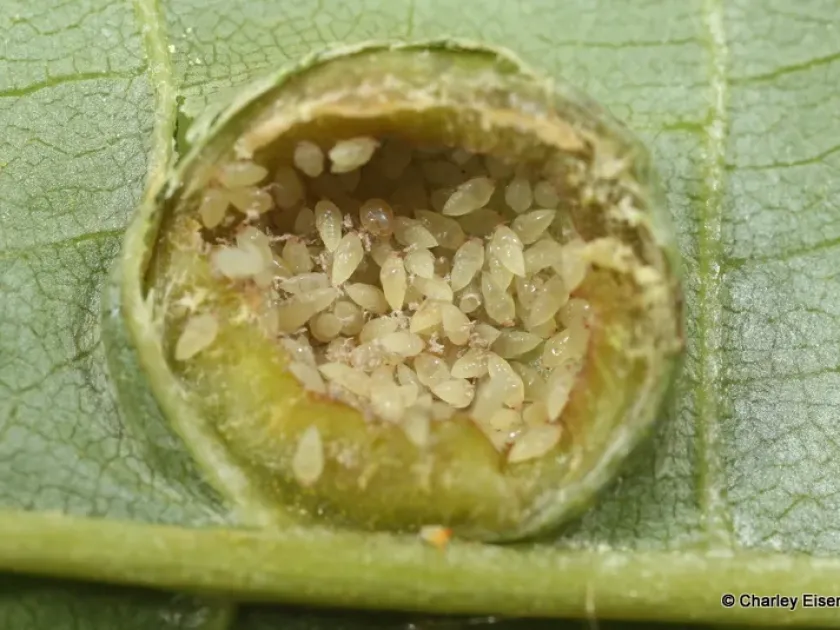
The most distinct sign of an infestation is the presence of numerous leaf galls on the undersides of the leaves. These galls often appear as small, blister-like pustules or protrusions.
Depending on the species and stage, these galls may turn from green to yellowish or reddish-brown. The leaf tissue surrounding the galls might become crinkled or display chlorotic (yellow) spotting.
When a fresh gall is opened, the phylloxera insects and their waste products can be found inside. The presence of these insects confirms an active infestation of Phylloxera depressa.
A tree under heavy pressure may show visible signs of distress, including early leaf drop and an overall thin appearance of the canopy. This poor condition is often a result of extended photosynthetic disruption.
Inspecting the foliage early in the season is the best way to detect early signs of the pest. Vigilance during the initial leaf-out phase is vital to preventing large-scale colonization of the tree's canopy.
Control measures
Management of hickory leaf phylloxera focuses on chemical intervention using systemic insecticides. These products are absorbed by the tree and move into the leaf tissues where the pests are feeding.
Application timing is critical; treatments should be performed just as the buds begin to break and leaves emerge, targeting the nymphs before they can induce the formation of protective galls.
Sanitation practices, such as raking and destroying fallen leaves in the autumn, can help reduce the overwintering population density in the immediate area around the tree.
Encouraging beneficial insects like lady beetles, lacewings, and minute pirate bugs can provide a degree of natural control, as these predators prey on the insects during their mobile stages.
- Monitor leaf development in early spring.
- Apply systemic insecticides before gall formation.
- Practice good orchard hygiene and debris removal.
- Maintain tree vigor through proper watering and nutrients.
Taxonomy
- Latin name
- Phylloxera depressa
- Order
- Hemiptera (bugs, aphids, leafhoppers)
- Family
- Phylloxeridae
- EPPO code
- XERODR
Discussion
No discussions yet — be the first.