
Spruce phylloxera
Phylloxera conifera
Description
How to identify
Spruce phylloxera, often belonging to the Adelgidae family (order Hemiptera), is a tiny, aphid-like insect that specializes in feeding on spruce trees. These insects are easily recognized by the white, cotton-like wax secretions that cover their bodies during various life stages.
Their life cycle is notably complex, often involving different generations that may migrate to different parts of the host plant. They use piercing-sucking mouthparts to extract vital nutrients, causing significant stress to the host.
Taxonomically related to aphids, adelgids have unique reproductive behaviors, including both sexual and asexual generations. Their ability to produce galls is a hallmark of their interaction with the host tree's physiology.
Overwintering usually occurs in the nymph stage, hidden in bark crevices or near bud scales. This strategy allows them to survive harsh winter conditions and emerge exactly when the tree begins its seasonal growth.
Correct identification is essential because adelgids are frequently confused with other scale insects or spider mites. Consulting an entomology guide or using a hand lens is recommended for accurate field diagnosis.
What it damages
The primary hosts for spruce phylloxera are various species of spruce. The damage is cumulative, as the insects sap energy from the tree, reducing its vigor and growth rates over time.
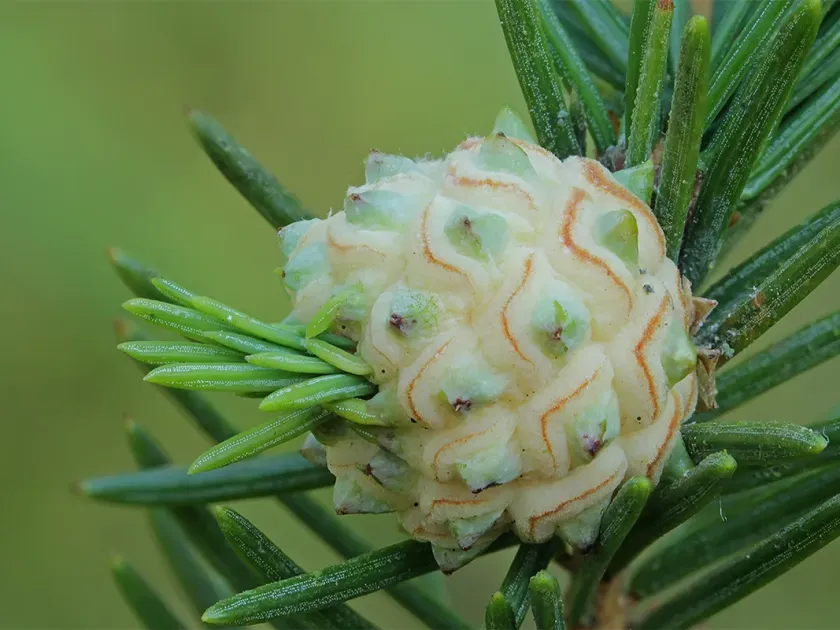
Gall formation is the most visible form of damage. These galls interfere with the development of new shoots, leading to stunted or distorted growth that ruins the aesthetic shape of the tree.
Infested needles lose their color, turning yellow or brown before falling off prematurely. This thinning of the foliage reduces the tree's photosynthetic capacity and weakens its overall structural integrity.
The honeydew excreted by the insects serves as a breeding ground for sooty mold, which covers the needles in a black film, further blocking sunlight and hindering gas exchange.
In nurseries and landscape settings, heavy infestations can lead to limb dieback or even the death of young spruce trees if not treated promptly through appropriate management practices.
When it appears
The active season begins in early spring, synchronized with the bud burst and the initiation of shoot elongation in spruce trees. This is when the overwintering nymphs wake up and start feeding.
The development of galls typically occurs throughout late spring and early summer. During this timeframe, the insects are hidden within the tissue, making them difficult to target with conventional contact pesticides.
Summer generations are highly mobile and spread across the canopy to colonize fresh growth. High humidity and moderate temperatures often favor the rapid expansion of the insect population.
Autumn is the period of migration and preparation for winter dormancy. Some individuals move to protected sites on the bark or needles to ensure survival during the cold months.
Environmental factors, such as unusually warm winters, can lead to earlier emergence in the spring, potentially making the trees more vulnerable to successful colonization.
Signs of infestation
The most distinctive sign of an adelgid infestation is the presence of white, woolly, or cottony masses on the branches, twigs, or at the base of the needles.
Distorted, lopsided, or cone-like swellings (galls) on the ends of the shoots are unmistakable symptoms of a spruce phylloxera or related adelgid infestation.
A yellowing or browning of the needles, particularly on lower or interior branches, indicates that the tree is under heavy nutritional stress from the insects' feeding activity.
- White cottony wax clusters on twigs
- Deformed, distorted new growth
- Black sooty mold on the foliage
- Premature needle drop
If you notice a sudden lack of annual growth compared to healthy neighboring trees, it is a strong indicator of a chronic infestation that requires intervention.
Control measures
Pruning and destroying infested branches, especially those bearing galls, is the most effective mechanical control method if done before the insects emerge.
Chemical control requires the use of systemic insecticides applied during the early spring or late autumn when the insects are most exposed and active on the exterior of the plant.
Encouraging natural predators, such as ladybugs (Coccinellidae) and lacewings, can help maintain the adelgid population below the threshold that causes significant economic damage.
Maintaining tree health through proper fertilization and irrigation is crucial, as healthy trees can better tolerate and recover from insect feeding compared to stressed individuals.
Frequent scouting and monitoring of spruce plantings allow for early detection, which drastically increases the success rate of any control strategy implemented.
Taxonomy
- Latin name
- Phylloxera conifera
- Order
- Hemiptera (bugs, aphids, leafhoppers)
- Family
- Phylloxeridae
- EPPO code
- XEROCI
Discussion
No discussions yet — be the first.