
Pecan leaf phylloxera
Phylloxera caryaegummosa
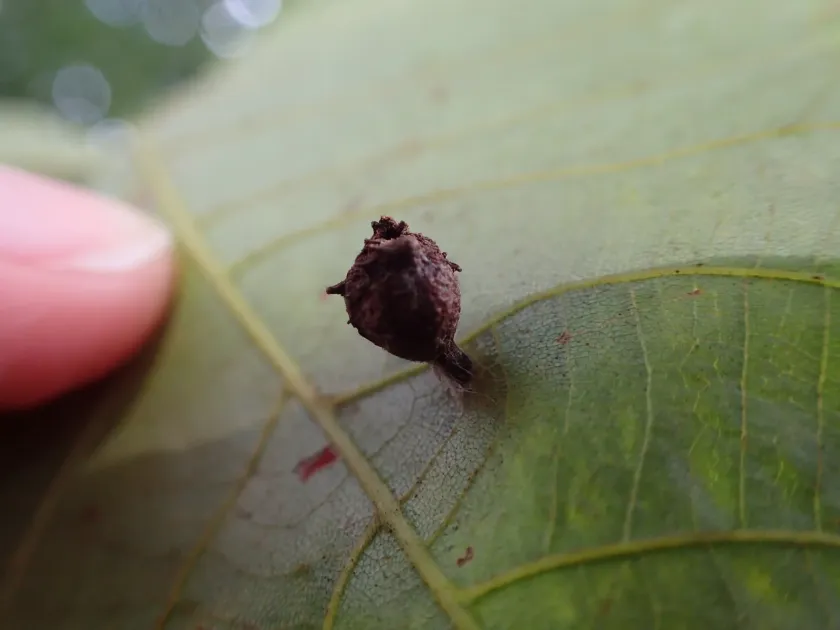
Description
How to identify
The pecan leaf phylloxera Phylloxera caryaegummosa is a tiny insect belonging to the family Phylloxeridae. These pests are microscopic, making them difficult to detect without a magnifying glass or microscope.
The appearance of the pest varies significantly depending on the life stage and the specific morph type. Females are the most noticeable stage, as they initiate the formation of galls on plant tissues.
The life cycle involves multiple generations, with each generation potentially exhibiting different morphological adaptations to survive and feed on the host plant.
The insect is closely associated with the development of buds and young shoots in early spring, which is the primary window for its initial infestation.
Accurate identification is essential for effective orchard management, as different gall-forming insects require specific timing for control measures.
What it damages
The primary host for this pest is the pecan tree Carya illinoinensis, though it also affects other species within the Carya genus.
When feeding, the phylloxera injects enzymes that disrupt plant cell growth, leading to the formation of galls on leaves, petioles, and young shoots.
Severe infestations cause physiological stress, which reduces the photosynthetic efficiency of the tree. This damage results in deformed foliage and reduced overall tree vigor.
While the phylloxera rarely kills a healthy mature tree, it significantly lowers nut yield and quality. Weakened trees become more susceptible to secondary diseases and environmental stressors.
Economic losses are cumulative, as repeated yearly infestations can lead to long-term decline in orchard productivity and overall health of the pecan stands.
When it appears
The activity of the pecan leaf phylloxera begins in early spring, synchronized with the bud break of the pecan trees. Overwintering nymphs emerge and begin feeding on succulent new tissues.
The spring generation is the most active and is responsible for the majority of gall formation observed in the orchard during the early season.
As the season progresses, multiple generations can emerge if environmental conditions remain favorable. During the summer, the population can multiply rapidly within the canopy.
As autumn approaches, the insect population prepares for dormancy. They migrate to bark crevices or other protected sites on the tree to survive the winter months.
Local climate data is crucial for predicting the emergence of this pest, as development is highly dependent on temperature-driven phenological stages.
Signs of infestation
The most distinctive sign of infestation is the presence of galls — raised, tumor-like growths on the leaf surface. These galls vary in size, color, and structure.
Early-season galls are often light green or yellow, but they may darken or necrotize over time. Inspecting the interior of these galls often reveals the presence of insects.
Foliage affected by the pest often becomes twisted or distorted. This architectural change in the leaf is a key indicator for scouts monitoring the orchard.
Careful examination of the underside of the leaves or inside the galls will reveal the microscopic nymphs or adult stages of the pest.
- Characteristic leaf galls and bumps.
- Distortion of young, growing shoots.
- Premature leaf yellowing or drop.
- Reduced vigor and annual growth.
Control measures
Chemical control must be applied before the galls fully enclose the insects. Early-season insecticide sprays are the most effective way to manage the population.
Systemic insecticides can be used to treat insects that have already penetrated the tissues, but efficacy is generally higher when treatments coincide with the initial emergence.
Cultural management includes pruning out heavily infested branches to reduce the local population density and prevent further spread throughout the orchard.
Maintaining tree health through proper irrigation and balanced fertilization helps trees tolerate the stress caused by phylloxera feeding.
Integrated Pest Management (IPM) programs should combine vigilant scouting, targeted insecticide applications, and sanitation practices to ensure long-term orchard productivity.
Taxonomy
- Latin name
- Phylloxera caryaegummosa
- Order
- Hemiptera (bugs, aphids, leafhoppers)
- Family
- Phylloxeridae
- EPPO code
- XEROCG
Discussion
No discussions yet — be the first.