
Pecan leaf phylloxera
Phylloxera caryaefoliae
Description
How to identify
Pecan leaf phylloxera (Phylloxera caryaefoliae) is a tiny insect belonging to the family Phylloxeridae. It is a specialized pest that exclusively affects trees within the genus Carya, particularly the pecan (Carya illinoinensis).
These insects are closely related to aphids and exhibit a complex life cycle. They are best known for inducing the growth of galls on the leaves of their host trees to provide shelter and sustenance.
Adult insects are microscopic and rarely seen without specialized equipment. The life cycle involves various generations, including wingless forms that reside inside the galls and winged forms that aid in dispersal.
Overwintering occurs in the egg stage. These eggs are typically laid in bark crevices or near leaf buds, where they remain dormant until the favorable conditions of the following spring.
Identifying the pest requires careful observation of the foliage, as the insects themselves spend most of their active life protected inside the plant tissue they induce to grow.
What it damages
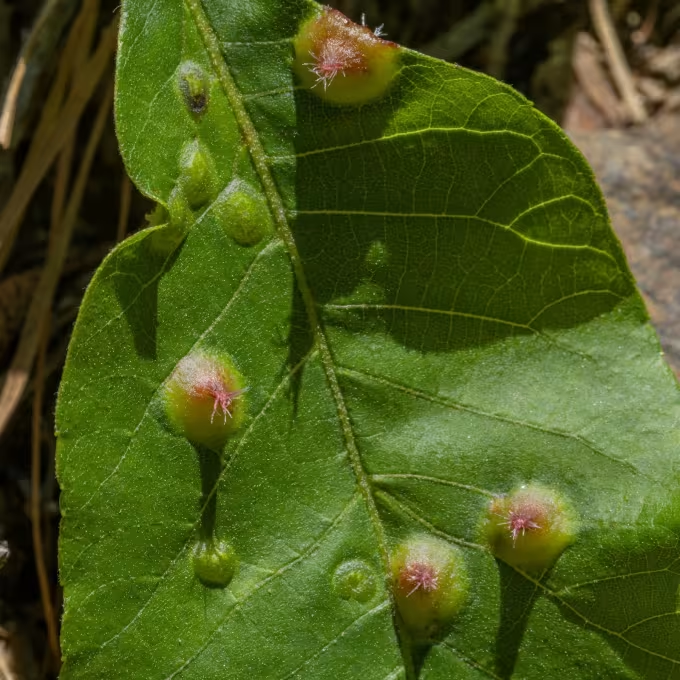
The primary damage caused by P. caryaefoliae involves the formation of galls on leaves. When a nymph begins to feed, it secretes substances that cause the plant tissue to swell and surround the insect.
While the galls provide a safe environment for the insect, they significantly disrupt the leaf structure. This damage reduces the overall photosynthetic capacity of the pecan tree.
Heavy infestations can lead to substantial leaf drop during the growing season. This loss of foliage causes the tree to weaken and significantly limits the nutrients available for nut production.
Ongoing annual infestations can lead to stunted tree growth and increased susceptibility to other biotic and abiotic stressors, ultimately reducing the orchard's profitability.
Although individual galls may seem insignificant, their cumulative impact on a large tree can be devastating if the pest population is not managed effectively.
When it appears
The active season for pecan leaf phylloxera begins in early spring, synchronized with the bud break of the pecan tree. This is when overwintered eggs hatch into stem mothers.
As soon as the leaves begin to expand, the nymphs migrate to the underside of the leaves to start the gall-forming process. This window is the most critical time for monitoring.
Several generations can occur throughout the spring and summer. Population dynamics are heavily influenced by temperature, with warmer spring weather often leading to faster development.
By late summer and into autumn, the insects complete their final generation, and eggs are deposited in bark fissures to prepare for the winter period.
Successful management depends on timing treatments during the spring emergence, before the galls have fully formed and enclosed the developing insects.
Signs of infestation
The most diagnostic sign of an infestation is the presence of distinctive leaf galls. These galls vary in size, shape, and color depending on the specific host and leaf development stage.
- Raised, bump-like structures on the upper surface of leaves.
- Small openings on the underside of leaves that serve as exit points for nymphs.
- Distorted, curled, or necrotic leaf edges.
- Yellowing of foliage followed by early seasonal leaf drop.
- Decreased nut yield and smaller nut size due to reduced vigor.
Control measures
Chemical control is the primary method for managing pecan leaf phylloxera. Applications of contact or systemic insecticides must be timed correctly to target the overwintered eggs and newly emerged nymphs.
Dormant oil sprays applied before bud break can effectively reduce the population by suffocating the overwintered eggs hidden in the bark.
Cultural practices, such as maintaining overall tree vigor through adequate irrigation and nutrient management, help trees withstand the stress of an infestation.
In commercial orchards, growers should monitor for early signs of gall formation to determine the need for and timing of insecticide applications.
Promoting biological control through the preservation of natural predators can also help suppress populations, especially in integrated pest management programs.
Taxonomy
- Latin name
- Phylloxera caryaefoliae
- Order
- Hemiptera (bugs, aphids, leafhoppers)
- Family
- Phylloxeridae
- EPPO code
- MORZCR
Discussion
No discussions yet — be the first.