
Pecan phylloxera
Phylloxera caryaefallax
Description
How to identify
The pecan phylloxera (Phylloxera caryaefallax) belongs to the order Hemiptera and the family Phylloxeridae. It is a tiny, aphid-like insect that specializes in parasitizing pecan and other Carya species.
These insects are microscopic and rarely seen by the naked eye. Their life cycle is uniquely adapted to inducing the formation of leaf galls, which provide both nutrition and a secure environment for their development.
The taxonomic classification highlights its evolutionary connection to other gall-forming pests. Understanding its biology is essential for differentiating it from other leaf-damaging organisms.
The female phylloxera is capable of both sexual and asexual reproduction, which allows the species to maintain its presence throughout the growing season. This reproductive strategy ensures rapid population growth under favorable conditions.
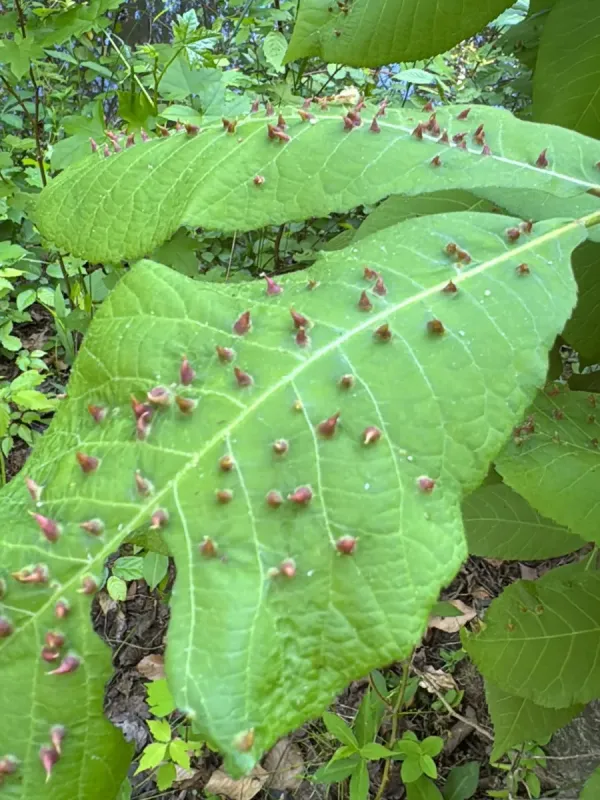
Identifying the species usually relies on the specific morphology of the galls it creates on the leaves, rather than direct observation of the insects themselves.
What it damages
The primary hosts for this pest are pecan trees and various species of walnut. The insect feeds by piercing the leaf tissue, which triggers the host plant to develop galls around the insect.
The formation of these galls diverts nutrients away from normal plant growth and development. This results in reduced photosynthetic capacity and overall tree vigor, especially in younger, more susceptible trees.
Heavy infestations can lead to premature leaf drop, which weakens the tree's ability to store energy for the subsequent year. This damage negatively impacts nut production and quality, causing economic losses for growers.
Affected trees become significantly more vulnerable to secondary stressors, including drought, nutrient deficiencies, and opportunistic pathogens that thrive on weakened plant tissues.
Persistent infestations over several years can result in stunted growth, dieback of smaller twigs, and a general decline in the long-term health of the entire orchard.
When it appears
The life cycle initiates in early spring when overwintering eggs hatch at the same time the tree buds begin to break. The nymphs immediately migrate to the emerging foliage to begin feeding.
During the growing season, multiple generations can occur, provided the environmental conditions are favorable. Peak activity usually coincides with the rapid expansion of young leaves.
As the season progresses toward autumn, the insects transition to the overwintering stage. These eggs are securely tucked into rough bark crevices or scales on the trunk and limbs to survive the winter.
Temperature and humidity levels are the primary drivers of the insect's development rate. Warm, humid springs are particularly conducive to higher infestation levels.
Monitoring for the first signs of activity should begin as soon as the first leaves unfurl, as this is the period when the insects are most vulnerable to control measures.
Signs of infestation
The most recognizable signs of an infestation are the galls that appear on the leaves. These structures vary in size and shape depending on the intensity of the colonization.
The leaf tissue around the gall often becomes discolored, ranging from pale yellow to brown. As the galls mature, they may harden, and the surrounding leaf tissue may show signs of stress or distortion.
- Development of small, raised bumps or swellings on the foliage.
- Distorted and misshapen leaf growth.
- Yellowing and localized necrosis on the leaf surface.
- Premature yellowing and leaf shedding during the peak summer months.
If a gall is dissected, the tiny insects can be observed inside. Distinguishing these symptoms from other foliar diseases is crucial for selecting the appropriate management strategy.
Control measures
Effective management requires a combination of early chemical intervention and orchard sanitation practices. Since the insects are protected inside galls, timing is the most critical factor.
Chemical control is most effective during the early spring period, specifically at the bud-break stage. Applying systemic insecticides at this time can help reduce the population before the galls are fully formed.
Sanitation efforts, including the removal and destruction of fallen leaves and infested debris, are essential to reduce the number of overwintering populations within the orchard environment.
Choosing resistant cultivars is the most sustainable long-term solution. Planting tree varieties that naturally resist gall formation minimizes the need for chemical pesticide use.
Regular orchard inspections allow for the early detection of localized outbreaks. Promptly treating these "hot spots" can prevent the infestation from spreading throughout the entire orchard.
Taxonomy
- Latin name
- Phylloxera caryaefallax
- Order
- Hemiptera (bugs, aphids, leafhoppers)
- Family
- Phylloxeridae
- EPPO code
- XEROCF
Discussion
No discussions yet — be the first.