
Pecan phylloxera
Phylloxera caryaecaulis
Description
How to identify
The pecan phylloxera Phylloxera caryaecaulis is a small sap-sucking insect in the family Phylloxeridae, known for being a specialized pest of hickory and pecan trees.
These insects are closely related to aphids but are distinguished by their complex life cycle involving the formation of protective galls on host tissues.
Adults are microscopic, wingless or winged, and spend a significant portion of their life cycle sequestered inside plant tissues.
The taxonomic classification places them in the order Hemiptera, where they utilize specialized mouthparts to feed on the host's vascular system.
Identification is almost exclusively based on the presence of the characteristic plant galls rather than the physical observation of the tiny insects themselves.
What it damages
Damage occurs primarily on pecans (Carya illinoinensis) through the creation of galls on young leaves, petioles, and succulent stems.
The feeding process triggers the host plant to overgrow its own tissue, creating a structure that provides food and shelter for the insect colony.
This redirection of plant resources significantly reduces the tree's vigor and limits the energy available for fruit production and nut filling.
High levels of galling lead to stunted growth of new shoots and may cause premature leaf senescence and drop, weakening the tree long-term.
Young orchards are particularly susceptible to severe infestations, which can permanently impair the architectural development of the tree.
When it appears
The life cycle begins in early spring as overwintering eggs or nymphs emerge in synchronization with bud break and new shoot growth.
Gall formation starts immediately after the young tissues begin to develop, making early spring the most critical window for pest activity.
Throughout the spring and early summer, multiple generations can occur, leading to a massive increase in the number of visible galls.
By mid-to-late summer, the activity peaks as mature insects emerge from the galls to mate and seek locations for overwintering.
The cycle completes in late autumn when the insects find refuge in the bark crevices, remaining dormant until the following spring.
Signs of infestation
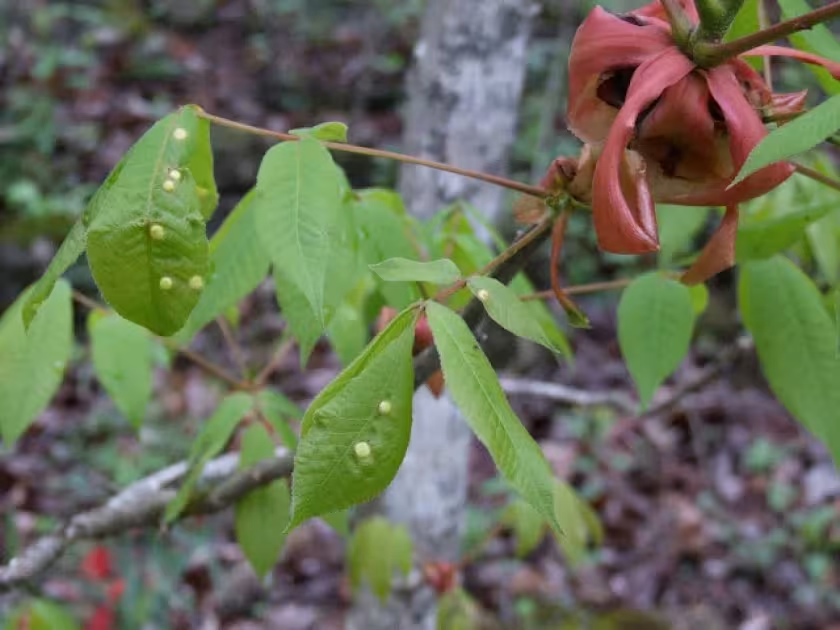
The most visible symptom is the appearance of distinct, globular, or elongated green galls on the foliage and new stems of the tree.
As the season progresses, these galls may darken to brown or black, becoming highly conspicuous against the green leaf canopy.
Severe infestation causes twisted, distorted growth of the twigs and petioles, leading to an irregular and unhealthy appearance of the canopy.
Premature loss of leaves before the end of the growing season indicates a high infestation level that has severely stressed the tree.
Careful inspection of the foliage during the early season will reveal small, soft, light-green swellings, which are the earliest evidence of attack.
Control measures
Effective management requires precise timing, as once the galls are fully formed, internal populations are protected from topical insecticides.
Systemic insecticides applied shortly before bud break provide the best results by targeting the nymphs before they can establish galls.
Cultural practices include the pruning of heavily infested branches to reduce the overall population density within the orchard environment.
Encouraging beneficial insects such as lady beetles and predatory bugs can help suppress the population naturally during the summer months.
Ongoing monitoring of trees during the spring transition is essential for determining the need for chemical intervention and protecting the crop yield.
Taxonomy
- Latin name
- Phylloxera caryaecaulis
- Order
- Hemiptera (bugs, aphids, leafhoppers)
- Family
- Phylloxeridae
- EPPO code
- XEROCC
Discussion
No discussions yet — be the first.