
Phylloscelis rubra
Phylloscelis rubra
Description
How to identify
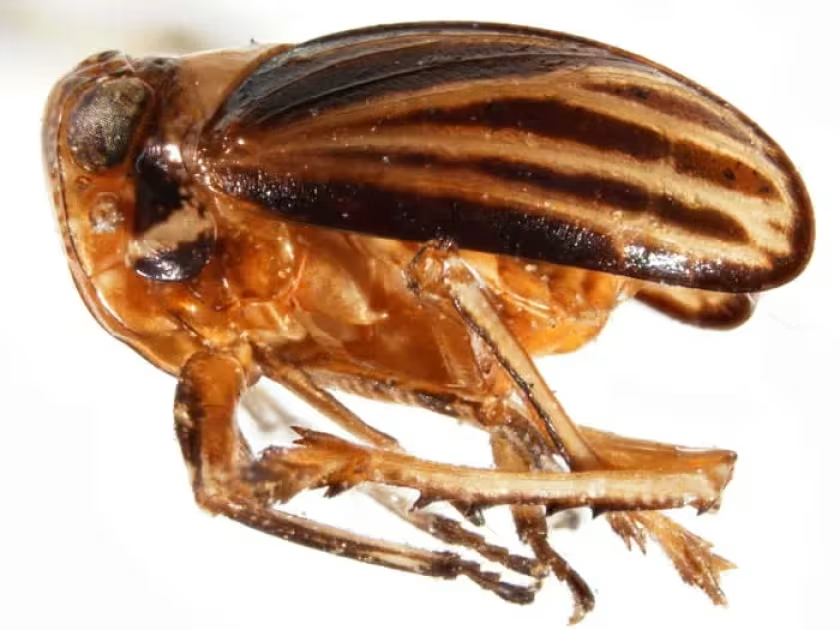
Phylloscelis rubra is a species of planthopper belonging to the family Dictyopharidae. These insects are easily identified by their specialized head morphology, featuring a distinct projection characteristic of this family.
Adult insects usually exhibit reddish to brownish coloration, which serves as camouflage against stems and leaf blades. Their body structure is designed for agility and rapid leaping when disturbed.
Nymphs of this species resemble smaller, wingless versions of the adults. They progress through several instars, gradually increasing in size and developing morphological features characteristic of the adult stage.
Entomologists distinguish this specific species by the unique shape of its cephalic process. Accurate identification under magnification is crucial for determining if this specific pest is present in a field.
These insects tend to be elusive, frequently occupying the undersides of leaves or hidden plant crevices. This cryptic behavior often allows them to remain undetected until their population density significantly increases.
What it damages
Phylloscelis rubra primarily feeds on various herbaceous plants. Its impact is characterized by the extraction of phloem sap, which deprives the host plant of essential nutrients and moisture.
As the insects feed, they use their piercing-sucking mouthparts to puncture plant tissues. This process directly interferes with the plant’s nutrient transport system and disrupts normal metabolic functions.
In addition to direct feeding damage, this species can act as a vector for various plant pathogens. The introduction of viruses or phytoplasmas through feeding sites can cause systemic infections that weaken the crop.
Large colonies can cause significant wilting, leaf yellowing, and stunted growth. In severe cases, the cumulative damage from feeding and pathogen transmission can lead to substantial yield losses.
Plants under water stress are particularly vulnerable, as their weakened internal systems cannot recover from the damage caused by high numbers of these feeding insects.
When it appears
The life cycle of Phylloscelis rubra is highly dependent on the vegetation period. Nymphs typically emerge in late spring as temperatures rise, signaling the start of the primary growing phase.
The species overwinters primarily in the egg stage. Eggs are laid within plant tissues or the upper soil layer, providing necessary protection from harsh winter temperatures until the following spring.
Adult activity is most pronounced during the summer months. During this time, they move between plants to feed and mate, completing their life cycle and preparing the next generation.
The number of generations per year can vary based on regional climatic conditions, particularly the length of the frost-free season and overall humidity levels.
As autumn approaches, adult activity declines, and the focus shifts to egg-laying for overwintering. This period is a critical window for monitoring the pest potential for the following season.
Signs of infestation
Early signs of infestation include chlorosis or yellowing of the leaves, often mistaken for nutrient deficiencies. The leaves may curl or lose turgor as the insects remove plant sap.
Visible feeding punctures appear as small, sometimes necrotic spots on the foliage. Over time, these spots can coalesce, leading to larger areas of tissue death and reduced photosynthetic capacity.
The presence of honeydew on the leaves is a common indicator of planthopper activity. This sticky substance often attracts sooty mold, which further blocks light and hampers plant growth.
A closer look at leaf undersides usually reveals groups of nymphs or adults. When disturbed, they may jump rapidly, which is a telltale sign of their presence in the canopy.
Discarded exoskeletons, or exuviae, found on the stem surfaces confirm that the nymphs have molted and are continuing to develop, indicating an active and growing infestation.
Control measures
Integrated pest management (IPM) is essential for controlling Phylloscelis rubra. Cultural practices, such as weed removal and maintaining field edges, reduce the habitat available for the pest to thrive.
Chemical control involving systemic insecticides is often necessary when populations reach economic injury levels. These treatments ensure that the plant is protected throughout the growth stage.
Biological control, including the encouragement of natural predators like lacewings, ladybugs, and parasitic wasps, can help keep populations in check without relying solely on synthetic chemicals.
Monitoring with yellow sticky traps is an effective strategy to detect initial migration or emergence. Early detection allows for targeted, smaller-scale applications rather than broad-spectrum spraying.
- Regular weeding to eliminate alternative host plants around the field.
- Usage of systemic insecticides as part of an integrated program.
- Encouraging natural predators through reduced chemical impact.
- Monitoring population trends using sticky traps for informed decision-making.
Taxonomy
- Latin name
- Phylloscelis rubra
- Order
- Hemiptera (bugs, aphids, leafhoppers)
- Family
- Dictyopharidae
- EPPO code
- PYIZRU
Discussion
No discussions yet — be the first.