
Dictyophara europaea
Dictyophara europaea
Description
How to identify
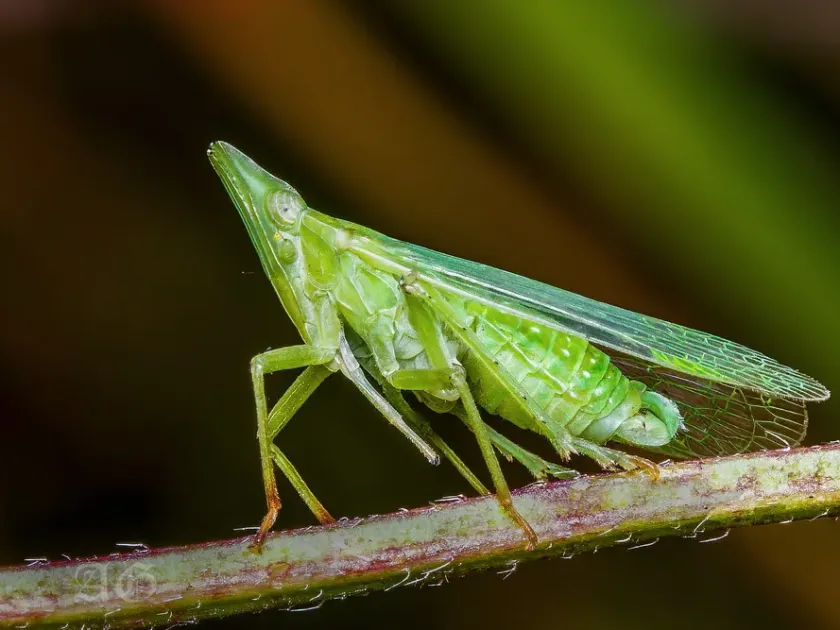
Dictyophara europaea is a member of the Dictyopharidae family, known for its distinct morphology. The most prominent feature is an elongated, horn-like cephalic process on its head.
Adult insects are typically pale green or yellowish-green, providing excellent camouflage against leaves and stems. Their wings are transparent with a complex vein structure.
Adults reach 10 to 15 millimeters in length. Nymphs resemble miniature adults but lack fully developed wings, making them more restricted in movement until they mature.
These insects are highly agile, capable of jumping significant distances using their hind legs, which makes them difficult to catch or monitor in the field.
Identification is easily confirmed by observing the conical head structure, which distinguishes this species from other similar cicada-like insects found in garden environments.
What it damages
This pest is a polyphagous insect that feeds on a wide range of hosts, including grapevines, fruit trees, and various vegetable crops such as tomatoes and eggplants.
Feeding occurs by piercing plant tissue and sucking the sap, which leads to significant nutrient loss. This weakens the plant and stunts overall growth and development.
Beyond physical feeding damage, Dictyophara europaea acts as a vector for various phytoplasma diseases, such as the grapevine yellows, causing severe economic losses.
Affected plants often show signs of chlorosis, leaf curling, and flower abortion. In severe infestations, the yield can be reduced to a fraction of the expected output.
- Grapevine
- Solanaceous plants
- Fruit-bearing trees
- Cereal crops
When it appears
The life cycle begins with eggs overwintering in soil or on plant debris. Nymphs typically emerge in late spring when temperatures begin to rise consistently.
Nymphs go through several developmental stages during the early summer months. They feed voraciously on young shoots during this critical growth period for plants.
Adults emerge mid-summer, usually during July and August. They are highly mobile and disperse across the plantation, looking for mating partners and fresh host plants.
Development is highly dependent on environmental conditions, with warmer climates potentially accelerating the life cycle and increasing population growth.
As autumn approaches, adult activity wanes. The insects lay eggs to ensure the next generation survives the cold season, completing the annual cycle.
Signs of infestation
Early warning signs include waxy white or grey secretions left by nymphs on the stems or undersides of leaves, which are visible upon close inspection.
Symptoms of infestation include sudden wilting or yellowing of foliage. If the plant is infected by phytoplasmas transmitted by the cicada, growth deformities are common.
The presence of honeydew on the leaves often leads to the growth of sooty mold, which further degrades the health of the plant by blocking light for photosynthesis.
Stunted plant growth and reduced flower set are major indicators that a systemic infestation might be occurring on the farm or vineyard.
Disturbing the foliage often causes adult cicadas to jump away rapidly. A sudden jump activity when checking plants is a clear sign of a localized pest presence.
Control measures
Cultural practices are the first line of defense. Keeping fields free from weeds is essential, as many weeds act as alternative hosts for the pest throughout the season.
Systemic insecticides should be applied during the peak emergence of nymphs. Proper timing is critical to reduce the population before it spreads to the main crops.
Integrated Pest Management (IPM) involves rotating different classes of chemicals to prevent the insects from developing resistance to common pesticide treatments.
Deep plowing in late autumn or early spring can help destroy overwintering egg clusters buried in the soil, effectively reducing the initial population size.
Encouraging natural predators, such as predatory wasps and spiders, can provide a level of biological control that suppresses the population naturally over time.
Taxonomy
- Latin name
- Dictyophara europaea
- Order
- Hemiptera (bugs, aphids, leafhoppers)
- Family
- Dictyopharidae
- EPPO code
- EPPTEU
Discussion
No discussions yet — be the first.