
Phylloscelis
Phylloscelis
Description
How to identify
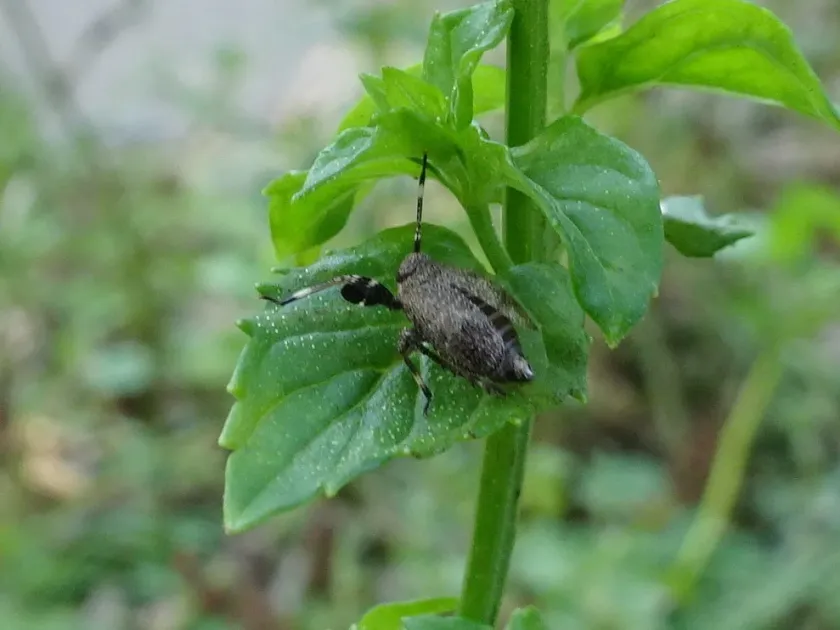
Phylloscelis belongs to the family Issidae, which is part of the order Hemiptera. These are small planthoppers characterized by a distinct head structure featuring an elongated rostrum or snout-like process.
Adults typically exhibit a flattened body shape with leathery forewings that lie flat against the back, creating a dome-like or shield-like profile. Their coloration ranges from brownish to grey, providing excellent camouflage against tree bark or plant stems.
Nymphs share a similar morphology with adults but are significantly smaller and lack developed wings. They are relatively sedentary and are often covered in a waxy, white secretion that protects them from external environmental stressors.
For precise species identification, specialists rely on the microscopic examination of the male genitalia. In field conditions, the insects are easily spotted by their sudden, jerky jumping movements when disturbed.
Phylloscelis prefers to reside in the lower vegetation layers, often hiding on the underside of leaves or within the crown area of host plants, which makes early detection quite challenging.
What it damages
This pest is a polyphage, though it primarily causes damage to perennial herbaceous plants and certain woody ornamental species. Phylloscelis feeds mainly on plant sap by piercing the epidermis of tender young shoots.
Feeding damage affects young leaves, petioles, and soft stems, disrupting the plant's metabolic processes. Persistent sap extraction causes a noticeable reduction in growth rate or complete cessation of development in affected parts.
It has been established that the insect's saliva may contain toxic components that cause deformation, curling, and twisting of leaf blades. This significantly weakens the plant's immune system, leaving it susceptible to secondary fungal infections.
Small chlorotic spots often appear at the puncture sites, which may eventually undergo necrosis. In cases of high population density, the plant loses its aesthetic value and overall productivity.
Phylloscelis poses a significant threat to young nursery saplings, where damage to terminal buds can lead to irregular branching and permanent trunk deformation.
When it appears
The life cycle of Phylloscelis is closely tied to the phenology of its host plants. Overwintering usually occurs in the egg stage, with eggs deposited by females into bark crevices or under bud scales.
Nymph emergence coincides with the start of the vegetative season when plants begin active sap flow. This typically happens in mid-spring, once average daily temperatures exceed 10–12 degrees Celsius.
The nymphal stage undergoes several molts while feeding intensively and moving across the plant. By mid-summer, the population reaches its peak density, coinciding with the maturation of adults.
Adults are active throughout the second half of summer, during which mating and egg-laying for the next generation occur. In favorable climatic conditions, only one generation is produced per year.
As autumn temperatures drop, insect activity declines sharply. Adults perish following the reproductive cycle, leaving behind cold-resistant eggs to survive the winter and repeat the cycle in the spring.
Signs of infestation
The first visual sign of a Phylloscelis infestation is the presence of honeydew, a sticky substance excreted by the insects. This residue acts as a substrate for sooty mold growth, which covers leaves in a black, powdery layer.
In early stages, the pest can be identified by the sudden curling of leaves on shoot tips. Carefully unfolding these leaves often reveals colonies of nymphs or adults hiding inside.
A characteristic sign is the overall stunted appearance of the plant, which may look wilted despite adequate watering, trailing behind healthy specimens in the same area.
Specific tiny light-colored dots on the underside of leaves indicate active feeding. In dry weather, these puncture marks become more pronounced as the tissue around them begins to desiccate.
Shaking the affected branches triggers a characteristic jumping reaction, as the insects rapidly abandon their feeding sites, which serves as a reliable indicator of infestation.
Control measures
Protecting plants from Phylloscelis requires an integrated approach combining agrotechnical and chemical measures. Maintaining plant vigor through proper irrigation and balanced fertilization is essential.
In home gardens, mechanical removal of infested shoots is an effective way to manage small colonies. Additionally, timely weeding of host plants and nearby reservoir weeds helps reduce the localized pest pressure.
When populations reach economic threshold levels, systemic or contact insecticides registered for the specific crop should be utilized. Applications are most effective during early morning or evening hours.
Biological control methods involve encouraging natural enemies, such as assassin bugs and lacewings. Planting insectary flowers around the garden perimeter can help attract these beneficial predators.
- Monitoring with yellow sticky traps.
- Maintaining crop rotation and spatial isolation of plots.
- Preventative applications of horticultural oils in early spring.
- Removal and destruction of plant debris in the autumn.
Taxonomy
- Latin name
- Phylloscelis
- Order
- Hemiptera (bugs, aphids, leafhoppers)
- Family
- Dictyopharidae
- EPPO code
- PYIZSP
Discussion
No discussions yet — be the first.