
Silky slug moth
Phrixolepia sericea
Description
How to identify
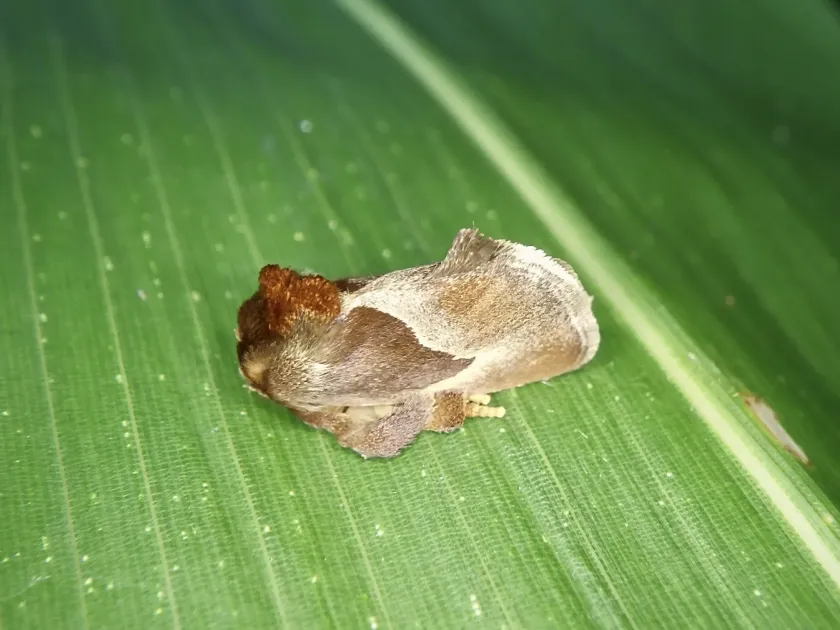
The silky slug moth (Phrixolepia sericea) is a species of moth belonging to the Limacodidae family. Adult moths are characterized by the silky appearance of their wings, which is reflected in their common name.
Larvae of this species are famously slug-like in appearance, lacking visible legs and moving with a gliding motion. Their skin is often covered in small, urticating hairs that provide protection against predators.
The coloration of the caterpillars is typically bright, often green or yellow, allowing them to blend into the foliage. They pupate in hard, rounded cocoons attached to twigs or the underside of leaves.
The life cycle depends on the climatic conditions of the habitat, with one or two generations occurring annually. Favorable temperatures allow the population to increase rapidly in infested areas.
Taxonomically, this species is classified within the order Lepidoptera. Scientific interest in this moth is primarily focused on its feeding habits and the potential impact it has on woody plants.
What it damages
Caterpillars cause the primary damage by feeding on the leaves of deciduous trees and shrubs. In agricultural or garden settings, this can lead to aesthetic and physiological damage to plants.
Common host plants include various fruit-bearing trees such as apples and pears. The larvae consume the soft tissue of the leaves, frequently skeletonizing them and leaving behind only the tougher veins.
Heavy infestations can lead to significant defoliation of the canopy. This stress reduces the plant's ability to photosynthesize, ultimately hindering growth and decreasing overall yield potential.
Handling these caterpillars can be hazardous for workers, as the stinging hairs on their bodies can cause contact dermatitis. This complicates manual maintenance tasks such as pruning or fruit harvesting.
Economic damage is generally localized, but proactive monitoring is necessary to prevent severe outbreaks that could negatively affect the productivity of orchards or ornamental landscapes.
Signs of infestation
The first sign of an infestation is the presence of eaten or skeletonized leaf patches. Because the larvae often feed on the underside of the foliage, infestations may go unnoticed in the early stages.
Durable cocoons attached to branches are a clear indicator of the species' presence. These structures are very resilient and can remain on the tree even after the adult moth has emerged.
Observing the larvae themselves is the most reliable way to identify the pest. Their distinct slug-like movement and lack of clearly defined legs make them easy to distinguish from other caterpillars.
The accumulation of frass (excrement) beneath the tree canopy indicates active feeding by a significant population. This should trigger an immediate assessment of the affected plant's health.
Premature leaf drop or yellowing of the canopy during the peak growing season often indicates that the photosynthetic surface area has been critically damaged by a large larval population.
Control measures
Effective management of the silky slug moth involves an integrated pest management (IPM) approach that balances mechanical, biological, and chemical methods.
Mechanical removal of cocoons during winter pruning is an effective and safe way to reduce the population. This simple step significantly lowers the number of larvae in the following season.
Biological control using microbial insecticides, such as products containing Bacillus thuringiensis, is highly effective against younger larvae while minimizing impact on beneficial insect populations.
Chemical control should be reserved for instances where the population density exceeds economic thresholds. Systemic insecticides can be used, provided they are labeled for the specific crop.
- Monitoring adult moth activity using light traps or pheromone lures.
- Preserving natural predator habitats to encourage biological suppression.
- Sanitation practices, including the removal and destruction of heavily infested plant materials.
Taxonomy
- Latin name
- Phrixolepia sericea
- Order
- Lepidoptera (butterflies)
- Family
- Limacodidae
- EPPO code
- PHRXSE
Discussion
No discussions yet — be the first.