
Phrixolepia
Phrixolepia
Description
How to identify
Phrixolepia is a genus of moths belonging to the Limacodidae family, commonly known as slug moths. Their caterpillars are distinctive due to their slug-like appearance, lacking typical prolegs.
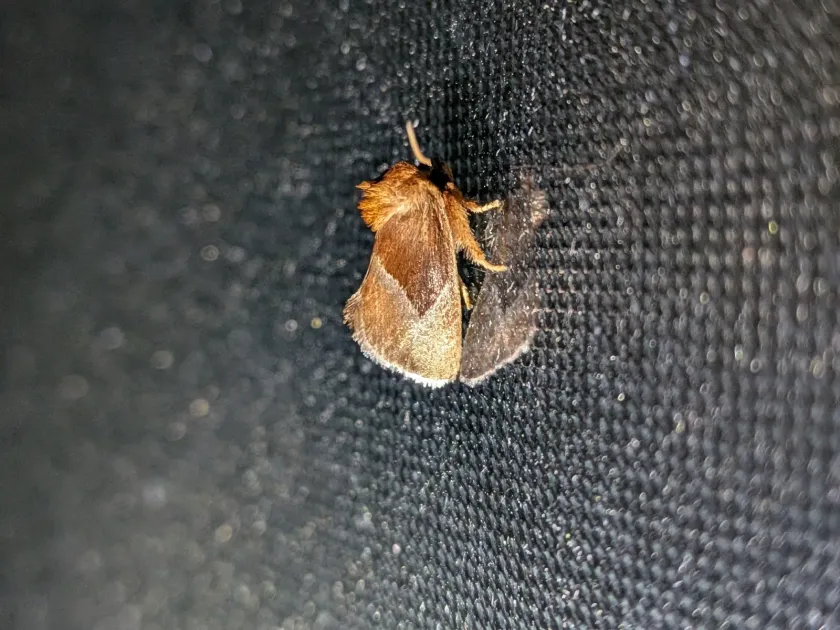
Adult moths are characterized by a robust, hairy body. They have evolved excellent camouflage, usually blending in with tree bark during daylight hours to avoid detection by predators.
The larvae (caterpillars) are often flattened and wide. Some species are brightly colored as a warning, and many are covered with stinging hairs or spines that can cause irritation to human skin.
The life cycle involves complete metamorphosis. Pupation occurs within firm, spherical or oval cocoons often attached directly to the host plant's stems or trunk.
Precise identification of Phrixolepia species can be challenging and often requires professional entomological examination of both larval and adult structures.
What it damages
Phrixolepia species primarily attack trees and shrubs, showing a preference for various foliage plants found in both natural environments and managed orchards.
The damage is caused by larvae feeding on leaves. They typically scrape away the epidermis or consume the entire leaf lamina, leaving only the veins behind, which is known as skeletonization.
Heavy infestations can lead to significant defoliation, which stresses the tree, reduces its growth rate, and makes it more susceptible to other diseases and pests.
In ornamental gardens, the aesthetic damage is severe, as the foliage becomes unsightly. In fruit production, defoliation affects the plant's ability to produce high-quality yields.
Young nursery stock is particularly vulnerable; a single colony of larvae can potentially defoliate a small tree, causing permanent structural damage or death.
When it appears
The activity of Phrixolepia generally begins in late spring and continues through the summer months, coinciding with the peak period of plant growth.
Depending on the climatic zone, the pest may complete one or multiple generations per year. The moths emerge to mate, and the resulting larvae feed throughout the season.
Caterpillar feeding is most intense during mid-summer. As temperatures begin to drop in late summer or autumn, the larvae prepare to pupate for the winter season.
The overwintering stage is the pupa, which remains protected within its hard cocoon. This stage is resistant to cold, allowing the species to survive harsh winter temperatures.
Farmers and gardeners should monitor plants from late May, looking for early signs of feeding or the presence of moth activity around host trees.
Signs of infestation
The primary sign of a Phrixolepia infestation is the presence of skeletonized leaves or irregular holes chewed into the leaf surface by the larvae.
Inspect tree trunks and twigs for the characteristic cocoons. Finding these structures during the winter pruning process is a reliable indicator of the pest's presence.
- Irregular leaf tissue loss (patchy or skeletonized).
- Larvae clustering on the undersides of leaves or twigs.
- Mild skin irritation when working near infested branches.
- Slowing of shoot development in late summer.
Large quantities of frass (larval droppings) beneath the host tree foliage can also alert growers to a significant infestation in the canopy above.
Control measures
Manual removal of larvae and cocoons is highly effective for small-scale gardens. This simple mechanical method can significantly suppress the local pest population.
Biological control options, such as the use of Bacillus thuringiensis (Bt) sprays, provide an eco-friendly way to manage larvae without harming beneficial pollinators.
Chemical control should be used only as a last resort. Targeted applications of appropriate insecticides are most effective when timed with the early larval stage of development.
Cultivation practices, including keeping trees healthy through proper nutrition and irrigation, enhance the plant's ability to recover from minor pest attacks.
Promoting local biodiversity by providing habitats for natural predators, such as parasitic wasps and predatory beetles, can help keep Phrixolepia populations in check naturally.
Taxonomy
- Latin name
- Phrixolepia
- Order
- Lepidoptera (butterflies)
- Family
- Limacodidae
- EPPO code
- PHRXSP
Discussion
No discussions yet — be the first.