
Phorid fly
Phora
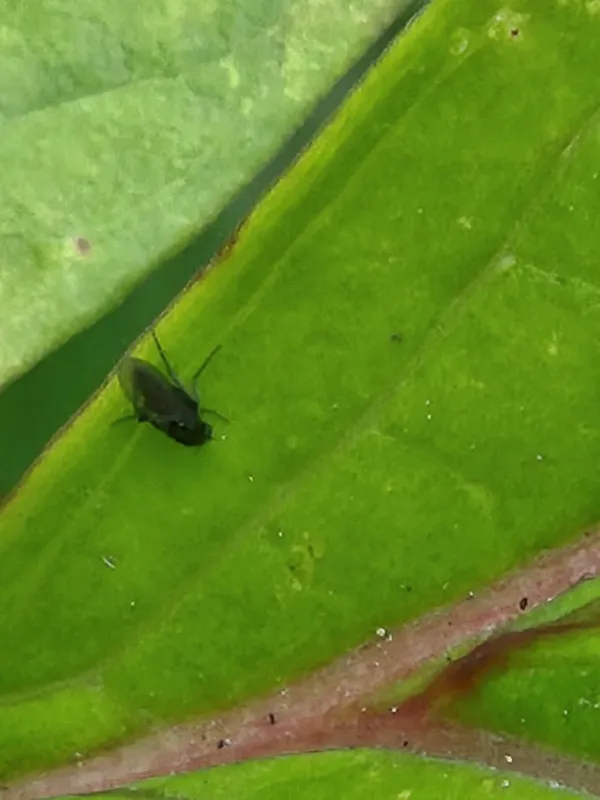
Description
How to identify
The Phorid fly (family Phoridae) is a small dipteran insect known for its characteristic arched thorax, which gives it a humpbacked appearance. Adult flies range from 0.5 to 3 mm in length and vary in color from black to yellowish-brown.
A distinctive trait of these flies is their erratic behavior: rather than flying constantly, they are often seen running rapidly across surfaces and making sudden, short hops when disturbed. The head is small with large eyes, and the wing venation is simplified, which is a key diagnostic feature for entomologists.
Phorid larvae are legless, reaching up to 5 mm in length, with a transparent body and a distinct head capsule. They thrive in moist environments rich in decaying organic matter, which provides the necessary nutrition for rapid development.
The life cycle encompasses four stages: egg, larva, pupa, and adult. In warm mushroom cultivation chambers, the development from egg to adult can take as little as 10–14 days, leading to very rapid generation turnover.
Due to this high reproductive rate, a single pair of flies can infest an entire production block in a very short time if preventative measures are neglected.
What it damages
The greatest economic impact of the Phorid fly is seen in the commercial cultivation of mushrooms, such as Agaricus and Pleurotus. Larvae feed directly on the mushroom mycelium and tunnel through the stalks and caps.
Infested mushrooms lose their commercial value, become unsuitable for sale, and are prone to secondary bacterial rot, as the flies act as vectors for various pathogens.
Beyond mushrooms, Phorid flies can infest seedling crops in greenhouses, particularly when the growing medium contains significant amounts of uncomposted organic matter.
The pest utilizes rotting plant residues, manure, and other organic substrates, making them a threat to vegetable storage facilities where flies may lay eggs in damaged produce.
A serious concern is the ability of adult flies to spread fungal spores and bacterial plant disease agents throughout production areas as they move between different rooms.
When it appears
In controlled indoor environments, Phorid flies are active year-round whenever temperatures remain above 15°C. The optimal range for peak reproductive activity is between 22°C and 26°C.
In outdoor settings, the pest is prevalent from spring through autumn, with activity peaking in mid-summer when heat and humidity are at their highest levels.
In mushroom farming cycles, population spikes often correlate with poor sanitation protocols and the accumulation of spent compost near cultivation chambers.
Adult flies frequently migrate from nearby manure piles, storage sheds, or wooded areas, gaining access to facilities through unprotected ventilation systems.
Populations tend to build up gradually within a facility, often going unnoticed until the fly numbers reach a critical threshold for mycelial damage.
Signs of infestation
The first sign of an infestation is the presence of small, fast-moving flies on the substrate surface or walls of the cultivation room. They exhibit characteristic jumping behavior when the surface is tapped.
Mushroom damage is evidenced by eaten areas on stalks and caps, which appear as small pits or tunnels. Dissecting these tunnels often reveals the presence of Phorid larvae.
Inspection of the mycelium may show patches of thinning or dieback where the larvae have been feeding, often leaving the compost surface exposed.
A distinct, pungent odor of rot emanating from young mushrooms is a strong indicator of Phorid infestation, as the larvae introduce decay-causing bacteria into the tissues.
Sticky residues on container surfaces or the presence of empty pupal casings in the casing soil are also clear indicators of a significant infestation level.
Control measures
The primary control strategy involves strict adherence to sanitary and hygiene standards in cultivation facilities, including the timely disposal of spent substrate and regular disinfection.
- Installing fine-mesh screens on all ventilation inlets to prevent adult migration.
- Utilizing light traps and yellow sticky cards for continuous monitoring and adult suppression.
- Applying biological control agents, such as entomopathogenic nematodes (e.g., Steinernema feltiae), to the substrate.
- Ensuring thorough heat treatment (pasteurization) of compost before inoculation to eliminate all fly life stages.
- Performing chemical treatments of facility surfaces with approved insecticides only when no fruiting bodies are present.
Taxonomy
- Latin name
- Phora
- Order
- Diptera (flies)
- Family
- Phoridae
- EPPO code
- PHQRSP
Discussion
No discussions yet — be the first.