
Daurian redstart
Phoenicurus auroreus
Description
How to identify
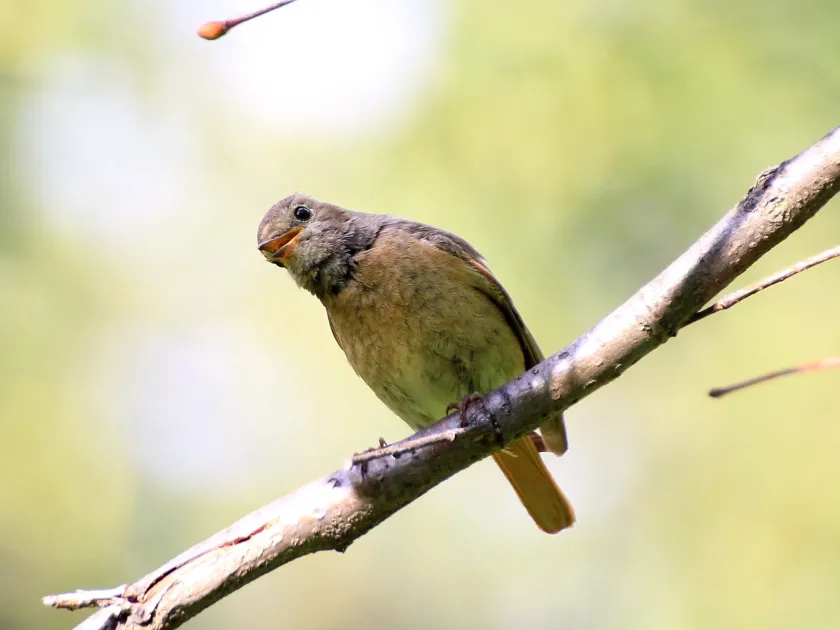
The Daurian redstart is a small passerine bird belonging to the Muscicapidae family. Males are easily recognized by their striking orange-red underparts and contrasting grey and black head markings.
Females exhibit a more muted, brownish plumage, which serves as camouflage during nesting and brooding periods. A distinctive feature of this species is its constant tail-flicking movement, especially when perched.
These birds favor forest edges, open woodlands, and are highly successful in occupying human-modified habitats such as gardens, orchards, and rural homesteads.
They are diurnal creatures, often seen hopping along branches in search of insects. Their song is a short, rhythmic sequence of whistles and clicking notes, commonly heard during the spring.
Highly adaptable to human presence, they often nest in cavities of buildings, stone walls, or trees, making them a common sight in cultivated landscapes.
What it damages
While the Daurian redstart primarily consumes insects, contributing to pest control in gardens, it can shift its diet towards fruit and berries during the ripening season.
The damage consists of pecking holes into ripening fruits, which ruins their appearance and marketability, while also creating entry points for opportunistic fungal infections.
Small berries such as currants, raspberries, and cherries are most susceptible to damage, especially when large family groups frequent the orchard.
In many cases, the benefit of having them around, as they consume aphids, beetles, and larvae throughout the spring, outweighs the occasional damage they cause to fruits.
Orchard managers should consider the net ecological impact of these birds before implementing intensive control measures, as they are crucial components of the garden's natural pest suppression.
When it appears
The seasonal presence of the Daurian redstart in orchards begins with their spring migration in April, when they return to establish territories and nesting sites.
The period of highest risk for crops occurs in mid-to-late summer, when the birds are raising fledglings and the ripening of various soft fruits coincides with their foraging activity.
As autumn approaches, the birds begin their southward migration, usually leaving their breeding grounds by October as the food supply decreases.
Their life cycle is tightly synchronized with the phenology of trees and the abundance of insects; successful breeding depends on this natural food availability.
Peak feeding activity is typically observed during early morning and late afternoon, which are also the times when damage to ripening fruits is most likely to occur.
Signs of infestation
The presence of pecked or damaged fruit remaining on the plant is the most definitive sign of avian activity, often accompanied by early fruit drop.
Nesting activity is identified by the presence of nests in building crevices or tree hollows, often near locations where adult birds are frequently seen.
Distinctive tail-flicking behavior and characteristic clicking calls are reliable markers for confirming that Daurian redstarts are actively using the garden as a foraging site.
Accumulated droppings on branches or under perching spots indicate well-frequented paths, which can help in identifying exactly which parts of the orchard are most exposed.
Seeing birds frequenting the same clusters of fruit repeatedly is a clear indicator that they have established a feeding habit in that specific area of the garden.
Control measures
The most effective strategy to protect fruit is the use of fine-mesh netting to cover bushes or individual tree crowns, which creates a physical barrier the birds cannot bypass.
Ultrasonic bird repellers or other acoustic deterrents that mimic predator calls can be effective, provided they are rotated to prevent the birds from becoming accustomed to the sound.
Visual deterrents, including reflective tape or holographic devices, can temporarily drive birds away, though their efficacy tends to diminish over time as birds habituate to them.
Prompt harvesting of ripe fruits prevents the buildup of the food source that attracts the birds, effectively limiting the time frame during which damage can occur.
Promoting a balanced garden ecosystem that supports natural predators of these birds can help regulate their population without the need for manual or chemical intervention.
Taxonomy
- Latin name
- Phoenicurus auroreus
- Family
- Muscicapidae
- EPPO code
- PHNCAU
Discussion
No discussions yet — be the first.