
European robin
Erithacus rubecula
Description
How to identify
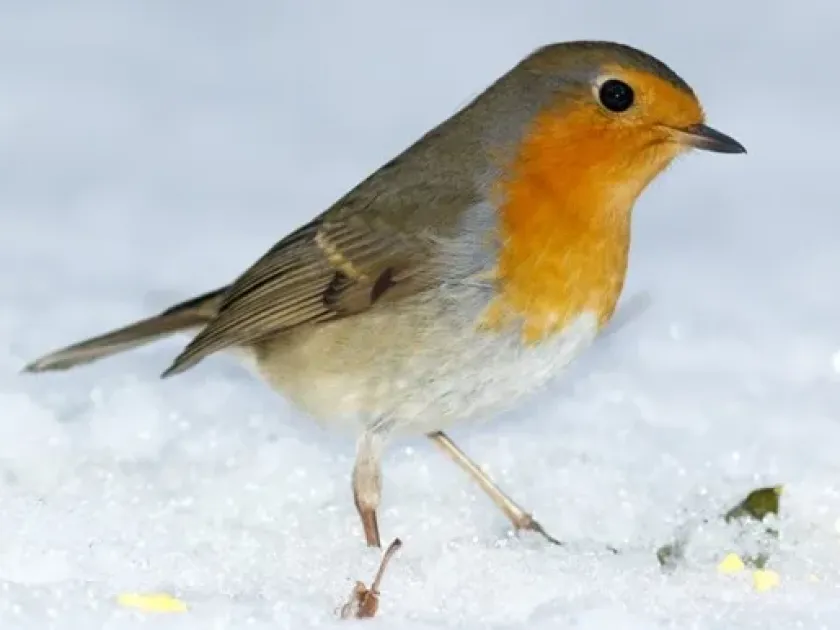
The European robin (Erithacus rubecula), often simply known as the robin, belongs to the family Muscicapidae within the order Passeriformes. This small bird is easily identified by its distinctive orange-red breast and large, dark eyes.
Physically, the bird is about 14 centimeters long with olive-brown upperparts. Males and females look nearly identical, making it difficult to distinguish between sexes without detailed observation.
Although primarily insectivorous, the robin exhibits dietary flexibility when soft fruits become available. Their high metabolic rate requires frequent feeding, which often leads them to raid garden patches.
Their biology is closely tied to nesting in dense hedges, thickets, or hollows. Due to their territorial nature, they remain permanent residents in gardens throughout the spring and summer seasons.
The robin's life cycle typically involves two broods per season, ensuring a stable population. Fledglings quickly learn to forage for food, increasing the number of birds searching for resources in the garden.
What it damages
The primary damage occurs during the ripening of soft fruits and berries. Robins damage crops such as raspberries, blackberries, strawberries, and currants by pecking at the succulent flesh.
Damaged fruits lose their aesthetic and commercial value and deteriorate quickly. Once the skin is broken, the berries become highly susceptible to fungal infections, particularly grey mold.
Economic damage is most noticeable in small-scale farming and home gardens, where robins can ruin up to 20% of the yield. They are most active during the early morning and late evening hours.
In addition to eating berries, robins may damage the buds of ornamental plants while foraging for insects. This can inadvertently slow down the development of young shrubs during early spring.
While robins act as beneficial predators of harmful insects, their behavior during the harvest season makes them significant competitors for produce, necessitating protective measures.
Signs of infestation
The first sign of bird presence is the characteristic ragged damage on ripe berries. The fruit will show signs of being pecked, often with sections of the pulp missing.
Accumulation of bird droppings on foliage and branches near berry bushes is a clear indicator that birds are frequently visiting the area to forage.
Observing bird behavior is key to early detection. Robins are naturally secretive, preferring to move by hopping along the ground or within the lower canopy of shrubs to avoid being spotted.
A noticeable absence of berries on the lower branches of a bush, while the upper ones remain untouched, often indicates the presence of robins, which prefer feeding in lower, sheltered areas.
Auditory signals: a sharp, ticking alarm call is commonly issued by robins when they feel threatened by human presence near their favorite feeding spots.
Control measures
The most effective method of protection is the use of fine-mesh netting. This should be draped over berry rows just before the fruit begins to ripen to prevent access.
Installing visual deterrents, such as reflective tapes, old CDs, or bird decoys, can help discourage robins from lingering in the garden area.
Agricultural practices include the prompt removal of fallen fruit, which can act as an attractant for birds and lead to a build-up of the population in the garden.
Creating alternative feeding zones with wild berry bushes at the edge of the property can successfully divert robins away from your high-value commercial crops.
- Installation of bird spikes on fences and trellises.
- Use of ultrasonic bird repellent devices.
- Harvesting berries as soon as they reach maturity.
Taxonomy
- Latin name
- Erithacus rubecula
- Family
- Muscicapidae
- EPPO code
- ERTHRU
Discussion
No discussions yet — be the first.