
Redstart
Phoenicurus
Description
How to identify
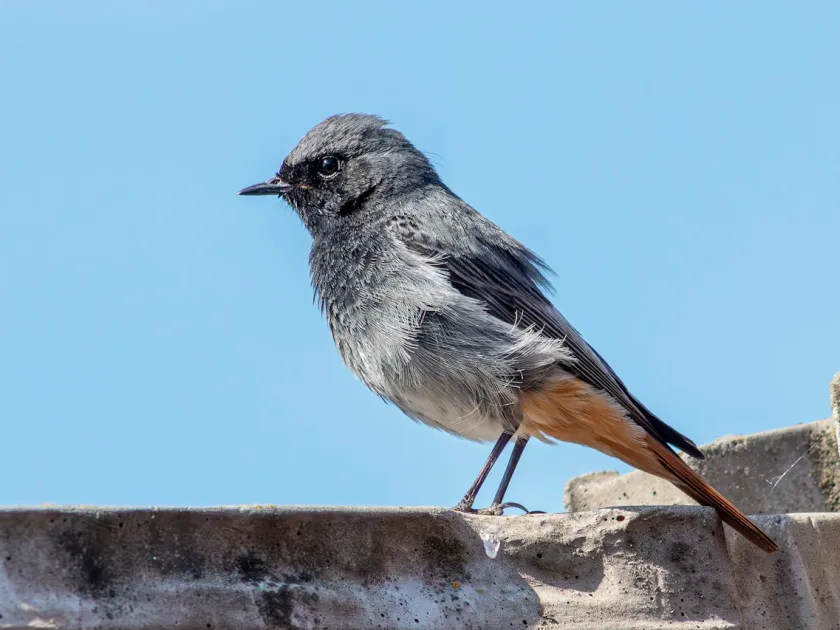
The redstart (genus Phoenicurus) belongs to the Muscicapidae family, order Passeriformes. These birds are small, energetic, and easily identified by their bright reddish-orange tails that they frequently quiver.
There is a notable sexual dimorphism: males have striking black faces and throat patches with a white forehead, while females have more muted, brownish-grey plumage for better camouflage.
Redstarts are highly adaptable creatures that often choose to nest in tree hollows, rock crevices, or man-made nest boxes located in gardens, orchards, and parklands near human habitats.
Their behavior is characterized by high agility and caution. While they are primarily insectivores, they are opportunistic feeders that readily shift their diet to include plant-based foods when available.
Understanding their nesting habits is key to managing their presence, as they often return to the same territory year after year if the conditions remain favorable for their reproduction and feeding.
What it damages
The primary agricultural concern with redstarts is their impact on soft fruits and berries. They frequently damage crops such as raspberries, strawberries, cherries, and grapes during their ripening phase.
Redstarts exhibit selective feeding behavior, often pecking at many fruits on a single bush rather than consuming a few entirely. This leads to widespread damage across a large portion of the crop.
Punctured skin on berries provides entry points for various fungal and bacterial pathogens. This secondary infection leads to rapid fruit rot, rendering the remaining yield unsalable.
In intensive fruit production, these birds can cause significant economic losses. A small flock can spoil a large volume of high-value produce in just a few early morning feeding sessions.
Furthermore, early in the spring, redstarts may peck at developing flower buds. This activity reduces the overall yield potential of fruit trees even before the fruiting season begins.
When it appears
Redstart seasonal activity in garden environments begins in early spring as they return from their wintering grounds. This period is marked by their insect-hunting behavior, which is generally beneficial.
The peak period of crop damage occurs during the ripening stage of early berries, typically between June and July. This coincides with the time when adult birds are foraging intensively for their broods.
August represents another critical time for fruit producers, as redstarts frequently feed on stone fruits before preparing for their autumn migration to warmer regions.
Prior to migration, birds often form small loose groups or move in family units, which increases the intensity of feeding on late-season crops like grapes or late berry varieties.
During the winter months, redstarts migrate to southern latitudes, meaning there is zero risk of damage to gardens and orchards during the cold winter season.
Signs of infestation
The most visible sign of a redstart presence is the occurrence of partially pecked fruits hanging on branches or lying on the ground, clearly showing small, sharp beak marks.
Field observation is highly effective: spotting the characteristic reddish tail-quivering motion when the bird lands on a fence or a high branch confirms their presence on your property.
Accumulated bird droppings around fruit bushes and on leaves indicate that the birds are using these specific locations as frequent feeding stations, necessitating protective interventions.
Noisy and rapid movement within the dense canopy of trees during the dawn and dusk hours is a reliable indicator that a group of birds is actively targeting your ripening fruit.
If you notice an unexplained increase in premature fruit drop or rapid darkening of berry skins, it is likely caused by prior bird damage that has compromised the integrity of the fruit's skin.
Control measures
The most effective physical measure is the use of high-quality bird netting. Covering berry bushes and vines during the ripening phase is the only way to guarantee a bird-free harvest.
Visual deterrents, such as reflective holographic tapes or scarecrows, can be effective in the short term, but they must be moved frequently to prevent the birds from getting accustomed to them.
Ultrasonic sound devices and recorded predator distress calls can discourage birds, but these require professional configuration to ensure high efficacy without annoying neighbors or domestic pets.
Maintaining a clean garden by removing weeds and excessive shrub growth minimizes the cover birds rely on, making your plot less attractive for nesting and sustained feeding sessions.
An integrated approach, combining physical exclusion (netting) with periodic changes in deterrent methods, provides the best results for protecting high-value fruit crops while respecting local wildlife.
Taxonomy
- Latin name
- Phoenicurus
- Family
- Muscicapidae
- EPPO code
- PHNCSP
Discussion
No discussions yet — be the first.