
Phobetron hipparchia
Phobetron hipparchia
Description
How to identify
Phobetron hipparchia is a member of the Limacodidae family, commonly known as slug moths, recognized for their unique caterpillar morphology.
The adult moth is relatively nondescript, often camouflaged to blend into the bark or forest floor, while the larvae are distinctly unusual.
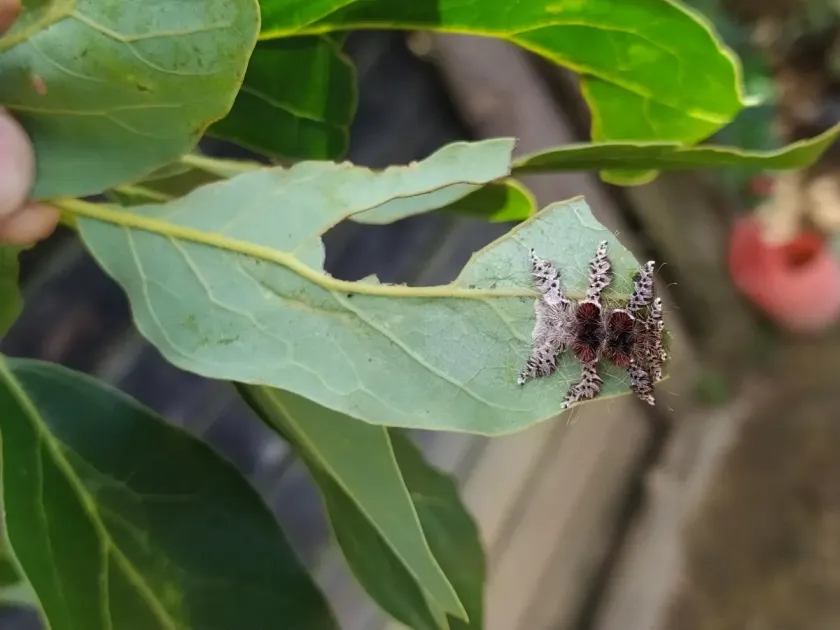
The larvae possess fleshy, sometimes stinging appendages that give them a bizarre appearance, often resembling pieces of plant debris or lichen.
These caterpillars move in a characteristic gliding motion, which is a hallmark of the Limacodidae family, similar to the movement of a slug.
Development involves a complete metamorphosis, with the pupal stage typically occurring within a hardened, spherical cocoon attached to a host plant.
What it damages
The larvae are folivores, consuming the leaves of various host plants, which can include both deciduous trees and certain ornamental shrubs.
Damage involves the consumption of leaf tissue, often starting from the margins or creating irregular holes that expand as the larvae grow.
High population densities of this pest can lead to significant defoliation, which stresses the host plant and reduces its overall vigor.
Repeated defoliation over several seasons can lead to dieback of branches and, in severe cases, the eventual death of the affected plant.
While often considered a minor pest in balanced ecosystems, local outbreaks can cause aesthetic damage to ornamental gardens and street trees.
When it appears
The active season for Phobetron hipparchia typically aligns with the warmer months of the year when host plants are in full leaf development.
In many regions, the larvae are most noticeable during the mid-to-late summer months as they reach their final instar stages before pupation.
The winter is spent in the pupal stage, protected by the dense cocoon, waiting for the return of favorable spring temperatures to emerge.
The emergence of adults is often staggered, which is an evolutionary strategy that ensures some offspring survive even if environmental conditions change.
Environmental factors, such as humidity and temperature, play a critical role in the rate of larval growth and the overall size of the population each year.
Signs of infestation
Symptoms of infestation are primarily observed on the foliage, where irregularly shaped bite marks are the most common indicator of presence.
The presence of larvae can be confirmed by inspecting the undersides of leaves, especially those exhibiting signs of recent feeding damage.
Frass (larval excrement) found on the leaves or the ground beneath the host plant is a strong indicator of an active caterpillar infestation.
- Presence of slug-like caterpillars with strange appendages.
- Irregular defoliation patterns on the canopy.
- Spherical cocoons attached to twigs or branches during winter months.
Early leaf drop or yellowing of the foliage around the damaged areas is common as the plant tries to compartmentalize the feeding damage.
Control measures
Integrated Pest Management (IPM) strategies are recommended, prioritizing cultural and biological control methods before chemical intervention.
Manual removal of caterpillars is highly effective in small gardens, provided that protective gloves are worn to avoid potential stings from larval appendages.
Application of botanical insecticides or microbial agents like Bacillus thuringiensis can target the larvae without harming beneficial pollinators.
Maintaining plant health through proper fertilization and watering helps trees recover more quickly from defoliation events caused by this pest.
Monitoring for egg clusters in the early spring can allow for targeted control efforts, significantly reducing the need for broad-spectrum pesticides later in the season.
Taxonomy
- Latin name
- Phobetron hipparchia
- Order
- Lepidoptera (butterflies)
- Family
- Limacodidae
- EPPO code
- PHOBHI
Discussion
No discussions yet — be the first.