
Phaulacridium vittatum
Phaulacridium vittatum
Description
How to identify
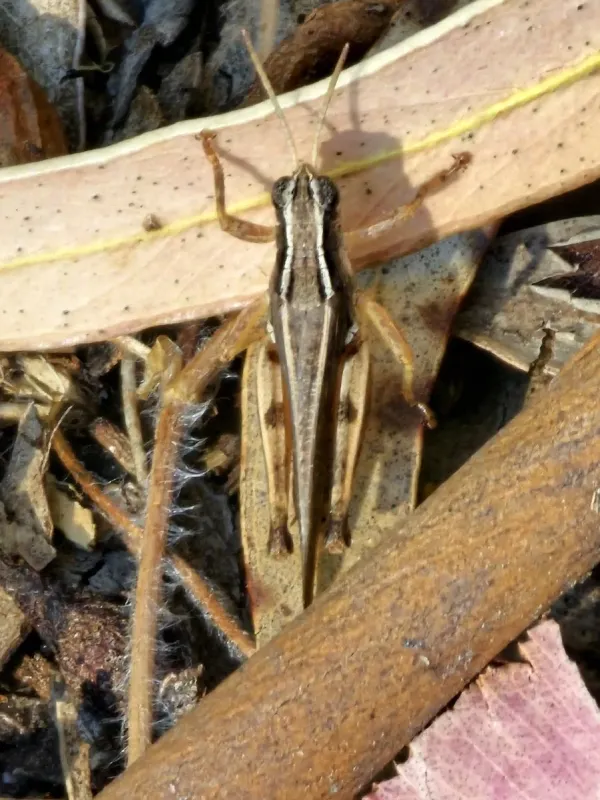
Phaulacridium vittatum, commonly known as the wingless grasshopper, is a significant pest belonging to the Acrididae family, characterized by its short, vestigial wings.
These grasshoppers are relatively small, usually measuring between 12 to 20 millimeters in length, with a body coloration that provides excellent camouflage against dry vegetation.
They are distinguished by a pale lateral stripe along their bodies, which serves as a key identification feature for agricultural scouts and farmers monitoring crops.
Unlike migratory locust species, this grasshopper prefers to remain in localized areas, meaning that infestations are often concentrated in specific fields or pasture zones.
The life cycle involves an egg stage, several nymphal instars, and the adult stage, with each phase exhibiting significant feeding behavior on surrounding plant matter.
What it damages
This pest is highly polyphagous, causing extensive damage to a wide range of host plants including native grasses, clover, lucerne, cereals, and various horticultural crops.
By consuming leaves and tender plant stems, they drastically reduce the photosynthetic capacity of the crops, leading to severe yield losses in fodder production.
In cases of high population density, these grasshoppers can completely denude pastures, leaving the ground bare and vulnerable to erosion during dry periods.
They are particularly problematic for nursery growers, as they target young sprouts and buds of trees and shrubs, effectively stunting their growth and reducing market value.
The loss of biomass directly impacts the feed quality for livestock, leading to reduced productivity and economic hardship for pastoral farmers.
When it appears
The insects overwinter as eggs buried deep in the soil, protected from frost and temperature fluctuations by the soil structure and vegetation cover.
Hatching typically occurs during the spring, coinciding with the peak vegetative growth phase of grasses, which provides abundant food for the emerging nymphs.
The nymphal stage lasts for several weeks, during which the insects undergo multiple molts, increasing in size and appetite with every successive developmental instar.
Adult grasshoppers are most active during the warm summer months, characterized by intense feeding and reproductive activities before the end of the season.
As autumn approaches, the adults lay eggs in the soil, ensuring the continuity of the population for the next growing season before dying off.
Signs of infestation
One of the earliest signs of infestation is the observation of nymphs jumping among the vegetation when someone walks through the field or pasture.
Plants affected by these pests often show irregular, ragged edges on their leaves, as the insects prefer to consume the leaf blade while avoiding harder veins initially.
The presence of small, cylindrical frass (excrement) around the base of plants is a clear indicator that a colony is currently feeding in the area.
In heavily infested zones, plants may appear withered or stunted, and large patches of "chewed" vegetation become visible as the population grows.
Increased activity of avian predators in the field can sometimes serve as a sign of high grasshopper populations, although this is not a diagnostic feature on its own.
Control measures
Cultural control remains a primary strategy, with deep tillage of the soil being highly effective in destroying eggs and disrupting the life cycle of the pest.
Effective pasture management, such as maintaining healthy, dense grass cover, makes the environment less hospitable for the grasshopper to lay eggs.
Chemical control using authorized insecticides is recommended during the early nymphal stages, as younger insects are more susceptible to treatment than adults.
Monitoring programs using sweep nets help farmers determine the population density and decide if insecticide application is economically justified at a specific time.
Promoting a balanced ecosystem by encouraging natural predators, such as insectivorous birds and parasitic wasps, can help suppress grasshopper numbers in the long run.
Taxonomy
- Latin name
- Phaulacridium vittatum
- Order
- Orthoptera (locusts)
- Family
- Acrididae
- EPPO code
- PHAMVI
Discussion
No discussions yet — be the first.