
Pezotettix giornae
Pezotettix giornae
Description
How to identify
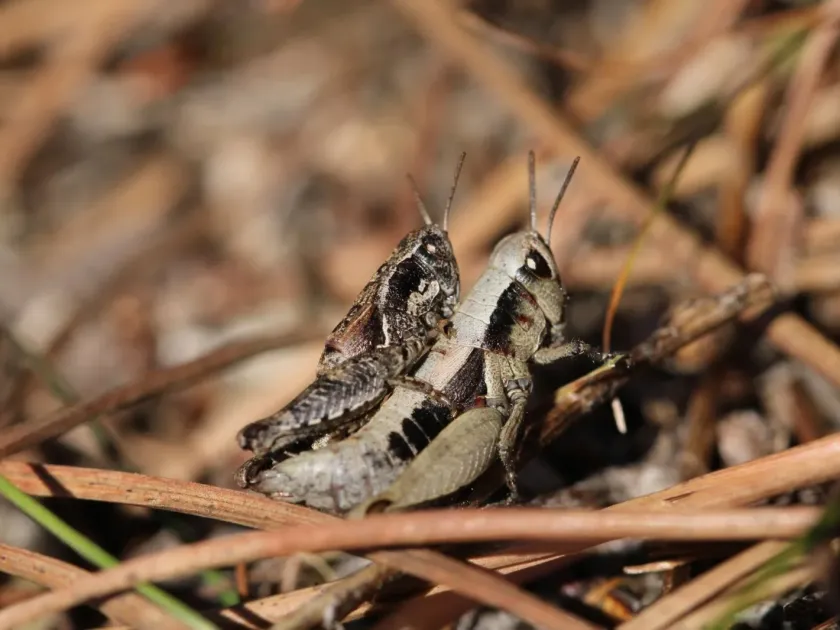
Pezotettix giornae belongs to the order Orthoptera and the family Acrididae (short-horned grasshoppers). It is a stout-bodied insect, typically displaying gray, brown, or brownish coloration that provides effective camouflage against dry vegetation and soil.
A distinctive feature of this species is its shortened wings, which often render the adults incapable of long-distance flight, limiting their dispersal compared to migratory locust species.
Females are significantly larger than males and possess a well-developed ovipositor, which allows them to deposit eggs directly into the upper soil layer or into dense plant debris.
Nymphs resemble smaller versions of adults but pass through several developmental stages (instars) before reaching maturity, gradually growing in size and developing reproductive organs.
The species prefers open areas with low-height vegetation, dry pastures, and sun-warmed fields, where optimal thermal conditions facilitate their metabolism and development.
What it damages
This pest is a polyphage, meaning it can feed on a wide variety of plant species, causing significant economic damage in both field crops and vegetable gardens.
Grain crops, such as wheat, barley, and corn, suffer the most damage, particularly during the early developmental stages when young seedlings are highly vulnerable to the insect's chewing mouthparts.
Furthermore, Pezotettix giornae often attacks leguminous crops, including alfalfa and clover, which reduces the quality of forage and the overall yield of fodder production.
Vegetable crops such as potatoes, tomatoes, and cabbage are also frequently attacked, leading to losses in market quality and reduced overall harvest yields for farmers.
Mass infestations on pasture lands can lead to severe degradation, as the pests destroy the most palatable and nutritious grasses, leaving only coarse, inedible stems behind.
When it appears
The life cycle is typical for grasshoppers in temperate climates: insects overwinter in the egg stage, remaining buried in the soil, which provides protection from freezing temperatures.
Mass hatching of nymphs occurs in late spring, once ambient and soil temperatures reach the threshold required for successful development of the offspring.
The active feeding period for nymphs lasts throughout the summer, with the peak of damage intensity occurring in July and August as the adult population reaches its maximum density.
Reproduction takes place in the latter half of the summer, after which females deposit their egg pods in suitable soil patches, completing the current year's biological cycle.
The number of generations per year depends on regional climatic conditions, though in warmer areas, the life cycle may be more rapid and populations more stable.
Signs of infestation
The first obvious sign of infestation is irregular, ragged feeding patterns on leaves, characterized by eaten leaf edges or holes scattered across the leaf blade.
During periods of high population density, one can observe mass gatherings of individuals on plant stems, especially during the early morning and evening hours when the insects are most active.
The presence of frass (small dark pellet-like excrement) on leaves and the soil surface serves as a direct indicator of active feeding by the pest population.
Affected crops often exhibit signs of wilting, yellowing, or premature drying due to damage to the plant's vascular tissues and increased moisture loss through wounded areas.
- Physical presence of nymphs and adults during field inspections.
- Discovery of egg pods in the soil surface during post-harvest tillage.
- Characteristic "skeletonized" appearance of leaves in highly sensitive crops.
Control measures
Deep autumn plowing is a critical agrotechnical method that disrupts egg pods, exposing them to predators and harsh environmental conditions, which effectively reduces the following season's population.
Consistent management and removal of weeds along field borders and ditches limit the pest's hiding spots and reproductive areas, curbing the spread of the population.
When infestation levels exceed the economic threshold, the application of systemic or contact insecticides, approved for agricultural use, is necessary to protect the harvest.
Biological control methods, such as encouraging natural predators like birds and parasitic insects, can help maintain population levels below the damage threshold during minor outbreaks.
Regular monitoring of field conditions and population density through scouting or pheromone traps allows for timely decision-making regarding the necessity and timing of chemical treatments.
Taxonomy
- Latin name
- Pezotettix giornae
- Order
- Orthoptera (locusts)
- Family
- Acrididae
- EPPO code
- PZOTGI
Discussion
No discussions yet — be the first.