
Pezotettix
Pezotettix
Description
How to identify
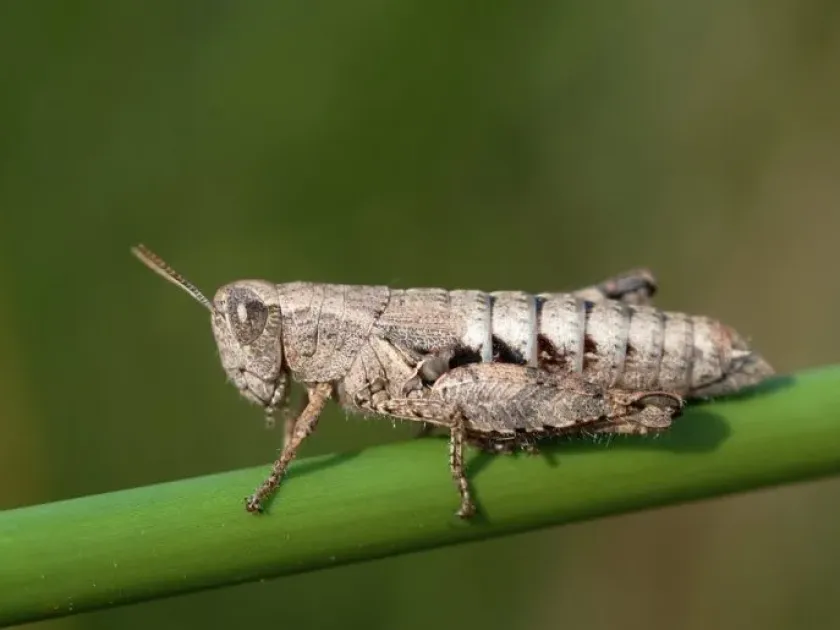
Pezotettix is a genus of short-horned grasshoppers belonging to the family Acrididae. These insects are characterized by a sturdy, compact body structure and often possess reduced wings, which limits their flight ability.
Their coloration is typically mottled brown, gray, or greenish, providing excellent camouflage against soil and dry vegetation, making them hard to spot when stationary.
The head is robust and features strong mandibles designed for chewing, allowing these pests to efficiently consume plant tissues during their active feeding stages.
These grasshoppers have powerful hind legs used for jumping, which is their primary method of evasion when threatened by predators or agricultural machinery.
Sexual dimorphism is evident as females are generally larger than males and possess a specialized ovipositor for depositing eggs into the soil.
What it damages
As polyphagous insects, Pezotettix grasshoppers feed on a wide variety of plant species, causing significant stress to both wild flora and agricultural crops.
They are known to damage cereal crops, legumes, and even garden vegetables, particularly during dry seasons when natural pastures are depleted.
Feeding damage typically involves the consumption of leaves and stems, which can lead to reduced photosynthetic capacity and stunted plant development.
In high populations, these pests can cause severe defoliation, leading to significant yield losses in infested areas of the field.
Beyond physical consumption, their feeding wounds provide entry points for secondary pathogens, potentially leading to bacterial or fungal plant infections.
When it appears
The life cycle begins in early spring, as nymphs emerge from eggs that overwintered in the upper layers of the soil.
Throughout the spring and early summer, nymphs undergo multiple molts, increasing in size and feeding intensity until they reach the adult (imago) stage.
Peak activity and damage typically occur during mid-to-late summer, which coincides with the final growth stages of many agricultural crops.
As autumn approaches, adult grasshoppers mate and lay eggs in the soil, ensuring the continuation of the population in the following year.
Environmental conditions, particularly temperature and humidity, play a critical role in the rate of development and overall survival of the population.
Signs of infestation
The most common sign of a Pezotettix infestation is the presence of irregular, notched feeding holes along the margins of leaves.
Farmers can identify the pest by observing the sudden jumping movements of the grasshoppers when walking through the fields, especially along edges and headlands.
Small, pellet-like droppings (frass) found on the soil surface or plant leaves are clear indicators of recent feeding activity by these insects.
Visual inspection often reveals thinning plant stands and chlorotic or wilting leaves in the areas where the population density is highest.
Consistent monitoring of field borders and adjacent non-crop areas is recommended to catch infestations before they spread further into the main crop.
Control measures
Effective management starts with cultural practices, such as deep autumn plowing, which disturbs the soil and destroys overwintering egg pods.
Maintaining clean field edges by controlling weeds reduces the availability of secondary food sources and nesting habitats for the grasshoppers.
When infestation levels exceed the economic threshold, targeted application of approved contact-stomach insecticides is necessary for crop protection.
Implementing regular field scouting helps determine the timing and location of treatments, minimizing the need for large-scale chemical intervention.
Biological control strategies, such as encouraging natural predators or using entomopathogenic fungi, can help suppress population growth in the long term.
Taxonomy
- Latin name
- Pezotettix
- Order
- Orthoptera (locusts)
- Family
- Acrididae
- EPPO code
- PZOTSP
Discussion
No discussions yet — be the first.