
Perillus bioculatus
Perillus
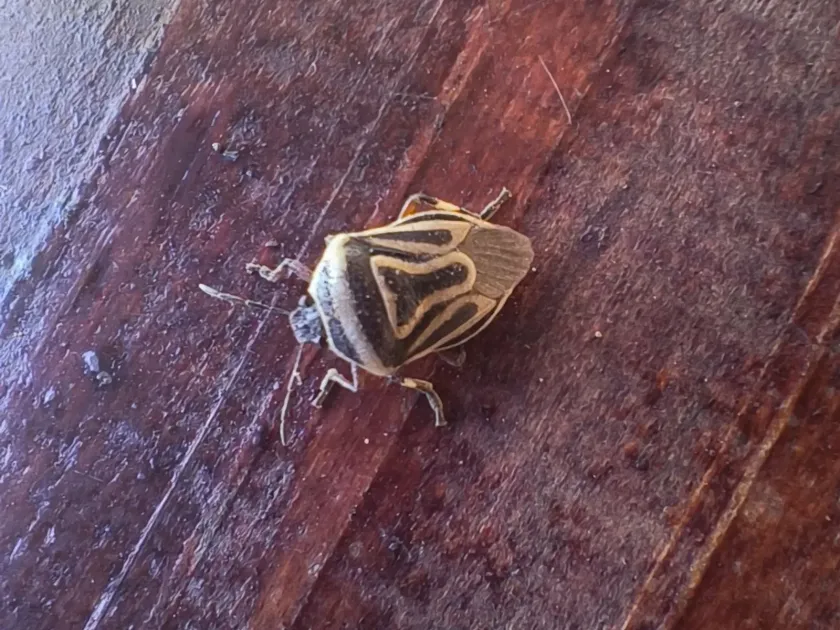
Description
How to identify
Perillus bioculatus, commonly known as the two-spotted stink bug, is a predatory insect belonging to the Pentatomidae family. It is recognized by its distinct, bold coloration pattern, typically featuring red or orange markings on a black shield-shaped back.
Adults measure approximately 10 to 12 mm in length. They possess a robust, prominent proboscis used specifically for hunting prey and injecting digestive fluids into their hosts.
The life cycle consists of the egg stage, five nymphal instars, and the adult phase. Nymphs are smaller and often display brighter, contrasting colors, which change as they mature toward the adult stage.
This insect is native to North America and has been widely studied and introduced as a powerful biological control agent against the Colorado potato beetle (Leptinotarsa decemlineata).
Proper identification in the field is essential to ensure that farmers do not confuse this beneficial predator with other herbivorous stink bugs that might be harmful to crops.
What it damages
Perillus bioculatus is strictly a beneficial predatory species and does not inflict damage upon crops like potatoes, eggplants, or other Solanaceous plants.
Its primary diet consists of Colorado potato beetle eggs, larvae of various stages, and even adults, making it a critical tool in reducing pest populations naturally.
By preying on the pests, the bug significantly mitigates defoliation caused by the Colorado potato beetle, thereby protecting the overall health and yield of the plant.
While some accidental probing of plant tissue for moisture may occur during extreme heat or scarcity of prey, this activity is minor and holds no economic significance for the farmer.
The predatory capacity of a single adult bug over its lifespan contributes to a substantial reduction in the necessity for synthetic chemical applications in agriculture.
When it appears
Activity of Perillus bioculatus begins in late spring when temperatures are high enough to support insect emergence and flight, usually aligning with the early stages of the potato season.
The population density peaks during the summer months, showing a strong correlation with the abundance of the Colorado potato beetle, which serves as its primary food source.
Depending on climatic conditions, the bug can produce multiple generations within a single growing season, allowing for continuous pressure on the pest population.
As autumn approaches and temperatures drop, the bugs enter a state of diapause, seeking overwintering sites such as leaf litter, soil crevices, or plant debris.
The survival rate during the winter is a key factor influencing the initial density of the predator population when the following spring season commences.
Control measures
Management of Perillus bioculatus revolves around the concept of conservation biological control, which emphasizes protecting existing populations in the field.
The most important practice is to minimize or eliminate the use of broad-spectrum insecticides that are known to be highly toxic to predatory stink bugs.
If chemical intervention is unavoidable, selecting narrow-spectrum or pest-specific insecticides allows for the survival of the predatory population while still controlling the primary pest.
Creating and maintaining field margins and hedgerows provides essential refuges and overwintering sites for the bugs, ensuring their persistence in the agricultural landscape.
- Avoid broad-spectrum pesticide use.
- Promote conservation of natural overwintering sites.
- Use selective chemicals only when necessary.
Taxonomy
- Latin name
- Perillus
- Order
- Hemiptera (bugs, aphids, leafhoppers)
- Family
- Pentatomidae
- EPPO code
- PERLSP
Discussion
No discussions yet — be the first.