
Forest bug
Pentatoma rufipes
Description
How to identify
The forest bug (Pentatoma rufipes), belonging to the family Pentatomidae, is a common shield bug found across various woodland and orchard habitats. Adults typically measure between 10 to 15 mm in length and possess a characteristic shield-shaped body.
The species is easily identifiable by its reddish-brown to dark bronze coloration, with the tips of the scutellum and the outer margins of the pronotum being a distinctive orange or red. Their legs and antennae also exhibit a notable reddish-orange hue, distinguishing them from other shield bugs.
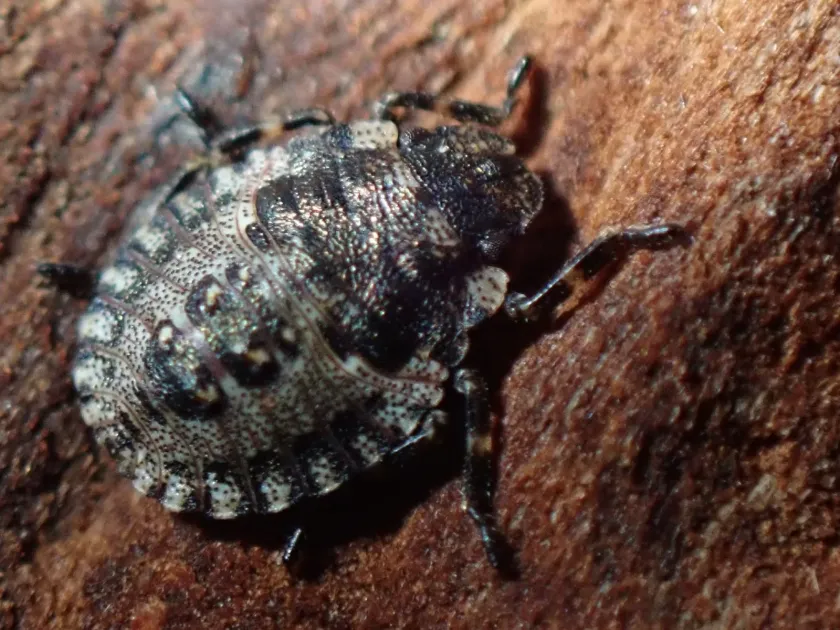
Nymphs go through five distinct instars, gradually increasing in size and intensity of color. Unlike adults, nymphs are wingless and have a more rounded body shape, often appearing lighter in color with dark markings on their abdomen.
These insects prefer secluded habitats, often resting on tree trunks or the underside of leaves to camouflage themselves against the bark. Like many members of their family, they possess specialized scent glands that release a pungent, defensive odor when the bug is disturbed.
Their life cycle is typically univoltine, meaning one generation per year. They overwinter as nymphs or adults, emerging in the spring to feed and eventually mate, ensuring the survival of the species through varying climate conditions.
What it damages
The forest bug is a polyphagous pest, known for feeding on a wide variety of deciduous trees, shrubs, and orchard crops. Preferred hosts include apple, pear, cherry, and plum trees, as well as oaks, birches, and hazelnuts in forested areas.
Both nymphs and adults utilize their piercing-sucking mouthparts to feed on plant sap. They predominantly target leaves, young shoots, and developing fruits, causing significant physiological stress to the plant and inhibiting healthy growth.
When feeding on fruits, the bugs inject enzymes that break down plant tissues. This results in the characteristic "pitting" or dimpling of the fruit surface, known as necrotic spots, which significantly reduces the market value and cosmetic quality of the harvest.
Heavy infestation of young shoots can cause wilting and stunted development, which is particularly detrimental to young fruit trees and nurseries. Severe feeding can lead to premature drop of fruits and flower buds, negatively impacting the annual yield.
Furthermore, the physical damage caused by their feeding punctures provides entry points for secondary pathogens, such as fungi and bacteria, which can cause fruit rot and further damage the overall health of the orchard ecosystem.
When it appears
Forest bugs emerge from overwintering sites in early spring, usually as temperatures start to rise above 10–12°C. They begin by feeding on developing leaf buds and flowers, often going unnoticed due to their protective coloration.
The breeding season occurs during late spring and early summer. During this time, eggs are laid in clusters, and the newly emerged nymphs begin their life cycle. The highest level of agricultural concern occurs during the mid-summer months.
By mid-summer, nymphs are actively feeding on maturing fruits, and the presence of the pest becomes more evident. This period coincides with the most sensitive stage of fruit development, making management efforts crucial during this window.
As summer draws to a close, the new generation of adults reaches maturity. They continue to feed actively to accumulate reserves for the upcoming winter, often being found on various host plants throughout the garden and orchard.
With the onset of autumn cooling, adults and late-stage nymphs seek out sheltered areas such as leaf litter, bark crevices, or dense vegetation to enter diapause for the winter season, remaining dormant until the cycle restarts the following spring.
Signs of infestation
The most reliable sign of a forest bug presence is the appearance of small, dark necrotic spots on developing fruit. These spots often develop into indentations or dimples as the fruit grows, causing noticeable deformity.
Observing groups of nymphs on the undersides of leaves is a clear indicator of a local population. These nymphs often cluster together, especially in the early stages of their development, and will drop to the ground if the branch is shaken.
A distinct, unpleasant odor can sometimes be detected in the canopy of infested trees. This smell serves as a defense mechanism for the bugs and is often stronger when the insects are disturbed or present in large numbers.
Visible damage to the bark or young shoots, such as oozing sap or localized wilting, can also point to shield bug activity. While subtle, experienced observers can distinguish these signs from those caused by other sap-sucking pests.
Regular monitoring using beating sheets or visual inspection of trunks and leaves during the spring and summer is the best way to detect early signs of infestation and prevent widespread damage to the orchard.
Control measures
The primary control strategy involves good orchard hygiene. Clearing away leaf litter, weeds, and debris from around the base of trees significantly reduces the available overwintering sites for nymphs and adults, lowering the spring population.
Manual control is often effective in small-scale gardens or orchards. Shaking branches over a collection container and destroying the bugs found is a simple and environmentally friendly way to manage localized infestations.
Chemical intervention should be used as a last resort, strictly adhering to economic threshold levels. Registered insecticides, including pyrethroids or neonicotinoids, can be used; however, application timing is vital to avoid harming beneficial pollinators.
Encouraging natural predators is an essential component of integrated pest management. Various parasitoid wasps and predatory insects target shield bug eggs and nymphs, helping to maintain a natural balance without the need for intensive chemical use.
Consistent monitoring and early detection are key to successful management. By keeping trees well-maintained and ensuring orchard health, the impact of forest bugs can be minimized, ensuring sustainable production and quality harvests.
Taxonomy
- Latin name
- Pentatoma rufipes
- Order
- Hemiptera (bugs, aphids, leafhoppers)
- Family
- Pentatomidae
- EPPO code
- PENARU
Discussion
No discussions yet — be the first.