
Hairy shieldbug
Pentatoma
Description
How to identify
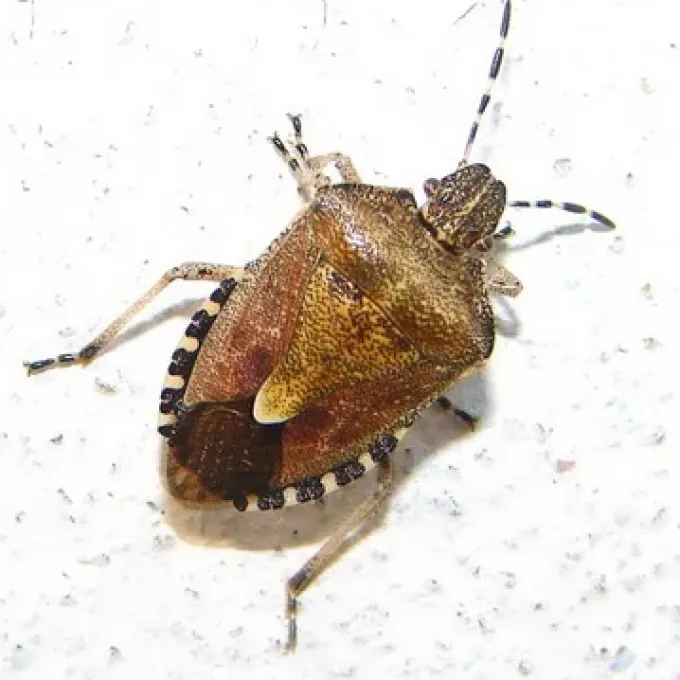
The hairy shieldbug, often referred to in the context of the Pentatomidae family, is a common garden pest. Adult bugs typically have a shield-shaped body, reaching 12 to 15 mm in length, with coloration ranging from reddish-brown to dark brown, often covered in small, fine hairs.
The insect is characterized by sharp lateral angles on its pronotum and a scutellum that covers most of its abdomen. Nymphs of older stages resemble the adults but are wingless and often exhibit more varied, mottled coloration, allowing them to blend into their surroundings.
Equipped with a piercing-sucking mouthpart, the bug feeds on plant juices by penetrating the epidermis of fruits and leaves. When threatened, these insects release a pungent, unpleasant-smelling secretion from their scent glands, which serves as a primary defense mechanism.
Adults overwinter in leaf litter, debris, or under the bark of trees, emerging in late spring as temperatures rise. Once active, they seek out host plants to feed and lay eggs, starting their reproductive cycle with the onset of the growing season.
The life cycle involves egg, five nymphal instars, and the adult stage. Females lay clusters of eggs on the underside of leaves, which provides the developing larvae with protection from environmental factors and predators during their early stages of life.
What it damages
The shieldbug is a polyphagous pest that attacks a variety of berries, including raspberries, blackberries, strawberries, and currants. It also infests stone fruits and occasionally pome fruits, feeding on both the vegetative and reproductive parts of the plants.
Both adults and nymphs cause damage by sucking sap from the berries. During feeding, they inject digestive enzymes into the fruit tissue, which leads to the shriveling, discoloration, and structural degradation of the berries, often making them unmarketable.
One of the most significant impacts of this pest is the unpleasant, lingering "buggy" smell and taste left on the fruits. Even a few bugs can ruin the quality of an entire harvest by contaminating the berries with their scent gland secretions.
Feeding on shoots and leaves can cause severe stress to the plant, resulting in curled leaves, stunted growth, and the wilting of young tips. In high populations, the cumulative damage can significantly reduce the overall yield of a commercial or home berry patch.
Migration from hedgerows, tall grasses, and wild vegetation into cultivated gardens often occurs in mid-summer. This influx makes it difficult for growers to maintain control, especially as fruits reach their peak ripeness and become most attractive to the bugs.
Signs of infestation
A telltale sign of an infestation is the noticeable odor upon touching or disturbing the plants. Visually, infected berries may appear distorted, hardened, or covered in white, cloudy spots where the bug has inserted its mouthparts to feed.
On leaves, you may notice tiny yellowish necrotic spots where the bugs have been feeding. Younger, tender shoots often show signs of curling or wilting, which is a common reaction to the loss of sap and the impact of the bug's salivary toxins.
Egg clusters are often found on the underside of leaves and are usually arranged in neat, barrel-shaped rows. These clusters are a clear indicator that the next generation of nymphs is about to emerge, signaling the need for immediate intervention.
Adult bugs are often visible sitting on the berries or hiding among the foliage during the day. A simple way to check for their presence is to gently shake the branches or canes over a white cloth, which will cause the insects to drop.
If you have unmanaged patches of weeds like nettles or thistles near your crops, these often act as primary reservoirs for shieldbugs. Observing these areas can provide an early warning of an impending move by the pests into your main garden beds.
Control measures
Good agricultural hygiene is the first line of defense. This includes clearing away debris, fallen leaves, and weeds around the garden, which denies the pests safe overwintering sites. Keeping the garden tidy significantly reduces the number of emerging adults in spring.
Hand-picking is a highly effective method for small-scale gardeners. By inspecting the plants in the cool of the morning when bugs are less active, you can knock them into a bucket of soapy water, which effectively eliminates them without using any chemicals.
Biological control agents, such as egg parasitoids, can be used to manage shieldbug populations. Encouraging natural predators, such as birds or predatory insects, in your garden can help maintain a natural balance and keep pest numbers below the economic threshold.
If chemical intervention is necessary, it should be limited to the pre-flowering or early fruiting stages. Always check the label for pre-harvest intervals to ensure that the residues have dissipated before the berries are picked for consumption.
- Sanitize the garden by removing weeds and debris
- Hand-collect bugs during the early morning
- Introduce or encourage natural predators
- Monitor weed reservoirs near your crops
- Use selective bio-insecticides when necessary
Taxonomy
- Latin name
- Pentatoma
- Order
- Hemiptera (bugs, aphids, leafhoppers)
- Family
- Pentatomidae
- EPPO code
- PENASP
Discussion
No discussions yet — be the first.