
Patanga
Patanga
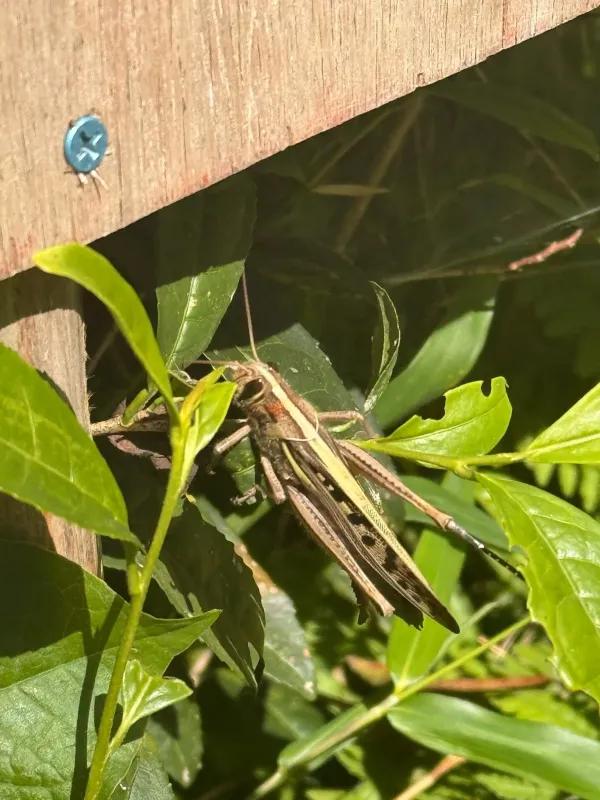
Description
How to identify
Patanga is a genus of grasshoppers within the family Acrididae, which includes several economically significant agricultural pests.
The most well-known species, Patanga japonica, is a robust insect with a typical orthopteran morphology, featuring powerful hind legs for jumping.
Adults possess strong wings, enabling them to migrate over long distances, which complicates pest control efforts in large agricultural areas.
Their coloration is generally cryptic, ranging from various shades of brown to olive-green, allowing them to blend into the canopy of rice and other grasses.
They typically deposit their egg pods in the soil, often near the edges of fields or in uncultivated land with appropriate soil moisture levels.
What it damages
Patanga primarily causes damage to cereal crops, with a specific preference for rice, which makes it a major concern in Asian agriculture.
The pest utilizes its strong mandibles to devour leaves, stems, and reproductive structures, causing direct quantitative loss to the harvest.
Feeding behavior is most intensive during the nymphal stages and the early adult phase, when insects require high nutrient intake for development.
Large swarms can lead to significant defoliation, leaving only the vascular tissues of the plant and hindering photosynthesis.
Secondary damage includes increased plant susceptibility to pathogens and environmental stress due to physical wounding of the plant tissues.
When it appears
The lifecycle begins with egg hatching in the spring, triggered by rising temperatures and sufficient rainfall.
Nymphs go through several instars, rapidly increasing their food consumption and size as the season progresses through the summer months.
Adults are most active during the peak summer period, when the weather supports high metabolic rates and successful mating.
The autumn season serves as the reproductive phase, where females lay eggs in the soil to ensure the survival of the next generation.
Seasonal patterns may vary by region, but temperature and humidity remain the most critical factors influencing the population density.
Signs of infestation
The presence of Patanga is often confirmed by observing irregular, jagged feeding marks along the leaf edges of cereal plants.
Droppings, or frass, found on the foliage are reliable indicators of current infestation within the field.
Sudden disturbances, such as walking through a field, will cause jumping or flying adults to scatter, which is a classic sign of high pest presence.
Yellowing or dieback of entire sections of the crop suggests concentrated feeding activity and the need for immediate field assessment.
In cases of severe infestation, the physical stripping of the green plant tissue becomes apparent from a distance.
Control measures
Chemical control involving systemic or contact insecticides is the primary method used to curb outbreaks during the early nymphal stages.
Deep plowing of field margins after the harvest is highly effective in destroying overwintering egg pods and reducing next year's population.
Integrated Pest Management (IPM) practices focus on monitoring population thresholds and using targeted applications of biological agents.
Cultural methods, such as field sanitation and the removal of weeds around the field, eliminate alternative host plants for the locusts.
Continuous surveillance and mapping of high-risk areas allow farmers to implement protective measures before the pest reaches destructive adult stages.
Taxonomy
- Latin name
- Patanga
- Order
- Orthoptera (locusts)
- Family
- Acrididae
- EPPO code
- PATASP
Discussion
No discussions yet — be the first.