
Parlatoria ziziphi
Parlatoria ziziphi
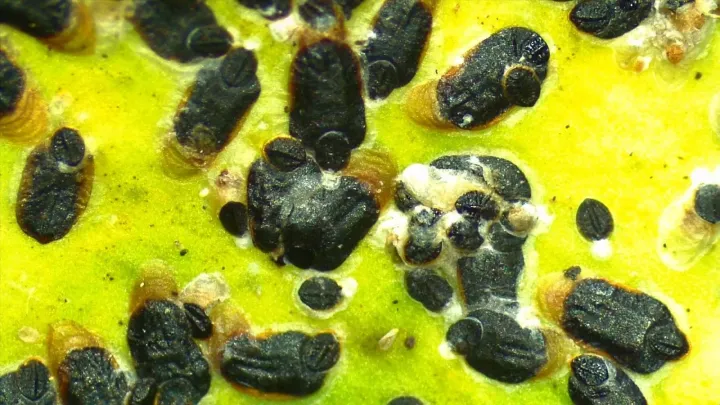
Description
How to identify
Parlatoria ziziphi, commonly known as the ebony scale, is a serious armored scale insect belonging to the family Diaspididae. It is a major pest primarily affecting citrus crops worldwide.
The adult female is characterized by its distinct, rectangular, black, and flattened shield, which firmly adheres to the host plant tissues, providing excellent protection against external factors.
Male scales are significantly smaller, more elongated, and typically paler in color. Unlike females, adult males possess wings, allowing them to disperse to find mates, which increases the pest's spread potential.
The pest lives a sedentary lifestyle under its shield, using its piercing-sucking mouthparts to extract vital nutrients directly from the plant's phloem and parenchyma tissues.
Accurate species identification usually requires microscopic examination of the female pygidium, as several scale species can appear superficially similar to the naked eye.
What it damages
The ebony scale specifically targets Rutaceae, with citrus trees such as oranges, lemons, mandarins, and grapefruits being the most significant economic hosts for the insect.
Beyond citrus, it has been recorded on various ornamental plants, including Ziziphus species, camellias, and gardenias, which may act as reservoirs for the pest.
Heavy infestations lead to leaf chlorosis, stunted plant growth, and severe twig dieback, as the scales drain nutrients and inject toxic saliva during the feeding process.
Economic impact is particularly high due to the damage caused to fruit quality; the presence of dark scale shields on fruit skins renders them unmarketable for fresh consumption.
The combined effect of chronic nutrient loss and damage to the plant epidermis makes the trees highly susceptible to secondary fungal and bacterial infections.
When it appears
The life cycle of Parlatoria ziziphi is highly dependent on climate; in tropical and subtropical regions, the pest can reproduce continuously throughout the year.
Optimal development typically occurs during warmer months, with peak crawler activity usually observed in the spring and summer when temperatures facilitate faster generation turnover.
Crawlers, the mobile first-instar nymphs, are the primary stage for dispersal, as they wander over plant surfaces to find suitable sites for permanent attachment and shield formation.
Depending on local environmental conditions and the availability of host plants, the insect can complete several overlapping generations per year, leading to rapid population explosions.
Adult females are the primary overwintering stage, showing high cold hardiness and the ability to survive periods of cooler weather until conditions improve for oviposition.
Signs of infestation
The most diagnostic sign of an Parlatoria ziziphi infestation is the presence of small, rectangular, black, and shiny shields concentrated on leaves, twigs, and fruit surfaces.
- Yellowing and chlorotic mottling of leaf tissue near feeding sites.
- Deformed, stunted, or crinkled new leaf growth.
- Reduced fruit size and loss of skin luster due to heavy scale coverage.
- Early leaf drop, especially during periods of water stress or intense infestation.
- Secondary growth of sooty mold on the honeydew-like excretions if other pests are present.
Control measures
Stringent quarantine measures are the first line of defense, including the mandatory inspection of imported nursery stock and fruit to prevent the pest from entering new regions.
Chemical control focuses on systemic insecticides that are absorbed by the plant and kill the feeding scales, combined with contact insecticides targeting the mobile crawler stage.
Horticultural mineral oils are highly effective; when applied as a spray, they form a suffocating film over the armored scales, disrupting the insect's respiration.
Regular monitoring using double-sided sticky tapes can help determine the timing of crawler emergence, allowing for more precise and effective pesticide applications.
Biological control programs utilizing parasitoid wasps (e.g., Aphytis species) have shown success in suppressing populations in established citrus-growing regions as part of integrated pest management.
Taxonomy
- Latin name
- Parlatoria ziziphi
- Order
- Hemiptera (bugs, aphids, leafhoppers)
- Family
- Diaspididae
- EPPO code
- PARLZI
Discussion
No discussions yet — be the first.