
Blue-striped nettle grub
Parasa lepida
Description
How to identify
The blue-striped nettle grub, scientifically known as Parasa lepida, is a member of the Limacodidae family, commonly referred to as slug moths due to the slug-like appearance of their larvae.
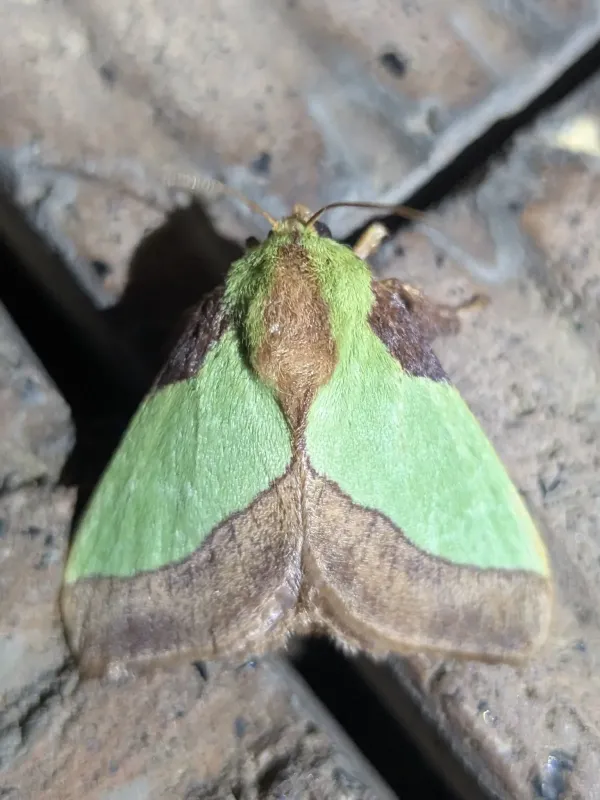
Adult moths have a wingspan of approximately 40 mm. Their wings often display a mix of green and brown patterns, which provide effective camouflage against foliage during the day when the moths are at rest.
The larvae are the most recognizable stage. They are vibrant, featuring distinct blue and green stripes, and are covered in rows of stinging spines or tubercles that carry irritating toxins.
These stinging spines serve as a potent defense mechanism against predators. Touching these larvae can cause severe dermatitis, itching, and swelling in humans, requiring cautious handling in the field.
The lifecycle includes complete metamorphosis. The pupal stage is contained within a hard, globular, greyish-brown cocoon, typically attached to the stems or bark of the host plant.
What it damages
This species is a highly polyphagous pest, meaning it attacks a wide variety of plants. It is particularly notorious for damaging crops like coconut, coffee, tea, and various tropical fruit trees.
Young larvae feed gregariously on the underside of leaves, causing skeletal damage. As they mature, they disperse and consume the entire leaf lamina, leaving only the primary veins intact.
Heavy infestations lead to severe defoliation of the canopy. In perennial crops, this stress reduces the plant's ability to store energy, leading to decreased yields and overall tree decline over successive seasons.
The wounds created by the larvae provide entry points for secondary pathogens, such as fungi and bacteria, which can cause further degradation of plant health and fruit quality.
In regions where these pests are established, they can cause significant economic losses if not managed during the initial stages of population buildup.
Signs of infestation
Early warning signs include the presence of transparent patches on leaves where young larvae have grazed. These patches eventually turn into skeletal networks as the leaves are consumed.
Egg masses are often found on the underside of leaves; they are usually flat, yellowish or clear, and resemble small clusters of overlapping scales that are difficult to spot initially.
The presence of mature larvae is easily identified by their bright, unique coloration and the visible damage they inflict on the foliage of the host plant.
Frass (larval droppings) found on the ground or on lower leaves is a strong indicator of an active population higher up in the canopy, signaling the need for an inspection.
Hard, calcified, marble-like cocoons found on the trunks or main branches indicate that a previous generation has successfully completed its lifecycle, suggesting a high risk for the next season.
Control measures
Manual removal of cocoons during the dormant season and picking off larvae from leaves are effective methods for small-scale operations, provided protective gloves are worn to avoid stings.
Biological control plays a crucial role, as various parasitic wasps and tachinid flies naturally prey on the larvae and pupae, helping to keep populations under control in healthy ecosystems.
The application of bio-insecticides containing Bacillus thuringiensis is highly recommended as it targets the larvae selectively while preserving the beneficial insect population.
In cases of severe outbreaks, targeted applications of systemic or contact insecticides may be necessary, but these should be rotated to prevent the development of pesticide resistance.
Proper orchard management, including thinning crowded branches and maintaining optimal nutrient levels, ensures that trees remain vigorous and better able to recover from occasional pest pressure.
Taxonomy
- Latin name
- Parasa lepida
- Order
- Lepidoptera (butterflies)
- Family
- Limacodidae
- EPPO code
- PARSLE
Discussion
No discussions yet — be the first.